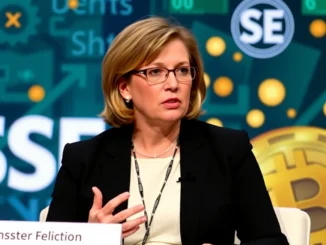
The world of digital assets is at a pivotal crossroads, and the stakes couldn’t be higher. On July 9, the U.S. Senate Banking Committee convened a crucial hearing, marking a significant step towards establishing clear crypto regulation. This isn’t just another discussion; it’s a race against time, with a looming September 30 deadline to advance comprehensive crypto market rules. For anyone invested in or curious about the future of cryptocurrencies, understanding these unfolding debates in the U.S. Senate is absolutely essential.
The Looming Deadline for Digital Asset Rules
The U.S. Senate Banking Committee’s recent hearing wasn’t just a formality; it was a clear signal of intent. Lawmakers are feeling the pressure to establish a framework for digital asset rules, aiming for a Sept. 30 deadline. This urgency stems from a growing recognition of the crypto market’s size and influence, coupled with a desire to foster innovation while safeguarding consumers.
The core of the debate revolves around how best to approach this complex landscape. On one side, many Republicans advocate for a flexible, innovation-friendly approach, believing that overly restrictive rules could stifle growth in a nascent but rapidly evolving industry. On the other, Democrats tend to emphasize robust oversight and consumer protection, raising concerns about potential market manipulation, fraud, and conflicts of interest that could harm everyday investors.
Divergent Paths: U.S. Senate Crypto Views Unpacked
The July 9 hearing brought these contrasting philosophies into sharp focus. Committee Chairman Tim Scott, a Republican, articulated a vision for regulation that is both clear and limited. His argument centers on the idea that excessive government intervention could hinder the very innovation that makes the digital asset space so promising. He stressed the importance of creating a predictable environment where businesses can thrive without undue burdens, all while still protecting investors.
However, Senator Raphael Warnock, a Democrat, presented a different perspective. He voiced significant concerns that the proposed legislation might not go far enough, particularly in addressing potential conflicts of interest within the executive branch and ensuring a truly fair market for all participants. His line of questioning highlighted the need for comprehensive safeguards that prevent bad actors from exploiting regulatory gaps.
Key Points of Contention in the U.S. Senate Crypto Debate:
- Scope of Regulation: How much should the government intervene?
- Regulatory Authority: Which agencies (e.g., SEC, CFTC) should have primary jurisdiction over different types of digital assets?
- Innovation vs. Protection: Striking the right balance between fostering technological advancement and shielding consumers from risks.
- Executive Branch Oversight: Addressing potential conflicts of interest within government bodies tasked with overseeing the crypto industry.
- Market Fairness: Ensuring a level playing field and preventing manipulative practices.
Prioritizing Investor Protection Crypto
One of the most critical aspects of any proposed crypto regulation is the focus on investor protection crypto. This isn’t just about preventing outright scams, but also ensuring transparency, clear disclosures, and robust mechanisms for recourse if something goes wrong. For many lawmakers, the volatile nature of cryptocurrencies and the rapid pace of technological change make this a paramount concern.
Questions being debated include:
- How can retail investors be shielded from highly speculative assets?
- What disclosure requirements should apply to crypto projects and exchanges?
- How can market manipulation be effectively identified and prosecuted in a decentralized environment?
- What role do stablecoins play, and how should their reserves be audited and regulated to prevent systemic risk?
Achieving meaningful investor protection requires not only new laws but also clear guidance for existing financial institutions looking to engage with digital assets.
Navigating the Complexities of Crypto Market Legislation
Crafting effective crypto market legislation is no small feat. The industry is multifaceted, encompassing everything from Bitcoin and Ethereum to stablecoins, NFTs, and decentralized finance (DeFi). Each segment presents unique regulatory challenges. For instance, determining whether a specific digital asset is a security, a commodity, or something entirely new has been a long-standing point of contention between regulatory bodies like the Securities and Exchange Commission (SEC) and the Commodity Futures Trading Commission (CFTC).
Key Complexities in Crypto Market Legislation:
- Jurisdictional Clarity: Who regulates what? The lack of clear lines creates uncertainty for businesses and investors alike.
- Technological Nuance: Legislation must be flexible enough to adapt to rapidly evolving technology without becoming obsolete.
- Global Coordination: Crypto is borderless, making international cooperation crucial to prevent regulatory arbitrage.
- DeFi and Decentralization: How do you regulate truly decentralized protocols without a central entity?
These challenges underscore why the current debates are so intricate and why finding consensus is proving difficult.
The House’s Parallel Journey: What to Expect Next
While the Senate is busy with its deliberations, the House of Representatives isn’t sitting idle. It’s scheduled to consider its own version of the proposed legislation in the coming week. This parallel effort highlights the bipartisan, bicameral interest in establishing a regulatory framework for digital assets. However, it also raises questions about potential differences in approach between the two chambers and the eventual need to reconcile any disparate bills.
The House’s version might focus on different aspects, or propose alternative solutions to the same problems. Ultimately, for a comprehensive federal framework to emerge, both chambers will need to find common ground, potentially leading to a lengthy legislative process.
Why This Matters: Impact on the Future of Crypto
The outcome of these legislative efforts will have profound implications for the entire crypto ecosystem. Clear, well-thought-out crypto regulation could:
- Boost Institutional Adoption: Provide the certainty that traditional financial institutions need to enter the crypto space.
- Enhance Consumer Confidence: Reduce fear of fraud and instability, encouraging broader public participation.
- Foster Innovation: Create a clear pathway for legitimate crypto businesses to build and grow within defined boundaries.
Conversely, overly burdensome or unclear regulations could stifle innovation, push legitimate businesses offshore, and potentially hinder the U.S. from maintaining its leadership in the digital economy.
Conclusion: A Pivotal Moment for Crypto Regulation
The U.S. Senate’s ongoing debate on crypto regulation, with its pressing September 30 deadline, marks a truly pivotal moment for the digital asset industry. The divergent views between Republicans favoring flexibility and Democrats emphasizing robust oversight reflect the inherent complexities of balancing innovation with investor protection crypto. As both the Senate and the House advance their respective versions of crypto market legislation, the industry watches with bated breath. The decisions made in the coming weeks and months will not only shape the regulatory landscape but also determine the future trajectory of digital assets in the United States, impacting everything from technological development to consumer trust and global competitiveness. Stay tuned, as the path forward promises to be as dynamic as the technology it seeks to govern.
Frequently Asked Questions (FAQs)
What is crypto regulation?
Crypto regulation refers to the laws, rules, and guidelines established by governments and regulatory bodies to oversee the cryptocurrency market and related activities. This includes rules for exchanges, digital asset issuance, trading, and consumer protection, aiming to ensure market integrity and prevent illicit activities.
Why is crypto regulation needed?
Regulation is sought to protect investors from fraud and market manipulation, ensure financial stability, prevent money laundering and terrorist financing, and provide legal clarity for businesses operating in the digital asset space. It aims to integrate cryptocurrencies more safely into the broader financial system.
What is the September 30 deadline for?
The September 30 deadline refers to the U.S. Senate Banking Committee’s stated aim to advance proposed legislation on digital asset regulation by that date. It signifies a target for progress in establishing formal rules for the crypto market.
How does the House of Representatives fit into this?
The House of Representatives is also working on its own version of digital asset legislation. For a comprehensive federal framework to become law, both the Senate and the House will need to pass their respective bills, which may then need to be reconciled into a single piece of legislation.
What are the key challenges in regulating crypto?
Key challenges include the decentralized nature of many cryptocurrencies, the rapid pace of technological innovation, determining which existing laws apply to digital assets (e.g., securities vs. commodities), jurisdictional disputes among regulatory agencies, and the global, borderless nature of the crypto market.