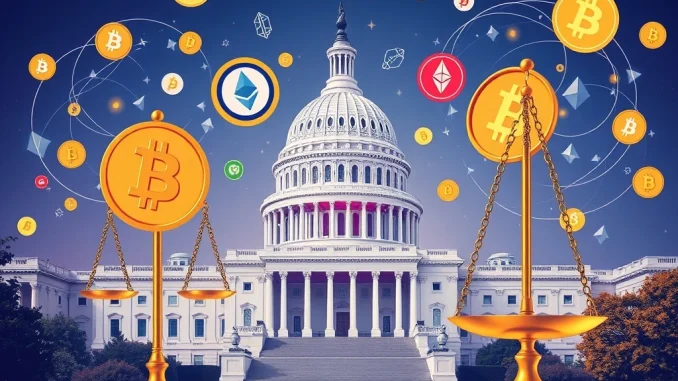
The world of cryptocurrencies is buzzing with unprecedented legislative activity as the US Congress races against the clock. If you’re tracking the pulse of the digital economy, you know that robust **crypto regulation** is no longer a distant dream but a rapidly unfolding reality. With key bills advancing and the Senate heading towards its August recess, understanding these developments is crucial for anyone involved in **US digital assets**.
The GENIUS Act: A Landmark for Stablecoin Legislation
In a significant move that signals Washington’s growing commitment to defining the digital landscape, the House of Representatives recently passed the Guiding and Establishing National Innovation for US Stablecoins (GENIUS) Act. This landmark bill, designed to establish a clear regulatory framework for payment stablecoins, received broad bipartisan support and was swiftly signed into law by President Donald Trump. This rapid progression underscores a collective urgency to bring clarity to a previously ambiguous sector.
- Who Regulates What? The GENIUS Act mandates the Office of the Comptroller of the Currency (OCC) to oversee standalone stablecoin issuers. Existing financial institutions, however, will continue to fall under the purview of the Federal Reserve, FDIC, and National Credit Union Administration.
- Industry Impact: This new structure has already prompted major players like Circle and Ripple to pursue bank charters, aiming to align with the fresh regulatory environment and ensure their continued operation within the US market. This is a clear indicator of the bill’s immediate and tangible effects on the industry.
What’s Next for US Digital Assets? The Senate’s Intense Debate
While the House has moved decisively with the **GENIUS Act**, the Senate is grappling with its own set of critical legislation. The ongoing **Senate crypto debate** centers around several key bills, including the Digital Asset Market Clarity (CLARITY) Act and the Anti-CBDC Surveillance State Act. These legislative efforts aim to:
- Define Jurisdictions: Clarify the regulatory boundaries between the Securities and Exchange Commission (SEC) and the Commodity Futures Trading Commission (CFTC), a long-standing point of contention for market participants.
- Address Market Structure: Establish guidelines for how digital asset markets should operate, fostering transparency and stability.
- Oppose CBDCs: Push back against the creation of central bank digital currencies (CBDCs), reflecting concerns about privacy and government oversight.
While the House version of the CLARITY Act has progressed, Senate Republicans have introduced their own revised framework, the Responsible Financial Innovation Act, seeking to refine crypto oversight. These deliberations are proving contentious, marked by partisan divides and concerns over potential conflicts of interest, making the Senate’s role pivotal in shaping the final regulatory landscape for **US digital assets**.
Navigating the Complexities of Crypto Regulation
The journey towards comprehensive **crypto regulation** is far from simple. One of the most critical issues on the table is clarifying which digital tokens qualify as securities under US law. The Responsible Financial Innovation Act, championed by Senate Republicans, is expected to offer a more holistic approach to market structure compared to the House’s CLARITY Act.
However, the legislative path is riddled with hurdles. Delays in confirming key regulatory leaders, such as Brian Quintenz for the CFTC chair, threaten to stall the implementation of new rules. With only two active commissioners at the CFTC, both slated to depart before 2026, the agency’s capacity to enforce an expanded regulatory mandate remains a significant concern. This highlights the intricate dance between legislative intent and practical execution.
Ensuring a Robust Future for US Digital Assets
As Congress scrambles to finalize bills before the August recess, stakeholders are closely monitoring potential extensions of the session. Wyoming Senator Cynthia Lummis has been a vocal advocate for extending the session, emphasizing the urgency of legislative action for **US digital assets**. The outcome of the Senate’s review of the CLARITY and anti-CBDC bills will directly influence everything from stablecoin operations to cross-agency regulatory coordination.
This legislative momentum reflects a significant shift in Washington’s approach to crypto, moving from uncertainty to structured oversight. The Trump administration’s embrace of digital assets, including executive orders to build a Bitcoin reserve, has further accelerated this shift. Yet, challenges persist, particularly in balancing innovation with robust risk management. The collapse of FTX in 2022 and the SEC’s enforcement-driven strategy under Gary Gensler have left lingering trust issues, complicating the path to consensus and underscoring the need for careful, comprehensive **stablecoin legislation** and broader crypto frameworks.
While the **GENIUS Act** marks a crucial first step, analysts caution that broader legislation will be necessary to address remaining gaps in market structure, investor protections, and interagency collaboration. Although the White House and GOP leadership initially aimed to finalize key bills before the August recess, the timeline has been revised to September. This delay underscores the political and procedural hurdles inherent in establishing a cohesive regulatory framework for the burgeoning digital asset ecosystem.
Conclusion: A New Era for Crypto in the US
The passage of the **GENIUS Act** and the intense **Senate crypto debate** signal a new, more defined era for **US digital assets**. While the path ahead is complex, marked by political divides and practical challenges, the clear intent to establish comprehensive **crypto regulation** is undeniable. As the legislative gears grind forward, market participants, innovators, and investors alike must stay informed and adapt to this evolving landscape, which promises both clarity and new compliance requirements for the future of digital finance.
Frequently Asked Questions (FAQs)
What is the GENIUS Act and why is it important?
The GENIUS Act (Guiding and Establishing National Innovation for US Stablecoins) is a landmark bill passed by the House of Representatives and signed into law. It’s crucial because it establishes the first comprehensive regulatory framework specifically for payment stablecoins in the US, defining how they are issued and overseen by agencies like the OCC, Federal Reserve, FDIC, and NCUA. This provides much-needed clarity for the stablecoin market.
How does the GENIUS Act impact stablecoin issuers like Circle and Ripple?
The GENIUS Act mandates that standalone stablecoin issuers will be regulated by the OCC. This has prompted companies like Circle and Ripple, which issue stablecoins, to pursue bank charters. By becoming regulated entities, they can operate within the new framework, ensuring compliance and potentially enhancing trust in their stablecoin offerings.
What other crypto legislation is being debated in the Senate?
The Senate is actively debating several other significant bills, including the Digital Asset Market Clarity (CLARITY) Act and the Anti-CBDC Surveillance State Act. These bills aim to define regulatory jurisdictions for the SEC and CFTC, address market structure concerns for US digital assets, and oppose the creation of central bank digital currencies (CBDCs).
What are the main challenges facing comprehensive crypto regulation in the US?
Key challenges include clarifying which digital tokens are classified as securities, resolving jurisdictional disputes between regulatory bodies like the SEC and CFTC, and overcoming delays in confirming key regulatory leaders. Political divisions and the need to balance innovation with investor protection also add to the complexity, as seen with lingering trust issues from past events like the FTX collapse.
What is the expected timeline for further crypto legislation?
While the GENIUS Act has passed, broader legislation addressing market structure and investor protections is still pending. The White House and GOP leadership initially aimed to finalize key bills before the August recess but have since revised the timeline to September. This indicates that the legislative process is ongoing and subject to political and procedural hurdles.