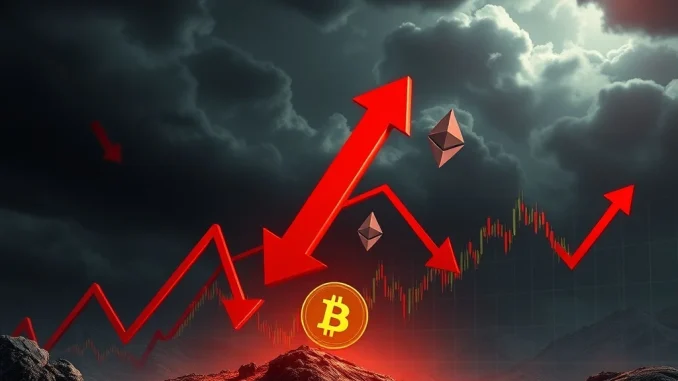
The cryptocurrency market recently witnessed a dramatic event. Over $470 million worth of futures liquidated within a single hour. This rapid sell-off sent shockwaves through the trading community. Furthermore, the past 24 hours saw an astonishing $1.755 billion in futures liquidations. These figures highlight significant cryptocurrency market volatility. Such events underscore the inherent risks in leveraged trading. They also emphasize the unpredictable nature of digital asset markets.
Understanding Crypto Liquidations: What Happened?
When traders engage in futures contracts, they often use leverage. Leverage allows them to control large positions with a smaller amount of capital. However, this practice carries substantial risk. If the market moves against a leveraged position, the exchange automatically closes it. This automatic closure is known as a liquidation. In the past hour, major exchanges processed an unprecedented volume of these forced closures. This swift market movement impacted countless traders globally. Many saw their positions wiped out in moments. Therefore, understanding the mechanics of these events is crucial.
The Mechanics of Futures Liquidations
Futures liquidations occur when a trader’s margin balance falls below the maintenance margin level. This happens due to adverse price movements. Exchanges then step in to close the position. This action prevents further losses for both the trader and the exchange. The scale of recent liquidations suggests a sharp price drop. It also indicates many traders were caught off guard. Such events are common during periods of high market instability. They can also exacerbate price declines. For instance, a sudden market downturn can trigger a cascade. This leads to more selling pressure and further liquidations.
Navigating Cryptocurrency Market Volatility
The recent liquidations underscore the inherent cryptocurrency market volatility. Digital asset prices can swing wildly in short periods. This makes them attractive to some traders. However, it also poses significant dangers, especially for those using high leverage. Rapid price changes can quickly erode margin. This then triggers liquidation cascades. A small initial price dip can snowball into a larger market correction. This happens as more positions are forcibly closed. Consequently, this volatility is a double-edged sword. It offers high reward potential but also high risk.
Why Such Large-Scale Liquidations Occur
Several factors contribute to such massive liquidation events. Firstly, a sudden, sharp price movement is often the primary trigger. This could be due to macroeconomic news, regulatory announcements, or large institutional trades. Secondly, the widespread use of high leverage amplifies these movements. Many traders seek magnified gains. They often overlook the magnified risks. Finally, cascading liquidations can create a feedback loop. As positions are closed, market sell pressure increases. This drives prices even lower. More liquidations then follow. This cycle can intensify market downturns rapidly. Ultimately, it demonstrates the interconnectedness of leveraged positions.
The Role of Crypto Derivatives in Market Dynamics
Crypto derivatives, including futures contracts, are powerful financial instruments. They allow traders to speculate on future price movements. These tools offer opportunities for both hedging and speculation. However, they also introduce systemic risk. When a significant portion of the market is leveraged, even minor price shifts can have outsized effects. The recent $1.755 billion liquidation figure is a stark reminder. It shows the potential for rapid wealth destruction in this sector. Understanding these instruments is crucial for all participants. Moreover, they represent a significant portion of daily trading volume.
Impact on Traders and Exchanges
For individual traders, liquidations mean significant losses. Many see their entire margin balance wiped out. For exchanges, managing these events is critical. They must ensure orderly market functioning. They also need to maintain their own solvency. Exchanges often have insurance funds. These funds cover potential shortfalls from liquidations. The high volume of recent liquidations tested these systems. It highlighted the robust mechanisms in place to handle extreme volatility. Therefore, exchanges play a vital role in maintaining market stability during such turbulent times.
Analyzing the Market Impact and Future Outlook
The immediate market impact of these liquidations is clear. Prices likely fell significantly across various cryptocurrencies. This created a sense of fear among investors. However, such events also serve as a ‘reset’ for the market. Excess leverage is flushed out. This can lead to a healthier, more stable market in the long run. Investors often use these dips as buying opportunities. They accumulate assets at lower prices. Therefore, the long-term impact remains to be seen. It depends on broader market sentiment and macroeconomic conditions. Ultimately, the market often recovers after such significant corrections.
Strategies for Mitigating Risks
Traders can adopt several strategies to mitigate liquidation risks. These practices can help protect capital during volatile periods. They promote more sustainable trading habits. Consider these points:
- Use lower leverage: This reduces the potential for rapid margin calls.
- Set stop-loss orders: These automatically close positions at a predetermined price. This limits potential losses.
- Diversify portfolios: Do not put all capital into one asset or strategy.
- Monitor market conditions: Stay informed about news and trends.
- Maintain adequate margin: Always keep sufficient funds in your account.
The Broader Economic Picture
Beyond individual trading strategies, macroeconomic factors heavily influence the crypto market. Global interest rates, inflation data, and geopolitical events can all contribute to market instability. For example, a sudden increase in interest rates might lead investors to pull funds from riskier assets like cryptocurrencies. This creates downward pressure. Consequently, this can trigger more liquidations. Therefore, a comprehensive understanding of both micro and macro factors is essential for traders. It helps them anticipate and react to market shifts more effectively.
The recent massive crypto liquidations event serves as a powerful reminder. The cryptocurrency market is dynamic and unpredictable. While crypto derivatives offer opportunities, they also carry inherent risks. Traders must approach these markets with caution. They need robust risk management strategies. Understanding cryptocurrency market volatility is key. It helps in navigating these turbulent waters. The events of the past 24 hours will undoubtedly shape market sentiment. They will also influence trading behaviors in the near future. The industry continues to evolve. Education and prudent risk management remain paramount.
Frequently Asked Questions (FAQs)
1. What are crypto futures liquidations?
Crypto futures liquidations happen when a leveraged trading position is automatically closed by an exchange. This occurs because the trader’s margin balance falls below a required level due to adverse price movements.
2. Why did $1.755 billion worth of futures liquidate?
This massive liquidation was triggered by significant cryptocurrency market volatility. A sharp price drop, combined with widespread use of high leverage, caused many positions to hit their liquidation price. This created a cascading effect.
3. How do futures liquidations impact the cryptocurrency market?
Liquidations typically lead to increased selling pressure. This drives prices down further in the short term. They can also cause panic among traders. However, they can also “cleanse” the market of excessive leverage. This potentially leads to more stable conditions later.
4. Can traders prevent their positions from being liquidated?
Yes, traders can prevent liquidations by using lower leverage, setting stop-loss orders, and maintaining sufficient margin in their accounts. Monitoring market conditions and diversifying investments also helps manage risk.
5. What is the role of leverage in these liquidation events?
Leverage allows traders to control larger positions with less capital. While it can amplify profits, it also significantly increases the risk of liquidation. A small price movement against a highly leveraged position can quickly wipe out a trader’s margin.
6. Are large liquidations common in the crypto market?
Large-scale liquidations are not uncommon in the highly volatile cryptocurrency market. They tend to occur during periods of significant price swings or unexpected market events.