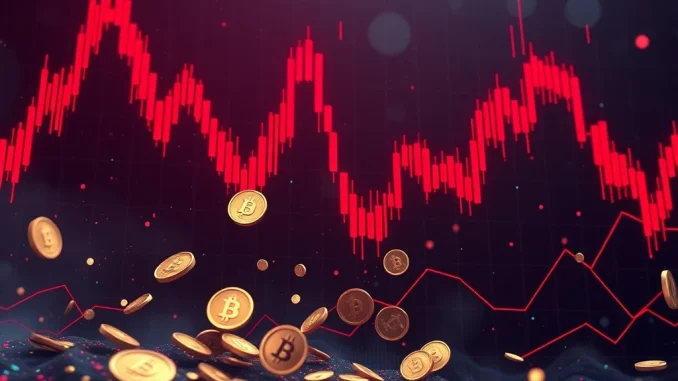
The cryptocurrency market recently experienced a dramatic downturn. Major exchanges reported staggering figures. Over $427 million worth of futures contracts were liquidated in a single hour. This rapid event sent shockwaves through the digital asset space. Furthermore, the past 24 hours saw an even larger sum. A total of $1,052 million in futures were liquidated. This significant event highlights the inherent risks and extreme market volatility within crypto trading.
Understanding Crypto Liquidations and Their Impact
Many traders often wonder about the term ‘liquidation’. What exactly does it mean? In the context of cryptocurrency futures, liquidation occurs when an exchange forcibly closes a trader’s leveraged position. This happens because the trader’s margin falls below the required maintenance level. Essentially, the market moves against their prediction. Their initial capital can no longer cover potential losses. Therefore, the exchange steps in to prevent further debt. This process is automatic and swift. It aims to protect both the exchange and the trader from greater losses.
Liquidations are a common feature of the futures market. However, the scale of recent events is noteworthy. Over $1 billion in liquidations within 24 hours signals significant price movements. It also points to widespread over-leveraging among traders. When prices drop sharply, many long positions (bets on rising prices) get wiped out. Conversely, sudden price surges can liquidate short positions. These events often create a cascading effect. They can exacerbate price swings. This makes the market even more unpredictable for participants.
The Scale of Recent Cryptocurrency Futures Liquidations
The figures are stark. In just one hour, $427 million in futures contracts vanished. This amount is substantial. It reflects a swift and powerful market correction. Expanding the timeframe, the 24-hour total reached $1.052 billion. Such a sum represents a significant portion of daily trading volume. These figures include positions across various cryptocurrencies. Bitcoin and Ethereum futures typically account for the largest share. However, altcoins also contribute to these totals. The sheer magnitude underscores the extreme market volatility currently observed. Traders must exercise caution in such environments.
For context, liquidations of this size are not unprecedented. However, they consistently remind participants of the risks involved. Large liquidations often follow significant news events. They can also occur during broader market corrections. The immediate impact is felt by individual traders. They lose their invested capital. The broader impact affects market sentiment. It can lead to further selling pressure. This creates a challenging environment for crypto trading. Therefore, understanding these dynamics is crucial for anyone involved.
Analyzing Market Volatility and Its Triggers
What causes such intense market volatility? Several factors contribute to these sharp price movements. Macroeconomic news often plays a role. For instance, inflation data or interest rate decisions can sway investor sentiment. Regulatory developments also have a profound impact. News of stricter regulations can trigger sell-offs. Conversely, favorable regulatory clarity can boost prices. Furthermore, technical factors are always at play. Large institutional trades can move markets. Whale activity, or the movement of large amounts of crypto by a single entity, also influences prices.
The highly interconnected nature of the crypto market means that a significant move in one asset can affect others. Bitcoin, as the largest cryptocurrency, often leads the market. Its price movements frequently dictate the direction for altcoins. When Bitcoin experiences a sharp drop, many altcoin futures positions also face liquidation. This interconnectedness amplifies the effects of market volatility. Consequently, traders need to monitor a wide range of indicators. They must also stay informed about global economic trends. This holistic approach helps in navigating the complex crypto landscape.
Risks Associated with Cryptocurrency Futures Trading
Cryptocurrency futures trading offers opportunities for high returns. However, it also carries substantial risks. Leverage is a double-edged sword. It amplifies gains when trades go well. But it also magnifies losses when they do not. A small price movement against a highly leveraged position can lead to total liquidation. Many traders, especially new ones, often underestimate this risk. They might take on too much leverage. This leaves them vulnerable to sudden market shifts. Prudent risk management is therefore paramount.
Another significant risk is the 24/7 nature of crypto markets. Traditional markets have closing hours. Crypto markets, however, operate continuously. This means major price swings can occur at any time. Traders might wake up to liquidated positions. They could be unable to react in time. Furthermore, the nascent nature of the crypto market means it is still less regulated. It is also more susceptible to manipulation. These factors collectively contribute to the elevated risk profile of cryptocurrency futures. Therefore, traders should approach this market with extreme caution and a clear strategy.
Navigating Volatile Crypto Markets: Strategies for Crypto Trading
Given the high market volatility, how can traders navigate these turbulent waters? First and foremost, risk management is critical. Never trade with more capital than you can afford to lose. This principle is fundamental. It protects your financial well-being. Secondly, avoid excessive leverage. While tempting, high leverage drastically increases liquidation risk. A conservative approach to leverage can help preserve capital during unexpected price swings. Traders should also set clear stop-loss orders. These automatically close a position if the price reaches a certain unfavorable level. This limits potential losses.
Diversification is another key strategy. Do not put all your capital into a single asset or trade. Spreading investments across different cryptocurrencies or trading strategies can mitigate risk. Furthermore, staying informed is vital. Keep up with market news, technical analysis, and global economic indicators. Understanding the underlying factors driving price movements can provide an edge. Emotional discipline is equally important. Avoid making impulsive decisions based on fear or greed. Stick to your trading plan. These disciplined approaches can help mitigate the impact of sudden crypto liquidations and market volatility.
Looking Ahead: What These Liquidations Mean for the Futures Market
The recent wave of liquidations serves as a stark reminder. The cryptocurrency futures market remains highly speculative. It is prone to rapid and significant price swings. For institutional investors, such events highlight the need for sophisticated risk models. They also underscore the importance of robust compliance frameworks. Retail traders, conversely, must prioritize education. They need to understand the mechanics of leverage and margin. These events often cleanse the market of over-leveraged positions. This can sometimes lead to healthier, more sustainable growth in the long run. However, the short-term pain for many traders is undeniable.
Moving forward, we might see a shift in trading behavior. Some traders may adopt more conservative strategies. Others might seek out less volatile investment opportunities. Regulatory bodies are also paying close attention. Such large-scale liquidations could prompt increased scrutiny. This could lead to new regulations aimed at protecting investors. The crypto space is constantly evolving. These events are part of its maturation process. Ultimately, they reinforce the importance of informed decision-making. They also highlight careful risk management in the dynamic world of cryptocurrency futures.
In conclusion, the recent $1 billion in crypto liquidations underscores the extreme volatility inherent in the digital asset market. These events, while challenging for many traders, offer valuable lessons. They emphasize the critical need for sound risk management, disciplined trading strategies, and continuous education. As the cryptocurrency landscape matures, understanding and adapting to these market dynamics will be paramount for all participants.
Frequently Asked Questions (FAQs)
Q1: What are cryptocurrency futures liquidations?
A1: Cryptocurrency futures liquidations happen when an exchange forcibly closes a trader’s leveraged position. This occurs because the trader’s margin falls below a required level. The market moves against their bet. This prevents further losses.
Q2: Why did over $1 billion in futures get liquidated recently?
A2: The liquidations were caused by significant price movements in the crypto market. These movements triggered many stop-loss orders. They also pushed leveraged positions below their maintenance margin. This often happens due to sudden market volatility or large-scale selling pressure.
Q3: How does market volatility affect crypto trading?
A3: Market volatility creates rapid price swings. These swings can lead to quick gains or substantial losses. For leveraged futures trading, high volatility significantly increases the risk of liquidation. Traders must manage their positions carefully.
Q4: What is the main risk of trading cryptocurrency futures?
A4: The primary risk is leverage. Leverage amplifies both profits and losses. A small adverse price movement can lead to the total loss of a trader’s margin. This can happen very quickly in a volatile market.
Q5: How can traders protect themselves from large crypto liquidations?
A5: Traders can protect themselves by using less leverage. They should also set stop-loss orders. Diversifying their portfolio helps. Moreover, continuously educating themselves about market dynamics is crucial. Never invest more than you can afford to lose.
Q6: Will these liquidations impact the long-term future of the crypto market?
A6: While painful in the short term, such liquidations can cleanse the market of excessive leverage. This may lead to a healthier, more sustainable market in the long run. They also serve as a reminder for prudent risk management among participants.