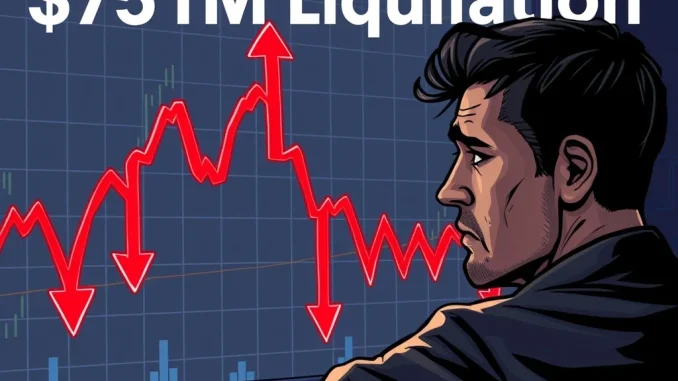
The cryptocurrency market was rocked by a staggering $751M in futures liquidations within just 24 hours, exposing the extreme volatility risks of leveraged trading. This event serves as a harsh reminder of the dangers lurking in high-stakes crypto derivatives markets.
Understanding Crypto Futures Liquidations
Crypto futures liquidation occurs when a trader’s margin falls below required levels, forcing exchanges to automatically close positions. Key points about this process:
- Leverage amplifies both potential gains and losses
- Long positions are particularly vulnerable during market downturns
- Exchanges liquidate positions to protect against bad debt
- Just a 2% price swing can wipe out highly leveraged positions
The Domino Effect of Mass Liquidations
The recent $751M liquidation event demonstrates how forced closures can create cascading market effects:
| Impact | Description |
|---|---|
| Market Orders | Exchanges execute orders that add selling pressure |
| Price Swings | Liquidations amplify volatility in both directions |
| Sentiment Shift | Large liquidations often trigger panic selling |
| Liquidity Issues | Exchanges must manage order books carefully |
Essential Risk Management Strategies
To survive crypto futures volatility, traders must implement disciplined approaches:
- Use stop-loss orders to limit potential losses
- Maintain sufficient margin above minimum requirements
- Monitor funding rates in perpetual futures contracts
- Stay informed about macroeconomic and regulatory changes
FAQs About Crypto Futures Liquidations
Q: What triggers crypto futures liquidations?
A: Liquidations occur when price movements cause a trader’s margin to fall below the exchange’s maintenance requirement.
Q: Why are long positions more vulnerable?
A: During market downturns, long positions (bets on price increases) face immediate pressure as prices fall.
Q: How can traders avoid liquidation?
A: By using conservative leverage, maintaining adequate margin, and setting stop-loss orders.
Q: Do liquidations affect spot markets?
A: Yes, large liquidations can create selling pressure that impacts spot prices.