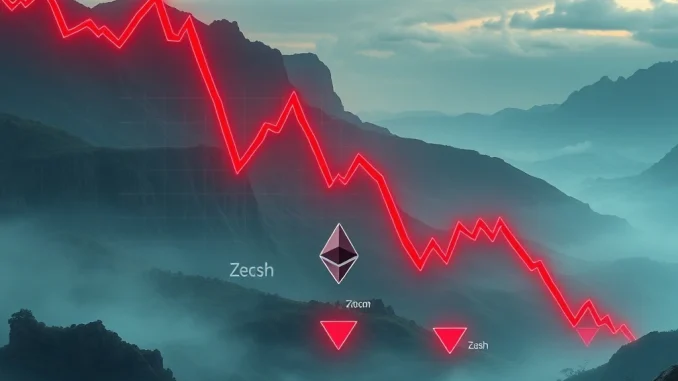
The cryptocurrency market recently witnessed a dramatic event. Over the past 24 hours, a staggering sum exceeding $330 million in crypto futures liquidations occurred across the perpetual futures market. This sudden downturn highlights the inherent volatility and risks associated with leveraged trading in digital assets. Many traders faced significant losses as positions were forcibly closed. This article explores the details of these liquidations and their implications for the broader market.
Understanding Crypto Futures Liquidations
What exactly are crypto futures liquidations? Essentially, they represent the forced closure of a trader’s leveraged position. This happens when the market moves against their trade, and their margin balance falls below the maintenance margin requirement. Exchanges automatically liquidate these positions to prevent further losses. Consequently, this protects both the trader and the exchange. Perpetual futures contracts, unlike traditional futures, have no expiry date. Therefore, they closely track the underlying asset’s spot price, making them popular yet risky instruments.
This recent event underscores the rapid and unforgiving nature of the perpetual futures market. Small price movements can trigger large liquidations, especially for highly leveraged positions. Traders often use leverage to amplify potential returns. However, leverage also significantly magnifies potential losses. Thus, understanding these mechanics is crucial for anyone participating in crypto trading.
The Impact on Bitcoin and Ethereum Liquidations
The latest data reveals significant figures for major cryptocurrencies. Bitcoin liquidations alone accounted for a substantial $140 million of the total. Interestingly, long positions dominated these BTC liquidations, comprising 57.99% of the total. This suggests that a majority of traders were betting on Bitcoin’s price increasing. When the price unexpectedly dropped, these bullish bets were wiped out.
Similarly, Ethereum liquidations also reached a considerable $130 million. However, the dynamics for ETH differed notably. Short positions primarily drove these liquidations, making up 60.41% of the total. This indicates that many traders were speculating on Ethereum’s price falling. When ETH’s price moved against their short bets, their positions faced forced closure. This contrasting pattern between BTC and ETH highlights divergent market sentiments or specific triggers affecting each asset.
Zcash and Broader Crypto Market Volatility
Beyond the top two cryptocurrencies, other altcoins also experienced considerable pressure. Zcash (ZEC) recorded $60.62 million in liquidations. For ZEC, short positions overwhelmingly dominated, accounting for 70.5% of its total liquidations. This reinforces the pattern observed with Ethereum. Such widespread liquidations across multiple assets point to a broader trend of crypto market volatility. These events often follow significant price swings, either up or down. They can also exacerbate price movements as liquidations trigger further selling pressure.
Market analysts constantly monitor these liquidation figures. They offer valuable insights into market sentiment and potential areas of weakness. A high volume of liquidations can signal either a market bottom (after a capitulation event) or further downside risk. Therefore, understanding these metrics helps traders assess overall market health. It also aids in predicting potential short-term price movements.
Navigating the Perpetual Futures Landscape
The significant perpetual futures liquidations serve as a stark reminder of the risks involved. While perpetual futures offer opportunities for profit, they demand careful risk management. Traders must consider their leverage ratios and potential margin calls. Unexpected market shifts can rapidly erode capital, especially for those over-leveraged. Therefore, prudent trading strategies are essential in this environment.
Moreover, these events highlight the interconnectedness of the crypto market. A downturn in one major asset can trigger a domino effect across others. This interconnectedness makes comprehensive market analysis even more critical. Traders should stay informed about macroeconomic factors, regulatory changes, and technical indicators. Such vigilance helps in making more informed decisions. It also allows them to better prepare for sudden market shifts.
Conclusion: Lessons from Recent Liquidations
The recent wave of crypto futures liquidations, totaling over $330 million, underscores the dynamic nature of the digital asset market. Bitcoin, Ethereum, and Zcash traders faced substantial losses as positions were forcibly closed. This event clearly demonstrates the magnified risks associated with leveraged trading in perpetual futures. It also emphasizes the constant presence of crypto market volatility. For participants, understanding these mechanisms and practicing robust risk management remains paramount. These events serve as crucial lessons in navigating the often-unpredictable world of cryptocurrency trading.
Frequently Asked Questions (FAQs)
Q1: What are crypto futures liquidations?
A1: Crypto futures liquidations occur when a trader’s leveraged position is automatically closed by an exchange. This happens because their margin balance falls below a required threshold. The market moves against their trade, preventing further losses for both the trader and the exchange.
Q2: Why did Bitcoin liquidations differ from Ethereum liquidations in terms of long/short positions?
A2: Bitcoin liquidations were dominated by long positions (bets on price increase), while Ethereum liquidations saw more short positions (bets on price decrease). This difference suggests varying market sentiment or specific catalysts affecting each asset at the time of the price movement that triggered the liquidations.
Q3: What are perpetual futures contracts?
A3: Perpetual futures contracts are a type of derivatives product in cryptocurrency trading. Unlike traditional futures, they do not have an expiry date. They are designed to closely track the price of the underlying asset. Traders use them to speculate on price movements with leverage.
Q4: How does crypto market volatility contribute to liquidations?
A4: High crypto market volatility means prices can change rapidly and dramatically. These sudden price swings can quickly push leveraged positions into negative territory. Consequently, this triggers automatic liquidations as margin balances deplete, leading to forced closures.
Q5: What can traders do to mitigate the risk of liquidations?
A5: Traders can mitigate liquidation risks by using lower leverage, setting stop-loss orders, and maintaining sufficient margin in their accounts. Diversifying portfolios and avoiding over-exposure to a single asset also helps. Understanding market conditions and risk management strategies is crucial.