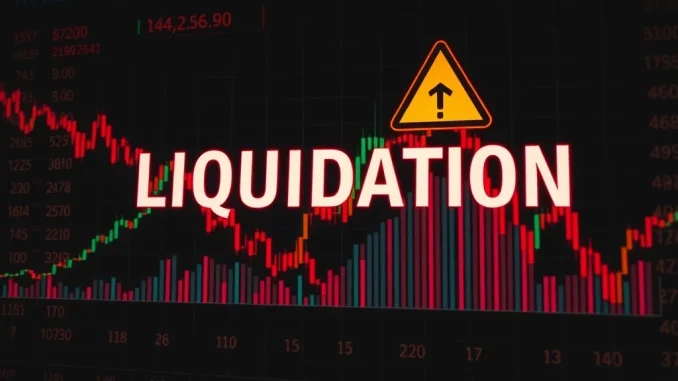
In the blink of an eye, the cryptocurrency world witnessed a staggering event: a monumental crypto futures liquidation that wiped out hundreds of millions of dollars from traders’ accounts. In just one hour, major exchanges processed $216 million worth of futures liquidations, escalating to a colossal $413 million over the past 24 hours. This sudden, dramatic shift has sent ripples across the entire digital asset landscape, leaving many wondering: what exactly happened, and what does it mean for the future of the market?
What Just Happened in the **Crypto Futures Liquidation**?
The numbers speak volumes: $216 million in an hour, $413 million in a day. These figures represent a massive unwinding of leveraged positions in the crypto futures liquidation market. When a trader opens a futures contract with leverage, they’re essentially borrowing funds to amplify their potential gains. However, this also magnifies potential losses. If the market moves against their position significantly, their collateral (or ‘margin’) can fall below a certain threshold, triggering an automatic closure of their position by the exchange – this is a liquidation.
- Rapid Unwinding: The sheer speed of the $216 million liquidation suggests a sharp, sudden price movement, likely a significant drop, catching many leveraged long positions off guard.
- Cascading Effect: Large liquidations often create a domino effect. As positions are closed, the forced selling can push prices down further, triggering more liquidations, creating a feedback loop.
- Market Health Indicator: While painful for those affected, such events can sometimes be seen as a ‘cleansing’ of excessive leverage from the market, potentially leading to healthier, more sustainable growth in the long run.
Understanding the Mechanics of the **Futures Market**
To grasp the impact of such liquidations, it’s crucial to understand how the futures market operates within the cryptocurrency ecosystem. Futures contracts allow traders to speculate on the future price of an asset without owning the underlying asset itself. They are popular for hedging existing positions or for betting on price movements with leverage.
Key components of a crypto futures trade:
- Leverage: Traders can use leverage (e.g., 10x, 50x, 100x) to control a much larger position with a smaller amount of capital. While this amplifies profits, it also means a small price swing can lead to significant losses.
- Margin: The initial capital a trader puts up to open a leveraged position. This acts as collateral.
- Maintenance Margin: A minimum margin level that must be maintained to keep the position open. If the market moves unfavorably and the margin falls below this level, a margin call or liquidation occurs.
- Liquidation Price: The specific price point at which an exchange will automatically close a leveraged position to prevent the trader’s losses from exceeding their margin.
The recent events highlight the inherent volatility and high-stakes nature of trading in the derivatives market. When prices move sharply, especially downwards, it can trigger a cascade of automatic sell-offs, exacerbating the price decline.
Why the Sudden **Cryptocurrency Volatility**?
The crypto market is no stranger to dramatic price swings, but the scale of this recent liquidation event underscores a particular period of intense cryptocurrency volatility. Several factors can contribute to such sharp movements:
- Macroeconomic Factors: Broader economic news, inflation data, interest rate decisions by central banks, or geopolitical events can significantly influence investor sentiment across all markets, including crypto.
- Regulatory Scrutiny: News or rumors of stricter regulations in major jurisdictions can spook investors and lead to sell-offs.
- Whale Movements: Large holders (whales) moving significant amounts of cryptocurrency can trigger market shifts.
- Technical Breakdowns: If key support levels on price charts are broken, it can accelerate selling pressure as automated trading systems and human traders react.
- Funding Rates: In perpetual futures contracts, funding rates can indicate market sentiment. Extreme funding rates can sometimes precede sharp corrections as positions become too crowded.
While the exact trigger for this specific hour of intense selling isn’t always immediately clear, it’s typically a confluence of these factors that pushes the market to such extreme points, leading to widespread liquidations.
Navigating **Crypto Market Crash** Scenarios
For many, the term ‘liquidation’ evokes fear, often associated with a broader crypto market crash. While not every liquidation event signals a full-blown crash, large-scale liquidations are certainly symptoms of significant market stress. Understanding how to navigate these scenarios is crucial for both seasoned traders and new investors.
Here are some insights:
- Stay Informed: Keep abreast of market news, technical analysis, and on-chain data. Unexpected news can trigger rapid shifts.
- Risk Management is Key: Never invest more than you can afford to lose. This fundamental rule becomes even more critical in volatile markets.
- Diversification: Spreading investments across different assets can help mitigate risks if one asset class or specific cryptocurrency performs poorly.
- Emotional Discipline: Panic selling during a downturn or FOMO (Fear Of Missing Out) during a rally often leads to poor decisions. Stick to your strategy.
- Long-Term vs. Short-Term: Differentiate between short-term market noise and long-term investment theses. Liquidations primarily impact short-term leveraged traders.
For those looking to enter or stay in the market, recognizing these patterns and having a robust strategy is paramount. The crypto market is cyclical, and corrections are a natural part of its evolution.
Mitigating **Trading Risks** in a Volatile Landscape
The recent liquidation spree serves as a stark reminder of the inherent trading risks in the highly volatile cryptocurrency derivatives market. While the allure of amplified gains through leverage is strong, the potential for rapid, significant losses is equally potent. Here’s how traders can better mitigate these risks:
Actionable Insights for Traders:
- Avoid Excessive Leverage: While 100x leverage might seem appealing, it means even a 1% price move against your position can wipe out your entire margin. Start with lower leverage (e.g., 2x-5x) until you fully understand the dynamics.
- Implement Stop-Loss Orders: A stop-loss order automatically closes your position when the price reaches a predetermined level, limiting your potential losses. This is perhaps the single most important tool for risk management in leveraged trading.
- Understand Margin Requirements: Always be aware of your initial and maintenance margin levels. Maintain sufficient collateral in your account to withstand adverse price movements.
- Monitor Funding Rates: High funding rates (especially positive ones for long positions) can indicate an overcrowded trade, making it susceptible to a sharp correction or liquidation cascade.
- Don’t Trade on Emotion: The crypto market is notorious for its psychological swings. Stick to a well-defined trading plan and avoid impulsive decisions driven by fear or greed.
- Practice on Demo Accounts: Many exchanges offer demo or paper trading accounts. Use these to practice your strategies and understand leverage without risking real capital.
The recent events are a harsh lesson for some, but also a valuable reminder for all participants about the importance of disciplined risk management. The crypto market offers immense opportunities, but they come hand-in-hand with significant risks that must be respected and managed proactively.
Conclusion: Navigating the Crypto Storm
The recent $216 million (and $413 million over 24 hours) crypto futures liquidation event is a powerful testament to the dynamic and often brutal nature of the cryptocurrency market. It underscores the immense power of leverage and the cascading effects that sudden price movements can have on derivative positions. While such events can be unsettling, they also serve as crucial stress tests for the market, purging excessive speculation and potentially paving the way for more sustainable growth.
For traders, the takeaway is clear: understanding the mechanics of the futures market, recognizing the signs of impending cryptocurrency volatility, and, most importantly, rigorously applying risk management strategies are not just recommendations – they are necessities. By learning from these moments of intense market activity, participants can become more resilient, more informed, and ultimately, more successful in navigating the thrilling yet challenging world of digital assets. The crypto market continues to evolve, and with proper preparation, you can be better equipped to weather its storms and seize its opportunities.
Frequently Asked Questions (FAQs)
Q1: What is crypto futures liquidation?
Crypto futures liquidation occurs when a trader’s leveraged position in the futures market is automatically closed by the exchange. This happens when the market moves against their trade to such an extent that their margin (collateral) falls below the required maintenance level, preventing further losses for the exchange.
Q2: Why do large-scale liquidations happen in the crypto market?
Large liquidations are typically triggered by sharp, sudden price movements (up or down). When many traders are heavily leveraged in one direction, a swift reversal can cause a cascade: initial liquidations push the price further, triggering more liquidations, creating a domino effect. Macroeconomic news, significant whale movements, or regulatory shifts can often be catalysts.
Q3: How does a crypto futures liquidation impact the broader market?
While directly affecting leveraged traders, large liquidations can create significant short-term volatility and downward price pressure on the broader market. The forced selling from liquidations can accelerate price declines, increasing fear and uncertainty among investors. However, they can also ‘cleanse’ the market of excessive leverage, potentially leading to a healthier, more stable base for future growth.
Q4: What can traders do to avoid being liquidated?
To avoid liquidation, traders should prioritize robust risk management. Key strategies include avoiding excessive leverage, setting strict stop-loss orders to limit potential losses, maintaining sufficient margin in their accounts, and not trading based on emotion. Understanding market dynamics and using demo accounts for practice are also beneficial.
Q5: Are these massive liquidation events common in cryptocurrency?
While not an everyday occurrence, large-scale liquidation events happen periodically in the highly volatile cryptocurrency market, especially during periods of significant price discovery or market corrections. They are a feature of leveraged trading and a reminder of the inherent risks involved.