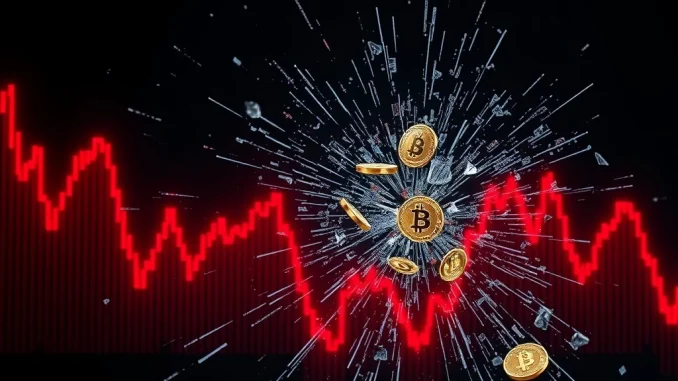
The cryptocurrency market just experienced a sudden jolt, as a staggering $112 million worth of crypto futures liquidation occurred in a single hour. This dramatic event is part of a larger trend, with the past 24 hours seeing a total of $309 million in futures positions wiped out across major exchanges. Such rapid, large-scale liquidations are a stark reminder of the inherent volatility and high stakes involved in digital asset trading, particularly when leverage is at play. What exactly does this mean for traders, and what drives such intense market movements?
What Exactly is a Crypto Futures Liquidation?
To understand the recent events, it’s crucial to grasp the concept of crypto futures liquidation. In essence, a futures contract is an agreement to buy or sell an asset at a predetermined price on a specified future date. Many traders use these contracts with leverage, meaning they borrow funds to amplify their potential returns. While leverage can magnify profits, it also dramatically increases the risk of significant losses.
A liquidation occurs when a trader’s leveraged position is forcibly closed by an exchange. This happens if the market moves against their trade to such an extent that their margin (the collateral they put up) falls below a certain maintenance level. Exchanges liquidate these positions to prevent traders from losing more money than they have in their accounts and to protect the exchange from potential bad debt. The process typically involves:
- Initial Margin: The initial amount of capital required to open a leveraged position.
- Maintenance Margin: The minimum amount of equity required to keep the position open.
- Margin Call: If the equity in the account drops below the maintenance margin, the trader might receive a margin call, requesting more funds.
- Liquidation: If the trader fails to add more funds or the market moves too quickly, the exchange automatically closes the position at the current market price, often resulting in substantial losses for the trader.
The recent $112 million figure represents the total value of these forcibly closed positions, indicating a swift and sharp market movement that caught many leveraged traders off guard.
The Anatomy of Market Volatility: Why Such Massive Liquidations?
The cryptocurrency market is renowned for its extreme market volatility, and large liquidation events are often a direct consequence of this characteristic. Several factors can contribute to sudden price swings that trigger such widespread liquidations:
- Macroeconomic Events: Global economic news, interest rate changes, or inflation data can significantly influence investor sentiment across all markets, including crypto.
- Regulatory News: Announcements from governments or financial bodies regarding cryptocurrency regulations can cause immediate and drastic price reactions.
- Whale Movements: Large transactions by institutional investors or high-net-worth individuals (known as ‘whales’) can move the market substantially, creating ripples that affect smaller traders.
- Technical Factors: Breaking key support or resistance levels, or hitting major stop-loss clusters, can accelerate price movements and initiate a cascade of liquidations.
- Liquidation Cascades: When initial liquidations occur, the forced selling pressure can further drive down prices, leading to more liquidations, creating a domino effect. This often explains why millions are liquidated in minutes.
The past hour’s events likely stemmed from a combination of these factors, leading to a rapid price drop that breached the liquidation thresholds of numerous leveraged positions. Understanding these triggers is vital for anyone participating in this dynamic market.
Bitcoin Liquidation and Its Broader Market Ripple Effect
While the recent figures encompass various cryptocurrencies, it’s common for a significant portion of these liquidations to be tied to Bitcoin liquidation events. As the largest cryptocurrency by market capitalization, Bitcoin often acts as the bellwether for the entire crypto market. When Bitcoin experiences a sharp price drop, it frequently pulls down altcoins with it, leading to widespread liquidations across the board.
The interconnectedness of the crypto market means that a major price movement in Bitcoin can trigger a chain reaction. Traders holding leveraged altcoin positions, even if their specific altcoin hasn’t moved as much, might find their positions affected due to their portfolio’s overall exposure to Bitcoin’s price action or general market sentiment. This ‘ripple effect’ underscores why monitoring Bitcoin’s movements is crucial, even for those primarily trading altcoins.
Navigating Leveraged Trading Risks: Lessons from the Downturn
The recent $112 million liquidation serves as a potent reminder of the inherent dangers of leveraged trading. While it offers the allure of magnified gains, it equally magnifies losses, often leading to rapid capital depletion. For traders looking to navigate these treacherous waters, here are some actionable insights:
- Understand Your Leverage: Don’t just use the maximum leverage offered. Calculate your risk and use leverage levels that align with your risk tolerance and market conditions.
- Implement Strict Risk Management: Always use stop-loss orders. These automatically close your position if the price reaches a certain level, preventing catastrophic losses. Position sizing is also critical; never risk more than a small percentage of your portfolio on a single trade.
- Monitor Margin Levels: Keep a close eye on your margin health. If your position is approaching liquidation, be prepared to either add more collateral or close the position manually.
- Avoid Emotional Trading: Market volatility can trigger fear and greed. Stick to your trading plan and avoid making impulsive decisions based on sudden price swings.
- Diversify (Cautiously): While not directly preventing liquidation on a single asset, a diversified portfolio can help mitigate overall portfolio risk during a market downturn.
These principles are not just theoretical; they are practical safeguards against the harsh realities of a volatile market where millions can be lost in moments.
Beyond the Numbers: The Human Impact of Crypto Market Crashes
While we talk in terms of millions of dollars and abstract concepts like crypto market crash, it’s important to remember the human element. For many individual traders, these liquidations represent real financial losses, impacting their savings, investments, and even livelihoods. The emotional toll of watching a position evaporate can be significant, leading to stress, anxiety, and impulsive decisions.
These events also serve as a harsh but effective teacher. They underscore the importance of continuous learning, disciplined trading practices, and a healthy respect for market forces. While the crypto market offers unparalleled opportunities for growth, it demands vigilance, education, and a robust risk management strategy from all participants.
Conclusion: Navigating the Waves of Crypto Volatility
The recent $112 million crypto futures liquidation event in a single hour, part of a $309 million wipeout in 24 hours, is a powerful testament to the intense and often unpredictable nature of the cryptocurrency market. It highlights the amplified risks associated with leveraged trading and the domino effect that can occur when market volatility triggers widespread liquidations. While such events can be daunting, they are also integral to the market’s natural cycles, offering lessons in risk management and the importance of a disciplined approach. For traders, understanding the mechanics of liquidation, respecting leverage, and implementing robust risk mitigation strategies are not just recommendations, but necessities for long-term survival and success in this exhilarating yet challenging digital frontier.
Frequently Asked Questions (FAQs)
What is a crypto futures liquidation?
A crypto futures liquidation occurs when an exchange forcibly closes a trader’s leveraged position because their margin (collateral) falls below a required maintenance level. This happens when the market moves significantly against their trade, preventing further losses for the trader and the exchange.
Why do large liquidations happen in the crypto market?
Large liquidations are typically triggered by sudden, sharp price movements in the market. These movements can be caused by macroeconomic news, regulatory announcements, large institutional trades (whales), or a cascade effect where initial liquidations lead to further price drops and more liquidations.
How does leverage contribute to liquidations?
Leverage allows traders to open positions larger than their actual capital by borrowing funds. While this can amplify profits, it also magnifies losses. With higher leverage, even small adverse price movements can quickly deplete a trader’s margin, leading to liquidation much faster than with lower or no leverage.
What is the difference between long and short liquidation?
A ‘long’ position expects the price to go up. A long liquidation occurs when the price drops significantly, moving against the long position. A ‘short’ position expects the price to go down. A short liquidation occurs when the price rises significantly, moving against the short position.
How can traders protect themselves from liquidation?
Traders can protect themselves by using strict risk management practices, such as setting stop-loss orders to automatically close positions at a predefined loss level, avoiding excessive leverage, maintaining sufficient margin, and diversifying their portfolios. Emotional discipline is also key to avoid impulsive decisions.
Are large liquidation events common in cryptocurrency?
Yes, large liquidation events are a relatively common occurrence in the highly volatile cryptocurrency market, especially in futures trading. They often coincide with significant price swings and are a characteristic feature of markets where leveraged trading is prevalent.