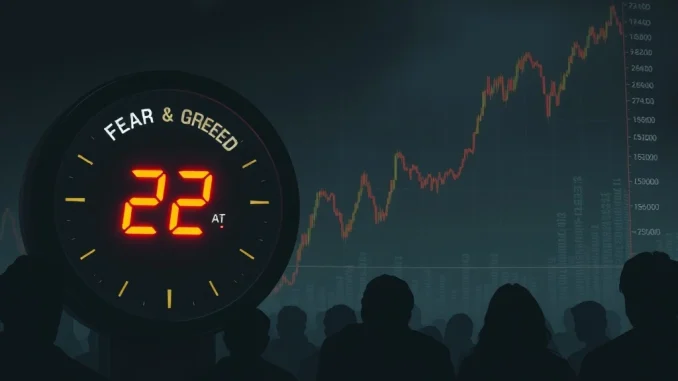
The cryptocurrency market often moves with significant volatility. Currently, a crucial indicator, the Crypto Fear & Greed Index, has plunged dramatically. This shift captures the current mood among participants. It highlights a period of significant apprehension across the digital asset landscape.
Understanding the Crypto Fear & Greed Index Plunge
The Crypto Fear & Greed Index recently dropped to a score of 22. This represents a significant six-point decline from the previous day. This movement pushes market sentiment into ‘extreme fear’ territory. Data from Alternative.me confirms this notable shift. Previously, the market was simply in a state of ‘fear’. Now, however, the sentiment has intensified considerably.
This index provides a valuable snapshot of market psychology. It helps investors gauge the prevailing mood. A score of zero indicates maximum fear. Conversely, a score of 100 suggests extreme optimism. Therefore, the current reading of 22 signals widespread apprehension. It often reflects a lack of confidence among investors. Such low scores historically coincide with potential turning points.
What Drives the Index? Components of Investor Sentiment
The Crypto Fear & Greed Index is not a single metric. Instead, it aggregates several key market indicators. Each component contributes to the overall score. Understanding these factors helps us interpret the index more accurately. Therefore, a comprehensive view emerges from this multi-faceted approach.
The index calculation relies on six distinct factors:
- Volatility (25%): This measures the current price fluctuations of Bitcoin. Higher volatility often indicates a fearful market. It suggests uncertainty among traders.
- Trading Volume (25%): High trading volumes in a declining market can signal panic selling. Conversely, low volumes during a price dip might indicate investor indecision.
- Social Media Mentions (15%): Analysis of cryptocurrency-related keywords on platforms like Twitter reveals public sentiment. Increased negative mentions contribute to fear.
- Surveys (15%): While paused, historically, these surveys directly polled investors. They offered insights into their perspectives.
- Bitcoin’s Market Capitalization Dominance (10%): A rising Bitcoin dominance during a market downturn often means investors are seeking ‘safer’ assets. They move away from altcoins.
- Google Search Volume (10%): Analyzing search trends for terms like “Bitcoin price manipulation” or “Bitcoin crash” indicates public anxiety. Increased searches for these terms contribute to a lower index score.
These components collectively paint a picture of prevailing investor sentiment. Each element offers a unique perspective. Together, they form a robust measure of market psychology.
The Implications of Extreme Fear in the Crypto Market Sentiment
When the index enters ‘extreme fear’ territory, it carries significant implications. Investors often react impulsively during such periods. This can lead to increased selling pressure. Furthermore, it may deter new capital from entering the market. Historically, however, such periods have presented unique opportunities.
For long-term investors, extreme fear can be a signal. It might indicate a potential buying opportunity. Legendary investor Warren Buffett famously advised, “Be fearful when others are greedy, and greedy when others are fearful.” This principle applies to crypto markets too. Therefore, current conditions might appeal to contrarian investors. They look for undervalued assets.
Conversely, short-term traders might face heightened risks. Increased volatility can lead to rapid price swings. This makes precise timing more challenging. Thus, a cautious approach often becomes paramount. Managing risk becomes a critical strategy.
Navigating Current Bitcoin Sentiment
Bitcoin sentiment heavily influences the overall index. Bitcoin’s price movements and market dominance significantly impact the Fear & Greed Index. As the largest cryptocurrency, Bitcoin often acts as a bellwether. Its performance sets the tone for the broader market. When Bitcoin shows weakness, the entire crypto ecosystem tends to follow.
The current extreme fear reflects concerns specifically around Bitcoin. These concerns might stem from various factors. Macroeconomic uncertainties play a role. Regulatory developments also contribute. Geopolitical events can impact investor confidence. Therefore, monitoring Bitcoin’s specific indicators is crucial. This provides deeper insight into the market’s direction.
Many analysts watch Bitcoin’s price action closely. They observe its support and resistance levels. A breakdown of key support can intensify fear. Conversely, a strong bounce might signal a sentiment shift. This shows the direct link between Bitcoin’s health and market perception.
Strategies for Investors Amidst Extreme Fear
Periods of extreme fear demand a thoughtful approach from investors. Reacting emotionally can lead to poor decisions. Instead, a well-defined strategy helps navigate market turbulence. Prudence and research are key during these times.
Here are some common strategies:
- Dollar-Cost Averaging (DCA): This involves investing a fixed amount regularly. It helps reduce the impact of volatility. Investors buy more when prices are low and less when prices are high.
- Rebalancing Portfolios: Reviewing and adjusting asset allocations is wise. It ensures your portfolio aligns with your risk tolerance. Selling some assets and buying others can help.
- Research and Due Diligence: Focus on fundamental analysis of projects. Strong projects with solid technology and use cases may weather downturns better. Avoid speculative plays during uncertain times.
- Risk Management: Never invest more than you can afford to lose. Set stop-loss orders to limit potential losses. Diversify investments across different asset classes, not just crypto.
- Staying Informed: Keep abreast of market news and economic indicators. Understand the broader context impacting the crypto space. Knowledge empowers better decision-making.
These strategies help mitigate risks. They also position investors for potential future recovery. Calm decision-making is essential when fear dominates the market.
The Broader Crypto Market Sentiment Outlook
The current crypto market sentiment is undoubtedly bearish. However, market cycles are a fundamental aspect of financial markets. Periods of fear often precede periods of recovery and growth. This historical pattern offers a glimmer of hope for patient investors. Therefore, understanding cycles is crucial for long-term success.
Looking ahead, several factors could influence a shift in sentiment. Positive regulatory clarity would certainly help. Significant technological advancements in blockchain projects could also spark optimism. Furthermore, a broader improvement in global economic conditions might encourage new investment. These catalysts could slowly push the index back towards neutrality or even greed.
Ultimately, the crypto market remains dynamic. It is subject to rapid changes. While extreme fear grips investors today, history suggests that sentiment can change quickly. Investors should focus on long-term potential. They must avoid short-term emotional reactions. Maintaining a rational perspective is vital for navigating these challenging times successfully.
Frequently Asked Questions (FAQs)
What does a Crypto Fear & Greed Index score of 22 mean?
A score of 22 on the Crypto Fear & Greed Index signifies ‘extreme fear’ in the market. It indicates that investors are highly apprehensive and cautious, often leading to increased selling pressure and reduced demand for cryptocurrencies.
How is the Crypto Fear & Greed Index calculated?
The index combines six weighted factors: volatility (25%), trading volume (25%), social media mentions (15%), surveys (15%), Bitcoin’s market capitalization dominance (10%), and Google search volume (10%). These components collectively measure prevailing investor sentiment.
Does a low Fear & Greed Index score always mean it’s a good time to buy?
Not necessarily. While historically, periods of extreme fear have presented buying opportunities for contrarian investors, there are no guarantees. A low score indicates widespread pessimism, which some view as a signal for potential reversals, but further price declines are always possible. Always conduct your own research.
How does Bitcoin sentiment affect the overall index?
Bitcoin’s performance and market dominance significantly influence the Crypto Fear & Greed Index. As the largest cryptocurrency, Bitcoin often leads market trends. Its price action and investor perception directly impact the overall sentiment score, often acting as a key driver for the entire crypto market.
What factors could shift the Crypto Fear & Greed Index from extreme fear?
A shift from extreme fear would likely require positive catalysts. These could include improved macroeconomic conditions, favorable regulatory news, significant technological advancements in blockchain projects, or a sustained upward price movement in Bitcoin and other major cryptocurrencies. Increased investor confidence and reduced volatility would also contribute.
Is the Crypto Fear & Greed Index a reliable indicator for market timing?
The index serves as a useful tool for gauging market psychology, but it should not be the sole basis for investment decisions. It provides a snapshot of current sentiment, which can be a contrarian indicator, but it does not predict future price movements with certainty. Combine it with other forms of analysis for a more robust strategy.