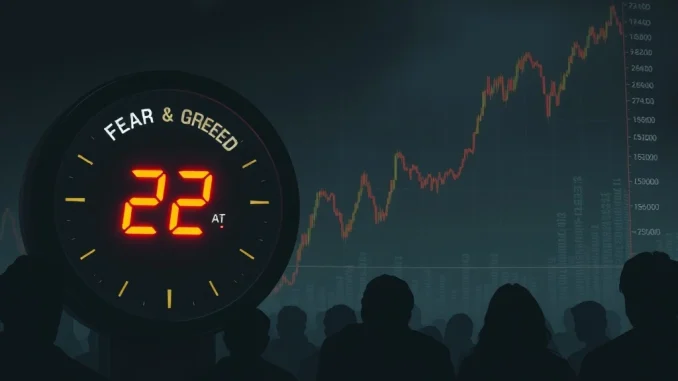
The cryptocurrency world often operates on a rollercoaster of emotions. Today, a significant shift has occurred. The **Crypto Fear & Greed Index** has plummeted by 37 points. It now sits at a concerning 27. This dramatic move signals a sharp downturn in investor sentiment, shifting the market from ‘Greed’ directly into ‘Fear’ territory. This change demands immediate attention from all crypto participants.
Understanding the Plunge in the Crypto Fear & Greed Index
The **Crypto Fear & Greed Index** offers a valuable snapshot of market psychology. It aggregates various data points to gauge whether market participants are feeling overly optimistic or excessively pessimistic. A score of 27 indicates significant apprehension. This is its lowest reading since September 26, when it registered 28. Such a drop suggests that many investors are pulling back. They are reacting to perceived risks within the broader **crypto market**.
Alternative.me compiles this crucial index. It helps observers understand the prevailing mood. Scores closer to zero reflect extreme fear. Conversely, scores near 100 suggest extreme optimism, or ‘Greed’. The current level clearly points to a market gripped by uncertainty. This affects decision-making across the board.
Decoding Investor Sentiment: What Drives the Index?
The index is not a simple measure. Instead, it relies on a sophisticated methodology. It combines six distinct market factors. Each factor contributes a specific weight to the overall score. Understanding these components is key to interpreting the index’s movements. This comprehensive approach provides a nuanced view of **investor sentiment**.
Here are the primary factors:
- Market Volatility (25%): This measures current volatility and maximum drawdowns of Bitcoin. High volatility often fuels fear.
- Trading Volume (25%): Strong, sustained buying volume suggests optimism. Conversely, low volume or high selling volume can signal fear.
- Social Media Mentions (15%): Sentiment analysis of crypto-related keywords on platforms like Twitter indicates public mood. Positive mentions boost the score.
- Surveys (15%): Weekly polls ask investors about their market outlook. These provide direct insights into psychological states.
- Bitcoin Dominance (10%): An increasing Bitcoin market cap dominance can indicate fear. Investors often shift to Bitcoin as a perceived safe haven during downturns.
- Google Search Volume (10%): Tracking search trends for terms like ‘Bitcoin price manipulation’ or ‘Bitcoin crash’ reveals growing fear.
Each component plays a vital role. Together, they paint a complete picture of the market’s emotional state. This allows for a more informed analysis of the **crypto market** dynamics.
The Impact of Fear on the Crypto Market
When the **Crypto Fear & Greed Index** enters fear territory, it typically reflects widespread concern. This can manifest in several ways. Many investors become risk-averse. They may sell off assets. Others might hesitate to enter new positions. This often leads to downward price pressure across various cryptocurrencies.
Historically, periods of extreme fear have sometimes preceded market bottoms. However, they can also signal further declines. Therefore, caution remains paramount. Traders and long-term holders alike must carefully assess their strategies. They need to consider the current environment. The plunge suggests that the market is grappling with significant headwinds. This impacts the immediate outlook for **Bitcoin price** and altcoins.
Navigating Market Volatility: Strategies for Investors
The current market environment demands careful consideration. High **market volatility** can present both risks and opportunities. During times of fear, many experienced investors adopt specific approaches. They prioritize risk management above all else. Diversification can help mitigate potential losses. Dollar-cost averaging (DCA) is another common strategy. It involves investing a fixed amount regularly. This helps smooth out price fluctuations. Therefore, investors buy more when prices are low and less when they are high.
Furthermore, staying informed is crucial. Keeping track of market news and economic indicators helps. Understanding the underlying technology and fundamentals of chosen assets is also vital. This knowledge can help investors avoid impulsive decisions driven by fear. Instead, they can make rational choices. They base these choices on sound analysis, not emotion. The current **investor sentiment** calls for disciplined action.
Historical Context and Future Outlook for the Crypto Market
Looking back at previous cycles provides valuable context. The **Crypto Fear & Greed Index** has dipped into fear territory many times before. Each instance brought unique market reactions. Sometimes, these periods marked excellent buying opportunities for those with a long-term perspective. Other times, they signaled prolonged bearish trends. This highlights the unpredictable nature of the **crypto market**.
The current plunge reflects a broader market re-evaluation. Factors like macroeconomic conditions, regulatory changes, and specific project developments all contribute. While no one can predict the future, understanding the index’s historical behavior offers insights. It suggests that patience and thorough research are essential. Investors should avoid making decisions based solely on emotion. Instead, they should rely on a balanced perspective. This approach helps navigate periods of heightened fear.
The sharp drop in the **Crypto Fear & Greed Index** serves as a clear warning. It indicates a significant shift in market sentiment. This move from ‘Greed’ to ‘Fear’ underscores the current apprehension among investors. Understanding the index’s components and implications is vital. It empowers market participants to make informed decisions. Navigating this period of heightened fear requires discipline and a strategic approach. Therefore, investors should remain vigilant and well-informed.
Frequently Asked Questions (FAQs)
Q1: What is the Crypto Fear & Greed Index?
The Crypto Fear & Greed Index is a tool that measures the prevailing emotional state of the cryptocurrency market. It ranges from 0 (Extreme Fear) to 100 (Extreme Greed) and helps gauge whether investors are overly optimistic or pessimistic.
Q2: Why did the Crypto Fear & Greed Index plunge to 27?
The index plunged to 27 due to a sharp downturn in various market factors. These include increased market volatility, shifts in trading volume, negative social media sentiment, and changes in Bitcoin dominance. These factors collectively indicate a rise in investor fear.
Q3: How does ‘Fear’ territory affect the crypto market?
When the index is in ‘Fear’ territory, it typically leads to increased selling pressure, reduced trading activity, and a general reluctance among investors to enter new positions. This often results in downward price movements for Bitcoin and other cryptocurrencies.
Q4: What factors contribute to the Crypto Fear & Greed Index?
The index is calculated based on six main factors: market volatility (25%), trading volume (25%), social media mentions (15%), surveys (15%), Bitcoin’s market cap dominance (10%), and Google search volume (10%).
Q5: Is a low Crypto Fear & Greed Index always a bad sign?
Not necessarily. While a low index reflects current fear, historically, periods of extreme fear have sometimes presented opportunities for long-term investors. However, it also signals significant risk, and careful analysis is always recommended.