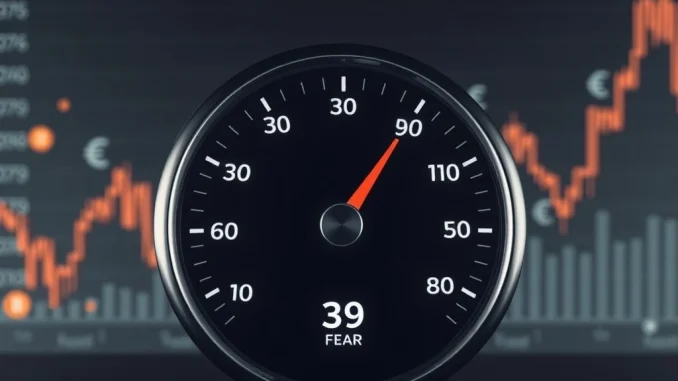
The **Crypto Fear & Greed Index** has recently taken a significant downturn. It dropped to a score of 39, moving squarely into the “fear” territory. This shift highlights a notable change in **market sentiment** across the cryptocurrency space. The index, provided by Alternative, serves as a crucial barometer for investor psychology. It operates on a scale from zero to 100. Zero signifies extreme fear, while 100 represents extreme optimism. Understanding this metric is vital for anyone navigating the dynamic **Bitcoin Market** and broader digital asset landscape.
This index is not a simple measure. It compiles data from various sources to offer a holistic view. Volatility contributes 25% to its score. Trading volume also accounts for 25%. Social media mentions influence 15% of the result. Furthermore, surveys provide another 15% of the input. **Bitcoin’s market cap dominance** makes up 10%. Finally, Google search volume adds the remaining 10%. Each factor offers unique insights into the prevailing **investor fear** or enthusiasm. A score of 39 indicates caution among market participants. It suggests a potential period of uncertainty ahead.
Decoding the Fear Territory: What a Score of 39 Means for Market Sentiment
When the **Crypto Fear & Greed Index** falls to 39, it signals a clear shift. The market has moved from a neutral or greedy state into one of pronounced **investor fear**. This specific score places the sentiment firmly within the “fear” category. Historically, such readings often precede periods of increased caution. Investors tend to become more hesitant. They may pull back from aggressive buying. This condition often results from recent price declines. Moreover, it can reflect broader economic uncertainties.
A score of 39 indicates that fear outweighs greed. It does not necessarily mean a market crash is imminent. However, it certainly suggests a lack of confidence. Traders often interpret this as a time for prudence. They might reduce their exposure to volatile assets. Conversely, some experienced investors view fear as an opportunity. They look for potential entry points. This strategy aligns with the adage, “be greedy when others are fearful.” Nevertheless, the current **market sentiment** points to widespread apprehension.
Key Factors Driving the Crypto Fear & Greed Index and Crypto Volatility
Several components collectively determine the **Crypto Fear & Greed Index** score. Each factor offers a distinct lens into **market sentiment**. Understanding these elements helps decipher the index’s movements.
Volatility (25%): High **crypto volatility** often correlates with fear. The index measures current volatility against average levels. Significant price swings, especially downwards, increase the fear component. Therefore, a sudden drop in asset prices will likely push the index lower.
Trading Volume (25%): High trading volumes during price downturns can signal panic selling. Conversely, low volumes during price increases might indicate a lack of conviction. The index assesses current volume against historical averages. Sustained high volume on falling prices suggests strong selling pressure.
Social Media Mentions (15%): Public sentiment on platforms like X (formerly Twitter) is a powerful indicator. The index analyzes keywords and sentiment in crypto-related posts. A surge in negative or bearish mentions contributes to increased fear. This factor captures the collective mood of the crypto community.
Surveys (15%): Alternative conducts weekly polls to gauge investor sentiment directly. These surveys ask participants about their market outlook. Direct feedback provides a snapshot of current **investor fear** or optimism. This component offers a qualitative measure.
Bitcoin Dominance (10%): **Bitcoin’s market cap dominance** reflects its share of the total crypto market. A rising dominance often suggests investors are moving into safer assets. Bitcoin is typically seen as the most stable crypto asset. A decreasing dominance can indicate increased risk appetite. This shift affects overall **market sentiment**.
Google Search Volume (10%): Search trends for terms like “Bitcoin price manipulation” or “crypto crash” reveal public concern. Higher search volumes for fear-related queries indicate growing apprehension. This factor reflects the broader public’s interest and anxiety.
Historical Context and Investor Psychology in the Bitcoin Market
The **Crypto Fear & Greed Index** provides valuable historical context. During strong bull markets, the index frequently registers “extreme greed.” For instance, in late 2021, scores often soared above 75. This indicated widespread optimism and often FOMO (Fear Of Missing Out). Conversely, deep bear markets typically push the index into “extreme fear” territory, sometimes below 20. Such periods mark capitulation events. The current score of 39 falls squarely into the “fear” zone, but not yet extreme. This suggests significant caution, yet not outright panic.
**Investor psychology** plays a pivotal role in **market sentiment**. Emotions frequently drive market movements. Fear can lead to irrational selling. Greed can fuel unsustainable rallies. Understanding these psychological biases is crucial. The index helps investors gauge the prevailing emotional state of the market. It offers a counter-indicator for some. When others are fearful, savvy investors might consider accumulating assets. When others are greedy, they might consider taking profits. This disciplined approach can mitigate risks associated with emotional trading.
Implications for the Cryptocurrency Market and Future Outlook Amid Investor Fear
The current **market sentiment**, as indicated by the falling **Crypto Fear & Greed Index**, has several implications. First, it suggests increased selling pressure. Investors may be de-risking their portfolios. This can lead to further price corrections. Second, it could signal a period of consolidation. The market might stabilize before finding a new direction. This offers a potential breather for highly volatile assets.
For the **Bitcoin Market**, a period of fear often tests support levels. Bitcoin’s price movements heavily influence the broader crypto ecosystem. Increased **crypto volatility** could persist in the short term. However, it also presents opportunities for long-term investors. They might view lower prices as attractive entry points. This requires a strong conviction in the underlying technology. Ultimately, monitoring the index alongside other technical and fundamental analysis is key. It helps investors make informed decisions.
Navigating Periods of Investor Fear in a Volatile Crypto Market
Periods of elevated **investor fear** demand careful consideration. It is crucial to avoid impulsive decisions. Panic selling often locks in losses. Instead, investors should review their investment thesis. Consider your long-term goals.
Here are some strategies to consider:
Re-evaluate Risk Tolerance: Ensure your portfolio still aligns with your comfort level.
Dollar-Cost Averaging (DCA): This strategy involves investing a fixed amount regularly. It helps mitigate the impact of **crypto volatility**.
Research and Due Diligence: Use this time to research projects thoroughly. Understand their fundamentals.
Diversification: Spread investments across different assets. This reduces exposure to single asset risks.
Monitor Key Metrics: Keep an eye on the **Crypto Fear & Greed Index** and other indicators. These provide valuable insights into evolving **market sentiment**.
Ultimately, market cycles are a natural part of investing. Fear and greed are inherent human emotions. A disciplined approach remains paramount.
The recent drop in the **Crypto Fear & Greed Index** to 39 marks a clear shift. It indicates that **investor fear** has taken hold in the **cryptocurrency market**. This sentiment is influenced by factors like **crypto volatility** and **Bitcoin’s market cap dominance**. While not a definitive prediction tool, the index serves as a valuable gauge. It helps investors understand the prevailing emotional climate. Prudent investors will monitor this indicator closely. They will combine it with comprehensive research. This approach helps navigate the inherent uncertainties of the digital asset space. The current “fear” territory urges caution. However, it also prompts a strategic review of investment positions.
Frequently Asked Questions (FAQs)
Q1: What is the Crypto Fear & Greed Index?
A1: The **Crypto Fear & Greed Index** is a tool that measures the current **market sentiment** in the cryptocurrency space. It uses various factors to determine if investors are feeling fearful or greedy, ranging from 0 (extreme fear) to 100 (extreme greed).
Q2: How is the index calculated?
A2: The index is calculated based on six key factors: **crypto volatility** (25%), trading volume (25%), social media mentions (15%), surveys (15%), **Bitcoin’s market cap dominance** (10%), and Google search volume (10%). These components provide a comprehensive view of investor behavior.
Q3: What does a score of 39 on the index signify?
A3: A score of 39 places the index in “fear” territory. This indicates that **investor fear** is prevalent in the market, outweighing optimism. It often suggests caution among participants in the **Bitcoin Market** and broader crypto assets.
Q4: Can the Crypto Fear & Greed Index predict future price movements?
A4: While the index is a strong indicator of **market sentiment**, it is not a direct prediction tool. It reflects the current emotional state of the market. Many investors use it as a contrarian indicator. They might buy when there is extreme fear and sell when there is extreme greed.
Q5: How should investors react when the index shows “fear”?
A5: When the index shows “fear,” it often prompts investors to exercise caution. Some may de-risk their portfolios. Others, particularly long-term investors, might see it as an opportunity for dollar-cost averaging or accumulating assets at lower prices. It is crucial to combine this insight with personal risk tolerance and thorough research.