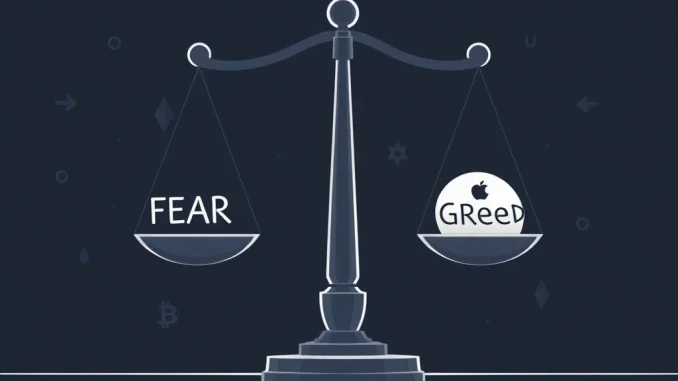
The cryptocurrency market often experiences significant fluctuations. Understanding investor psychology is crucial during these times. The Crypto Fear & Greed Index offers a valuable snapshot of prevailing market sentiment. It currently registers a score of 29. This figure firmly places sentiment in the “fear” category. This consistent reading from yesterday suggests a sustained cautious outlook among participants.
Understanding the Crypto Fear & Greed Index
The Crypto Fear & Greed Index is a widely referenced tool. It quantifies emotional states within the cryptocurrency market. Developed by Alternative.me, the index ranges from 0 (extreme fear) to 100 (extreme greed). A score of 29 signals notable apprehension. This particular reading highlights a cautious environment. Consequently, it often influences investor decisions. Historically, periods of extreme fear have sometimes preceded market bottoms. Conversely, extreme greed can signal overbought conditions. Thus, the index serves as a contrarian indicator for many. It suggests potential buying or selling opportunities.
Decoding Market Sentiment: What a Score of 29 Means
A score of 29 unequivocally places market sentiment in the “fear” zone. This means investors are generally risk-averse. They may be selling assets or refraining from new investments. This cautious stance often results from recent price drops or negative news. However, it is important to remember that fear can create opportunities. Legendary investor Warren Buffett advises being “fearful when others are greedy, and greedy when others are fearful.” This philosophy resonates with the index’s utility. Therefore, the current reading might encourage some long-term investors. The sustained level at 29 indicates a lack of immediate recovery in sentiment. Yesterday’s identical reading confirms this stability. Market participants are not quickly shifting towards optimism. This persistent fear can prolong consolidation phases. It might also lead to further price declines in the short term. Investors often watch this metric closely. They use it to inform their strategic decisions.
Key Factors Driving the Cryptocurrency Market Index
The Crypto Fear & Greed Index uses six distinct metrics. Each contributes to the overall score. Understanding these components clarifies the index’s accuracy.
- Volatility (25%): This measures current price drawdowns. It compares them to average values over 30 and 90 days. High volatility often signals fear.
- Market Volume (25%): High buying volumes in a rising market suggest greed. High selling volumes in a falling market indicate fear. The index analyzes current trading volume. It compares it with average volumes.
- Social Media Mentions (15%): The index monitors specific crypto-related hashtags. It analyzes their volume and sentiment. Increased negative mentions point to fear.
- Surveys (15%): Although currently paused, these polls previously asked investors about their market outlook. They provided direct sentiment data.
- Bitcoin Dominance (10%): A rising Bitcoin price dominance often signals fear. Investors move from altcoins to Bitcoin. They see Bitcoin as a safer haven. Conversely, falling dominance suggests greed. Funds flow into riskier altcoins.
- Google Search Volume (10%): The index tracks search trends for terms like “Bitcoin price manipulation.” Rising searches for such terms indicate fear. They suggest investor anxiety.
Bitcoin Price and Its Overarching Influence
The Bitcoin price holds significant sway over the entire cryptocurrency market. Its movements often dictate broader sentiment. When Bitcoin experiences sharp declines, the Fear & Greed Index typically drops. This occurs due to its dominance factor. Furthermore, Bitcoin’s volatility directly impacts the index’s largest component. Many altcoins often follow Bitcoin’s lead. Therefore, a bearish Bitcoin outlook generally translates to widespread market apprehension. A sustained low Bitcoin price can keep the index in the “fear” zone for extended periods. The correlation is undeniable. Bitcoin remains the bellwether asset. Its stability or instability sets the tone. Traders constantly monitor Bitcoin’s charts. They anticipate its impact on the index. Therefore, any analysis of the Crypto Fear & Greed Index must consider Bitcoin’s performance. It is a foundational element.
Navigating Periods of Extreme Fear in the Cryptocurrency Market
The current score of 29 signifies extreme fear. This environment can be challenging for investors. However, it also presents unique opportunities. Historically, some of the most profitable investments were made during periods of widespread panic. A low index score can indicate a potential buying opportunity. This is especially true for long-term investors. They look for undervalued assets. It is crucial to approach such periods with caution. Proper risk management is essential. Investors should avoid impulsive decisions. Instead, they might consider dollar-cost averaging. This strategy involves buying fixed amounts regularly. It helps mitigate volatility risks. Diversification also plays a vital role. Do not put all capital into one asset. Always conduct thorough research. Understand the underlying fundamentals of any investment. This measured approach helps navigate extreme fear effectively.
Conclusion
The Crypto Fear & Greed Index remains a critical barometer. Its current reading of 29 highlights persistent “fear” in the cryptocurrency market. This sentiment is shaped by multiple factors. Volatility, trading volume, social media, and Bitcoin price dominance all contribute. While fear can be unsettling, it also presents potential strategic entry points for astute investors. Understanding the index empowers market participants. It helps them make more informed decisions. Monitoring this metric offers valuable insights into the collective psyche of crypto investors.
Frequently Asked Questions (FAQs)
Q1: What is the Crypto Fear & Greed Index?
A1: The Crypto Fear & Greed Index is a tool by Alternative.me that measures the prevailing emotional state of the cryptocurrency market. It ranges from 0 (extreme fear) to 100 (extreme greed), using various data points to quantify market sentiment.
Q2: How is the Crypto Fear & Greed Index calculated?
A2: It is calculated based on six factors: volatility (25%), trading volume (25%), social media mentions (15%), surveys (15% – currently paused), Bitcoin’s market cap dominance (10%), and Google search volume (10%).
Q3: What does a score of 29 on the index mean?
A3: A score of 29 indicates that market sentiment is firmly in the “fear” category. This suggests that investors are generally cautious, risk-averse, and may be selling or holding back from new investments in the cryptocurrency market.
Q4: How does Bitcoin’s price influence the index?
A4: Bitcoin price movements significantly impact the index. Bitcoin’s volatility contributes to 25% of the score, and its market dominance (10%) reflects investor shifts between Bitcoin and altcoins. Strong Bitcoin performance often correlates with higher index scores, while declines typically push it into fear.
Q5: Can the Crypto Fear & Greed Index predict market movements?
A5: While not a definitive predictor, the index serves as a contrarian indicator for many. Periods of extreme fear (low scores) have historically coincided with potential buying opportunities, while extreme greed (high scores) might signal market tops. However, it should be used in conjunction with other analysis tools.