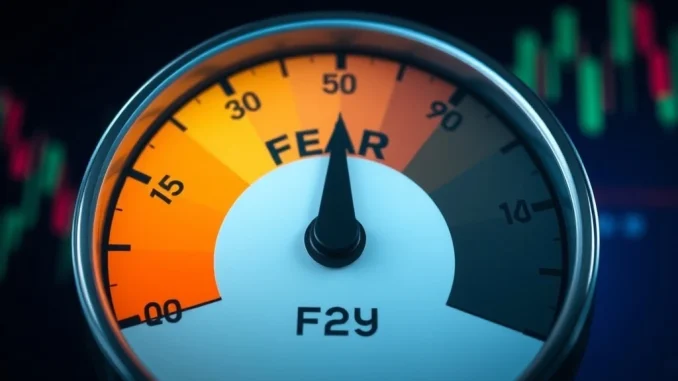
The cryptocurrency market is once again gripped by apprehension. The **Crypto Fear & Greed Index** recently plunged to 29, firmly placing the market in a state of ‘Fear’. This significant drop highlights the pervasive **market fear** among participants. Understanding this crucial indicator helps investors navigate volatile digital asset landscapes. It provides a snapshot of current **crypto market sentiment**.
Understanding the Crypto Fear & Greed Index Drop
The **Crypto Fear & Greed Index** has registered a notable decline. It fell five points from its previous reading, settling at 29. This movement confirms that fear continues to dominate market psychology. Such a low score indicates that investors are increasingly nervous. Many participants are likely selling their holdings. Others may hesitate to enter new positions.
The index serves as a valuable barometer. It measures the prevailing emotional state of the cryptocurrency market. A score of zero signifies ‘Extreme Fear’, while 100 represents ‘Extreme Greed’. Therefore, a reading of 29 places the market squarely in ‘Fear’ territory. This sentiment often precedes periods of price volatility. It can also signal potential buying opportunities for contrarian investors. However, caution remains paramount during such times.
How the Fear & Greed Index is Calculated
Alternative.me compiles the **Fear & Greed Index** using a sophisticated methodology. It combines multiple factors to provide a comprehensive view of **investor sentiment**. Each component carries a specific weighting. This ensures a balanced and accurate representation. The index’s calculation includes:
- Volatility (25%): This measures the current volatility and maximum drawdowns of Bitcoin. High volatility often signals a fearful market.
- Market Volume (25%): It compares current trading volume and market momentum with average values. Low volume during price drops can indicate fear. Conversely, high volume during rallies suggests greed.
- Social Media (15%): This analyzes sentiment from various social media platforms. It looks for specific keywords and engagement rates. Increased negative sentiment or ‘fud’ (fear, uncertainty, doubt) contributes to a lower score.
- Surveys (15%): While currently paused, these surveys historically gauged investor perceptions directly. They provided insights into market expectations.
- Bitcoin Dominance (10%): An increasing Bitcoin dominance often suggests a flight to safety. Investors move from altcoins to Bitcoin during periods of uncertainty. This indicates fear in the broader altcoin market.
- Google Search Trends (10%): This component tracks relevant search queries for Bitcoin. A surge in searches for terms like ‘Bitcoin crash’ or ‘how to sell Bitcoin’ indicates rising fear.
These diverse data points offer a holistic picture. They help to quantify an otherwise subjective concept like market sentiment. Investors use this index as one tool among many. It helps them make informed decisions.
Historical Context of Market Fear
Historically, low readings on the **Crypto Fear & Greed Index** have often coincided with significant market bottoms. For example, during major market corrections, the index frequently dips into ‘Extreme Fear’. This happened during the March 2020 crash and various bear market phases. Many experienced **crypto investors** view these periods as potential accumulation zones. They believe that maximum fear presents maximum opportunity.
Conversely, ‘Extreme Greed’ readings can signal an overheated market. These high scores often precede price corrections. Therefore, monitoring the index helps investors understand potential turning points. It is not a precise trading signal. Instead, it offers a psychological perspective. It informs investors about prevailing market emotions.
The current score of 29 reflects a continued cautious outlook. This sentiment suggests that recovery might take time. However, it also means that panic selling could create value for long-term holders. Every market cycle exhibits these patterns. Learning from past cycles is crucial for successful navigation.
Navigating Current Bitcoin Sentiment and Market Volatility
The current **Bitcoin sentiment** is undoubtedly impacted by the broader market fear. As Bitcoin often leads the cryptocurrency market, its sentiment heavily influences altcoins. When Bitcoin experiences significant fear, altcoins typically follow suit. Volatility remains a defining characteristic of the crypto space. The index specifically accounts for this factor.
High volatility can be a double-edged sword. It presents opportunities for quick gains. However, it also carries substantial risks. Investors must employ robust risk management strategies. Diversification and careful position sizing become even more critical during fearful periods. Furthermore, understanding the underlying reasons for volatility is essential. This includes macroeconomic factors, regulatory developments, and geopolitical events. These external forces frequently shape **crypto market sentiment**.
Implications for Crypto Investors and Future Outlook
The persistent ‘Fear’ signal from the **Crypto Fear & Greed Index** has several implications for **crypto investors**. First, it suggests that prices could remain suppressed or experience further dips. This creates a challenging environment for short-term traders. Second, it highlights potential opportunities for long-term investors. Buying assets during periods of fear can yield substantial returns in a subsequent bull market. However, such strategies require patience and conviction.
Furthermore, this prolonged period of fear can test investor resolve. Many new participants might feel overwhelmed. Seasoned investors, however, often view these phases as part of the market cycle. They focus on fundamental analysis and long-term trends. The index acts as a reminder. Emotions often drive market movements, but rational decision-making is key.
Looking ahead, a shift from ‘Fear’ to ‘Neutral’ or ‘Greed’ would signal a change in momentum. This transition often occurs gradually. It requires sustained positive news or significant price recovery. Until then, investors should remain vigilant. They must prioritize research and disciplined investing practices. The current environment demands careful consideration of every investment decision.
Beyond the Index: Factors Influencing Investor Sentiment
While the **Crypto Fear & Greed Index** is a powerful tool, it does not operate in isolation. Numerous other factors contribute to overall **investor sentiment**. Global economic conditions play a significant role. Inflation concerns, interest rate hikes, and recession fears can dampen enthusiasm for risk assets like cryptocurrencies. Regulatory uncertainty also weighs heavily on the market. Clear and favorable regulations could significantly boost confidence. Conversely, restrictive policies can induce fear.
Technological advancements and adoption rates also influence sentiment. Breakthroughs in blockchain technology or increased institutional adoption can foster optimism. Major security breaches or project failures, however, can quickly erode trust. Therefore, a holistic approach is necessary. Investors should consider the index alongside broader market analysis. This comprehensive view helps in making more informed choices.
In conclusion, the **Crypto Fear & Greed Index** dropping to 29 is a clear indicator of sustained **market fear**. This metric, derived from various market dynamics, offers a crucial lens into the collective psyche of crypto participants. While fear can be daunting, it also presents unique challenges and opportunities for discerning investors. Remaining informed and disciplined during these periods is essential for long-term success in the dynamic cryptocurrency market. Always conduct thorough research before making any investment decisions.
Frequently Asked Questions (FAQs)
What is the Crypto Fear & Greed Index?
The Crypto Fear & Greed Index is a tool that measures the current sentiment of the cryptocurrency market. It ranges from 0 (Extreme Fear) to 100 (Extreme Greed). It helps investors gauge whether the market is overly emotional or rational.
How is the Fear & Greed Index calculated?
It is calculated based on several weighted factors: volatility (25%), trading volume (25%), social media mentions (15%), surveys (15%), Bitcoin’s market capitalization dominance (10%), and Google search volume (10%).
What does a score of 29 on the index mean?
A score of 29 indicates that the market is in a state of ‘Fear’. This suggests that investors are cautious, nervous, and potentially selling their assets. It reflects a prevailing pessimistic outlook.
Should I buy or sell when the index shows ‘Fear’?
The index is not a direct buy or sell signal. Historically, periods of ‘Extreme Fear’ have often presented buying opportunities for long-term investors. Conversely, ‘Extreme Greed’ can signal potential market tops. However, investment decisions should always be based on thorough research and personal financial goals, not solely on this index.
Is the Crypto Fear & Greed Index accurate?
The index provides a valuable snapshot of market psychology. It aggregates multiple data points to offer a comprehensive view. While it is a useful indicator, it should be used in conjunction with other analytical tools and fundamental research for more accurate decision-making. It reflects sentiment, not guaranteed future price movements.