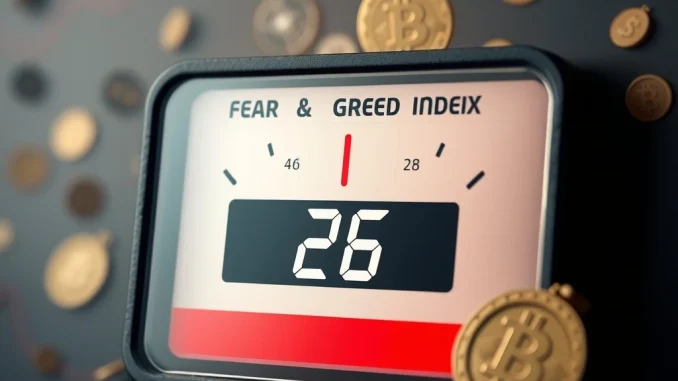
The cryptocurrency market often operates on a rollercoaster of emotions. Consequently, understanding the prevailing mood becomes crucial for investors. The **Crypto Fear & Greed Index** serves as a vital barometer for this very purpose. This essential tool, compiled by the data provider Alternative.me, recently dropped three points from yesterday, settling at 26. This score firmly places the market sentiment within the ‘Fear’ category, prompting closer examination by traders and long-term holders alike.
Understanding the Crypto Fear & Greed Index
The **Crypto Fear & Greed Index** offers a unique perspective on the cryptocurrency market’s emotional state. It distills complex market dynamics into a simple, easily understandable number. On a scale from 0 to 100, the index measures current market sentiment. A score of 0 signifies ‘Extreme Fear,’ indicating potential undervaluation and buying opportunities. Conversely, a score of 100 represents ‘Extreme Greed,’ often suggesting an overheated market ripe for correction.
This index acts as a counter-indicator for many seasoned investors. For instance, Warren Buffett famously advised being “fearful when others are greedy, and greedy when others are fearful.” Therefore, a low score on the **cryptocurrency index** might present opportunities for those with a long-term vision. The recent dip to 26, while not ‘Extreme Fear,’ certainly suggests a cautious environment. This current reading underscores a significant shift from more optimistic periods, demanding careful consideration.
Decoding the Index Components: What Drives Market Sentiment Crypto?
The **Crypto Fear & Greed Index** is not based on a single metric. Instead, it aggregates data from six key factors, each weighted differently. This comprehensive approach provides a holistic view of **market sentiment crypto**. Let’s explore these components:
- Volatility (25%): This measures the current volatility and maximum drawdowns of Bitcoin. High volatility often indicates increased fear in the market. Consequently, sharp price swings can unnerve investors.
- Market Volume (25%): High trading volumes in a negative market can signal strong selling pressure. Conversely, low volumes during price drops might suggest a lack of conviction from sellers. This component reflects the intensity of market activity.
- Social Media Mentions (15%): The index analyzes specific hashtags and keywords on social media platforms. A surge in negative sentiment or discussions about market crashes contributes to fear. Social media often amplifies collective emotions.
- Surveys (15%): While currently paused, these surveys historically gauged investor sentiment directly. They offered insights into individual perspectives on market direction. Future iterations may reintroduce this direct feedback.
- Bitcoin’s Market Dominance (10%): An increasing dominance of Bitcoin often signals a flight to safety. Investors typically move funds from altcoins into Bitcoin during uncertain times. Therefore, rising Bitcoin dominance can indicate **Bitcoin sentiment** is more resilient than the broader altcoin market, or that investors are de-risking.
- Google Search Trends (10%): The index monitors search queries related to Bitcoin and other cryptocurrencies. A sudden spike in searches for terms like “Bitcoin price manipulation” or “crypto crash” suggests growing fear. These trends offer a glimpse into public interest and concern.
Each component plays a vital role in painting the overall picture. Together, they provide a robust framework for assessing the current emotional state of the crypto market. This multi-faceted approach ensures a more accurate reflection of sentiment.
What Does a Score of 26 Signify for the Crypto Market Fear?
A score of 26 on the **Crypto Fear & Greed Index** places the market squarely in the ‘Fear’ category. This is a step above ‘Extreme Fear’ (0-24) but still indicates significant apprehension among investors. When the index is in ‘Fear,’ several scenarios typically unfold. For example, many investors may feel hesitant to buy, fearing further price declines. They might even engage in panic selling, exacerbating downward pressure on prices.
Historically, periods of heightened **crypto market fear** have often preceded market bottoms or significant accumulation phases. While not a guarantee, experienced traders often view such times as potential opportunities. They look for undervalued assets, employing a contrarian strategy. However, this approach carries inherent risks. A prolonged period of fear can lead to further declines, testing even the most resilient investors. Therefore, careful research and risk management remain paramount.
Historical Context of the Crypto Fear & Greed Index
Examining past movements of the **Crypto Fear & Greed Index** offers valuable insights. During bull runs, the index frequently surges into the ‘Greed’ or ‘Extreme Greed’ zones, sometimes reaching scores in the 80s or 90s. These periods are often characterized by euphoric buying, high trading volumes, and widespread optimism. Conversely, during significant market corrections or bear markets, the index typically plunges into ‘Fear’ or ‘Extreme Fear,’ often staying there for extended periods.
For example, during the sharp market downturns of 2018 or more recently in 2022, the index frequently hit single digits. These low scores reflected widespread panic and capitulation. Following such extreme fear, markets often found their bottom, eventually leading to recovery. However, the timing of these recoveries is never certain. The index serves as a reminder that market cycles are driven by human emotion, oscillating between hope and despair. Monitoring the index allows investors to gauge the collective emotional state and potentially act against the crowd.
Navigating Market Fear: Strategies for Investors
When the **cryptocurrency index** signals fear, investors face a critical juncture. Emotional decisions often lead to losses. Therefore, adopting a disciplined approach becomes essential. Here are some strategies often considered during periods of market fear:
- Dollar-Cost Averaging (DCA): Instead of making a large, single investment, DCA involves investing a fixed amount of money at regular intervals. This strategy helps mitigate the risk of buying at a market top. It also allows investors to accumulate more assets when prices are low, which is common during periods of fear.
- Thorough Research: Market downturns provide an excellent opportunity for in-depth research. Investors can identify projects with strong fundamentals, solid technology, and clear use cases. Focusing on intrinsic value rather than short-term price movements can lead to better long-term outcomes.
- Risk Management: Never invest more than you can afford to lose. During fearful markets, volatility can be extreme. Setting stop-loss orders or diversifying portfolios can help manage potential losses. Maintaining a balanced portfolio across different asset classes is also a wise approach.
- Avoiding Emotional Decisions: The primary goal of using the **Crypto Fear & Greed Index** is to counteract emotional trading. When fear grips the market, it is easy to panic sell. Conversely, during periods of greed, over-exuberance can lead to impulsive buying. Stick to a pre-defined investment plan and avoid reacting to daily price swings.
- Long-Term Perspective: Cryptocurrency markets are known for their volatility. Short-term fluctuations are common. However, many successful investors maintain a long-term view, focusing on the growth potential over several years. This perspective helps weather market storms and reduces the impact of short-term fear.
Impact on Different Cryptocurrencies
While the **Crypto Fear & Greed Index** heavily relies on Bitcoin data, its reading profoundly impacts the broader cryptocurrency ecosystem. Bitcoin often acts as the market leader. When **Bitcoin sentiment** turns fearful, altcoins typically follow suit, often with even greater volatility. This is due to Bitcoin’s dominant market share and its role as a benchmark asset.
During periods of fear, investors often de-risk. They might sell off smaller, more speculative altcoins first. This flight to quality can sometimes lead to a temporary increase in Bitcoin’s dominance. However, if the fear persists, even Bitcoin can experience significant declines. Understanding this dynamic is crucial for altcoin investors. They must recognize that their holdings are often highly correlated with Bitcoin’s performance, especially during market downturns. Diversification within the altcoin space, or a higher allocation to more established projects, can be considered.
The Broader Economic Landscape and Crypto Fear
Cryptocurrency markets do not exist in a vacuum. They are increasingly influenced by the broader macroeconomic environment. Therefore, understanding global economic trends is essential when interpreting the **Crypto Fear & Greed Index**. Factors such as inflation, interest rate hikes, geopolitical tensions, and regulatory news can significantly impact investor sentiment. For example, when central banks signal tighter monetary policies, investors often become risk-averse. This can lead to a withdrawal of capital from riskier assets like cryptocurrencies, pushing the index into fear.
Conversely, periods of economic expansion and loose monetary policy tend to fuel speculative investments, often driving the index into greed. The current economic climate, marked by ongoing inflation concerns and potential recessionary fears in various regions, contributes significantly to the prevailing **crypto market fear**. Investors are becoming more cautious, allocating capital to less volatile assets. This interplay between traditional finance and crypto markets highlights the increasing maturity and integration of digital assets into the global financial system.
In conclusion, the recent drop of the **Crypto Fear & Greed Index** to 26 serves as a clear indicator of sustained fear within the cryptocurrency market. This metric provides a valuable, objective snapshot of investor sentiment. While such periods can be challenging, they also present opportunities for well-informed and disciplined investors. By understanding the index’s components, historical context, and the broader economic influences, market participants can make more strategic decisions. Ultimately, navigating these emotional market cycles effectively requires a blend of data analysis, patience, and a long-term perspective.
Frequently Asked Questions (FAQs)
Q1: What is the Crypto Fear & Greed Index?
The Crypto Fear & Greed Index is a tool that measures the current sentiment of the cryptocurrency market. It ranges from 0 (Extreme Fear) to 100 (Extreme Greed) and helps investors gauge whether the market is overly pessimistic or optimistic, often acting as a contrarian indicator.
Q2: How is the Crypto Fear & Greed Index calculated?
The index is calculated using six weighted factors: volatility (25%), market volume (25%), social media mentions (15%), surveys (15%), Bitcoin’s market dominance (10%), and Google search trends (10%). These components collectively reflect the prevailing **market sentiment crypto**.
Q3: What does a score of 26 on the index mean?
A score of 26 falls into the ‘Fear’ category. This indicates that investors are currently feeling apprehensive and cautious about the market. It suggests potential undervaluation but also the possibility of further price declines due to widespread **crypto market fear**.
Q4: How can investors use the Crypto Fear & Greed Index?
Investors often use the index as a contrarian indicator. For example, a low score (fear) might suggest a good time to consider buying, while a high score (greed) might signal a time to be cautious or consider selling. It helps to make decisions less emotionally driven, especially concerning **Bitcoin sentiment**.
Q5: Is the Crypto Fear & Greed Index only relevant for Bitcoin?
While Bitcoin’s data heavily influences the index due to its market dominance, the index reflects overall cryptocurrency market sentiment. Changes in the index typically impact altcoins as well, as they often follow Bitcoin’s price movements. Therefore, it is a valuable **cryptocurrency index** for the entire market.
Q6: What other factors influence the Crypto Fear & Greed Index?
Beyond its direct components, the index is also influenced by broader macroeconomic factors. These include inflation rates, interest rate policies from central banks, global geopolitical events, and significant regulatory news. These external factors can significantly shift overall investor confidence and contribute to market fear or greed.