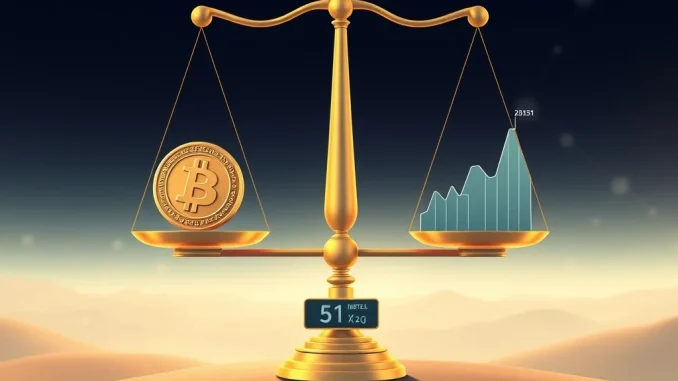
The dynamic world of **cryptocurrency** constantly generates headlines. Investors closely monitor various indicators to gauge the market’s pulse. One such crucial tool is the **Crypto Fear & Greed Index**. This widely followed metric recently registered a significant shift. It moved from a state of ‘Fear’ into the ‘Neutral’ zone, hitting a score of 51. This change reflects an evolving **market sentiment** among participants. It suggests a more balanced outlook on digital assets. Understanding this index helps decode broader market psychology.
Decoding the Crypto Fear & Greed Index
The **Crypto Fear & Greed Index** offers a snapshot of current **market sentiment**. It distills complex data into a single, easily understandable number. Developed by Alternative.me, the index ranges from zero to 100. Zero represents ‘Extreme Fear,’ while 100 signifies ‘Extreme Greed.’ A score of 51, as seen recently, places the market squarely in the ‘Neutral’ category. This indicates a period of indecision or balanced views among investors. Many factors contribute to this composite score. These elements paint a comprehensive picture of prevailing investor psychology. They move beyond simple price action.
The index’s methodology combines several key market factors. Each factor holds a specific weighting in the calculation. Understanding these components is essential. They reveal the underlying drivers of **investor sentiment**. The shift to neutral suggests a lessening of panic. It also indicates a reduction in irrational exuberance. Instead, a more cautious optimism or balanced perspective emerges. This phase often precedes significant market movements. Therefore, traders and long-term holders alike pay close attention.
Key Components Shaping Market Sentiment
The **Crypto Fear & Greed Index** relies on six distinct metrics. Each metric provides unique insights into the market’s mood. These components are weighted differently to create the final score. Let’s explore these foundational elements:
- Volatility (25%): This measures the current price fluctuations of **Bitcoin**. It compares these movements to average values over the last 30 and 90 days. High volatility often signals fear in a downtrend. Conversely, it can indicate greed during rapid uptrends.
- Market Volume (25%): High trading volumes in a rising market often suggest greedy or confident investors. Similarly, high volumes during a price drop can indicate panic selling. This component analyzes current trading activity compared to historical averages.
- Social Media Mentions (15%): This factor scans various social media platforms. It looks for specific keywords related to **cryptocurrency**. A surge in positive or negative mentions can signal a shift in public interest and sentiment.
- Surveys (15%): Although currently paused, this component previously gathered direct feedback. It asked investors about their perceptions of the market. These surveys provided a direct gauge of individual **investor sentiment**.
- Bitcoin Dominance (10%): This metric tracks **Bitcoin’s** share of the total **cryptocurrency** market capitalization. Rising dominance often indicates fear. Investors typically move funds into Bitcoin as a perceived safe haven. Falling dominance, however, can suggest growing confidence in altcoins.
- Google Search Volume (10%): This analyzes search trends for crypto-related terms. A spike in searches for phrases like ‘Bitcoin price manipulation’ or ‘crypto crash’ suggests fear. Conversely, increased searches for ‘buy Bitcoin’ or ‘crypto investment’ can indicate growing interest or greed.
The Significance of a Neutral Reading for Bitcoin and Crypto
A score of 51 on the **Crypto Fear & Greed Index** is noteworthy. It represents a pivot point from ‘Fear’ to ‘Neutral.’ Previously, the market experienced higher levels of apprehension. This shift suggests that extreme bearish sentiment has somewhat subsided. Investors are no longer in a state of widespread panic. Furthermore, it indicates that overly bullish sentiment has not yet taken hold. The market finds itself in a period of equilibrium. This neutral stance can be interpreted in several ways. It reflects a period of consolidation. It might also precede a more decisive move. Many traders consider ‘Neutral’ as a wait-and-see period. They observe for clearer signals before committing significant capital.
Historically, extreme fear often presents buying opportunities. When the index drops very low, prices typically hit bottoms. Conversely, extreme greed often precedes market corrections. Prices often become overextended at these peaks. A neutral reading suggests neither extreme is dominating. This balance allows for more rational decision-making. It also indicates less emotional trading activity. Therefore, the current 51 reading offers valuable context. It informs strategies for various **cryptocurrency** assets, not just **Bitcoin**.
Navigating Neutral Market Sentiment: What it Means for Investors
The transition to ‘Neutral’ **market sentiment** provides a different landscape for investors. It differs significantly from periods of ‘Fear’ or ‘Greed.’ During fearful times, selling pressure intensifies. During greedy periods, buying frenzies occur. A neutral environment fosters a more analytical approach. Investors may choose to re-evaluate their portfolios. They might consider rebalancing strategies. This period is often characterized by sideways price action. It can also involve smaller, less dramatic swings. Understanding this environment helps manage expectations.
Furthermore, a neutral reading can signify underlying strength. It shows the market’s ability to recover from previous fear. It suggests resilience. This resilience is important for the long-term health of the **cryptocurrency** ecosystem. It provides a stable base for potential future growth. However, it does not guarantee an immediate bull run. Instead, it highlights a moment of stability. This stability can be beneficial for careful planning. Many experienced investors view neutral periods as ideal for accumulation. They might slowly build positions. This approach avoids the pitfalls of emotional buying or selling. Therefore, the 51 reading empowers more deliberate investment choices.
The Role of Bitcoin in the Fear & Greed Index
While the **Crypto Fear & Greed Index** is broad, **Bitcoin** plays a disproportionately large role. Bitcoin’s price movements heavily influence the index’s volatility and volume components. Its market dominance also directly contributes to the score. As the largest **cryptocurrency** by market capitalization, Bitcoin often acts as a bellwether. Its performance frequently dictates the overall direction of the market. Therefore, shifts in Bitcoin’s price action directly impact the index’s reading. A stable Bitcoin price can contribute to a neutral score. Conversely, sharp movements can push the index towards fear or greed.
Many investors view Bitcoin as a primary indicator of broader crypto health. When Bitcoin’s dominance rises, it often suggests a flight to safety. Investors move away from riskier altcoins. This indicates fear. When Bitcoin’s dominance falls, it can signal increased confidence. Investors feel comfortable allocating capital to smaller cap projects. This often indicates greed or a risk-on environment. The current neutral reading implies a balanced view towards Bitcoin. It suggests neither extreme optimism nor pessimism prevails for the dominant asset. This balanced perspective can set the stage for subsequent market trends.
Beyond the Index: Comprehensive Investor Sentiment Analysis
While the **Crypto Fear & Greed Index** is a powerful tool, it is not the only metric. Savvy investors use a range of indicators for a complete picture. Technical analysis charts provide price patterns and trend lines. On-chain data offers insights into network activity and wallet movements. Macroeconomic factors also influence **investor sentiment**. Global inflation rates, interest rate decisions, and geopolitical events all play a part. Therefore, combining these various analyses leads to more informed decisions. The index serves as an excellent starting point. It offers a quick, accessible gauge of market mood. However, deeper dives into other data sources are always recommended. This comprehensive approach ensures a well-rounded understanding. It helps investors navigate the complexities of the **cryptocurrency** market more effectively.
Furthermore, understanding individual risk tolerance is crucial. Different investors react differently to market signals. A neutral reading might encourage some to enter the market. Others might prefer to wait for clearer trends. The index simply reports the collective sentiment. It does not provide investment advice. Each individual must assess their own financial situation. They must also consider their investment goals. This personalized approach, combined with objective market data, yields the best results. It fosters responsible and strategic participation in the **cryptocurrency** space.
The Future Outlook: What a Neutral Index Implies
The shift to a ‘Neutral’ **Crypto Fear & Greed Index** reading marks an interesting juncture. It suggests a temporary pause in extreme emotional trading. This period of balance can be a precursor to future trends. It might indicate a market consolidating before a new direction emerges. The absence of overwhelming fear or greed creates a unique environment. It allows for a more rational assessment of fundamentals. Project developments, regulatory news, and technological advancements might gain more prominence. These factors can influence the next major shift in **market sentiment**. Investors should remain vigilant. They should monitor for any sustained moves. A prolonged stay in the neutral zone could signal stability. Alternatively, a rapid move back to either extreme would demand attention. Such a move would indicate a significant change in collective **investor sentiment**.
Ultimately, the index remains a valuable barometer. It measures the collective emotional state of the **cryptocurrency** market. Its current neutral position reflects a moment of equilibrium. This balance can offer opportunities for strategic planning. It encourages a thoughtful approach to investment. As the market evolves, the index will continue to provide critical insights. It helps participants understand the prevailing mood. This understanding is essential for navigating the volatile world of digital assets. Staying informed about the **Crypto Fear & Greed Index** helps investors make smarter choices.
Frequently Asked Questions (FAQs)
What does the Crypto Fear & Greed Index measure?
The **Crypto Fear & Greed Index** measures current **market sentiment** in the **cryptocurrency** space. It combines various data points into a single score. This score indicates whether investors feel fear or greed.
How is the Crypto Fear & Greed Index calculated?
It is calculated based on six weighted factors: volatility (25%), trading volume (25%), social media mentions (15%), surveys (15%), **Bitcoin’s** market cap dominance (10%), and Google search volume (10%).
What does a ‘Neutral’ score of 51 mean for investors?
A ‘Neutral’ score of 51 suggests balanced **investor sentiment**. It indicates neither extreme fear nor extreme greed. This period often involves market consolidation or indecision. It can be a time for careful portfolio evaluation.
Is the Crypto Fear & Greed Index only relevant for Bitcoin?
While **Bitcoin** significantly influences the index due to its market dominance and trading volume, the index reflects overall **cryptocurrency** **market sentiment**. It provides insights relevant to the broader digital asset space.
Should I base my investment decisions solely on the Crypto Fear & Greed Index?
No, the index is a useful tool but should not be the sole basis for investment decisions. Investors should combine its insights with technical analysis, on-chain data, macroeconomic factors, and personal risk assessment for a comprehensive strategy.
How often does the Crypto Fear & Greed Index update?
The **Crypto Fear & Greed Index** typically updates daily. This provides up-to-date insights into shifting **market sentiment**.