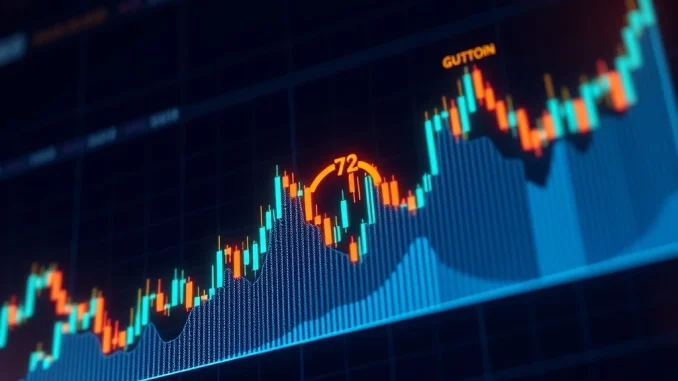
The Crypto Fear & Greed Index remains firmly in the ‘Greed’ zone at 73, unchanged from the previous day. What does this mean for Bitcoin and altcoin investors? Let’s dive into the implications.
What Is the Crypto Fear & Greed Index?
The Crypto Fear & Greed Index measures market sentiment on a scale from 0 (extreme fear) to 100 (extreme greed). Currently at 73, the index suggests strong bullish momentum. Here’s how it breaks down:
- Volatility (25%) – Price swings influence sentiment.
- Market Momentum/Volume (25%) – High trading activity signals greed.
- Social Media (15%) – Positive chatter fuels optimism.
- Surveys (15%) – Currently paused.
- Bitcoin Dominance (10%) – BTC’s market share impacts sentiment.
- Google Trends (10%) – Search interest reflects retail FOMO.
Why Is the Bitcoin Market Sentiment Stuck in Greed?
With Bitcoin holding steady above key support levels and altcoins rallying, traders remain optimistic. However, prolonged greed can signal overconfidence—historically, extreme greed precedes corrections.
How Does Cryptocurrency Greed Affect Your Portfolio?
When the market is greedy, investors often chase high-risk assets. Key considerations:
- Profit-taking opportunities – Consider securing gains.
- Increased volatility – Prepare for sudden swings.
- Altcoin surges – Smaller coins may outperform.
Bitcoin Dominance and Market Volatility
Bitcoin’s dominance (10% weight in the index) plays a role in sentiment. If BTC consolidates, altcoins may rally further—but watch for reversals.
Conclusion: Should You Follow the Crowd?
While greed fuels rallies, smart investors stay cautious. Monitor the Crypto Fear & Greed Index for shifts, and always balance risk.
FAQs
1. What does a Crypto Fear & Greed Index of 73 mean?
A score of 73 indicates strong greed, suggesting investors are bullish but may be overextended.
2. How often is the Fear & Greed Index updated?
The index updates daily, tracking real-time market data.
3. Can the index predict Bitcoin price crashes?
Extreme greed often precedes pullbacks, but it’s not a precise timing tool.
4. Why are surveys paused in the index calculation?
Alternative, the index provider, has temporarily halted survey inputs for accuracy.