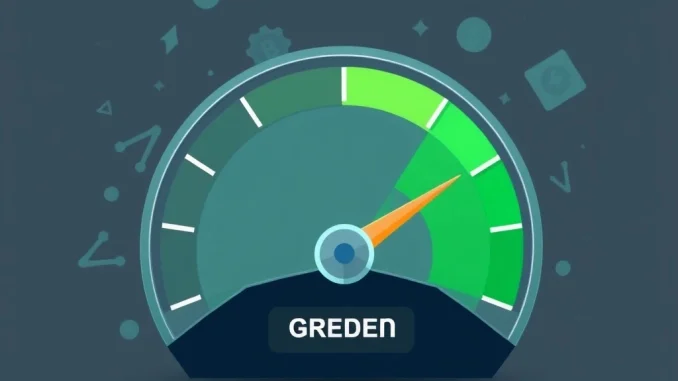
The cryptocurrency market often reflects a fascinating interplay of human emotions. Investors constantly seek indicators to gauge the prevailing mood. Currently, the Crypto Fear & Greed Index provides valuable insight into this sentiment. It recently climbed to 75, placing the market firmly within the ‘Greed’ zone. This significant shift signals increased confidence among participants. Understanding this index is crucial for anyone navigating the volatile crypto landscape.
Understanding the Crypto Fear & Greed Index
The Crypto Fear & Greed Index is a powerful tool. It offers a clear snapshot of prevailing market sentiment. Developed by Alternative, a software development platform, this index ranges from 0 to 100. A reading of 0 indicates extreme fear. Conversely, 100 signifies extreme greed. As of August 14, the index stood at 75. This marked a two-point increase from the previous day. Such a reading suggests that investors are becoming more optimistic. They are also showing increased willingness to buy.
This index serves as a barometer for the crypto market. It helps investors understand the collective emotional state. Extreme fear often suggests a buying opportunity. Prices may be undervalued. On the other hand, extreme greed might signal an impending correction. Prices could be overvalued. Therefore, tracking this index helps many traders make informed decisions. It provides a quick visual summary of market psychology.
Factors Influencing Crypto Market Sentiment
The Crypto Fear & Greed Index is not based on a single metric. Instead, it aggregates data from six distinct factors. Each factor contributes to the overall score. This comprehensive approach ensures a balanced perspective. These factors are:
- Volatility (25%): This measures the current price fluctuations of Bitcoin. It compares them with average values over the last 30 and 90 days. Higher volatility often indicates fear.
- Market Momentum/Volume (25%): This factor analyzes current volume and market momentum. It compares them with recent averages. High buying volume suggests greed.
- Social Media (15%): The index monitors specific hashtags and posts on social media. It counts the number of posts related to Bitcoin. It also measures the speed of interactions.
- Surveys (15%): This component involves weekly polls. These surveys ask users about their market perceptions. However, this factor is currently paused.
- Bitcoin Dominance (10%): This measures Bitcoin’s share of the total crypto market cap. A rising Bitcoin dominance can indicate fear. Investors often move to Bitcoin as a safe haven.
- Google Trends (10%): This analyzes Google search queries related to Bitcoin. It looks for changes in search volumes. Rising search interest often correlates with increased market attention.
Each component plays a vital role. They collectively paint a picture of the current market mood. The index’s methodology aims for accuracy. It provides a robust measure of investor sentiment.
Analyzing Bitcoin Dominance and Its Impact
Bitcoin’s role in the crypto market is undeniable. Its dominance significantly influences the overall sentiment. The Bitcoin dominance factor within the index is crucial. It reflects Bitcoin’s market capitalization relative to the entire cryptocurrency market. When Bitcoin dominance rises, it often suggests a flight to safety. Investors might be selling altcoins. They then move their capital into Bitcoin. This typically happens during periods of uncertainty or fear. Bitcoin is often perceived as a less risky asset compared to altcoins. It has a longer track record and higher liquidity.
Conversely, a declining Bitcoin dominance can indicate a shift. Investors might be moving into altcoins. This often occurs during bull markets. Altcoins tend to outperform Bitcoin during these phases. The current high index reading suggests confidence across the market. This includes Bitcoin’s strong position. It indicates that investors are not necessarily seeking a safe haven. Instead, they are embracing broader market opportunities. Understanding Bitcoin dominance helps gauge overall market health. It shows where capital is flowing.
Navigating Market Momentum and Volatility
Two key components of the Crypto Fear & Greed Index are market momentum and volatility index. These factors together account for 50% of the index’s weight. They provide significant insights into market dynamics. Market momentum assesses the speed and strength of price movements. High momentum, especially with strong buying volume, suggests a bullish trend. It indicates that buyers are in control. This contributes positively to the ‘Greed’ score.
Volatility, on the other hand, measures price fluctuations. While some volatility is normal, extreme swings can signal instability. High volatility often correlates with fear. Investors become uncertain about future price directions. However, a controlled level of volatility can also indicate a healthy, active market. The index carefully weighs these elements. It determines their collective impact on sentiment. The current index reading of 75 implies that positive momentum outweighs any negative volatility concerns. This suggests a relatively stable yet upward-trending market. Investors are showing confidence in current price action. They anticipate further gains.
What the Greed Zone Means for Investors
The Crypto Fear & Greed Index standing at 75 is a clear signal. The market is in a state of ‘Greed.’ This zone suggests that investors are optimistic. They are actively buying assets. Prices tend to rise during these periods. However, it also carries a cautionary note. Extreme greed can lead to irrational exuberance. This might result in market bubbles. Smart investors use this information carefully. They avoid emotional decisions. They understand that what goes up can also come down. The ‘Greed’ zone encourages careful analysis. It does not guarantee continued gains. It is important to consider individual risk tolerance. Develop a robust investment strategy. Do not simply follow the crowd. While current sentiment is positive, market conditions can change quickly.
The index is a tool, not a crystal ball. It reflects the current emotional state of the market. It does not predict future prices with certainty. Therefore, investors should combine this insight with other fundamental and technical analysis. This holistic approach leads to more informed trading decisions. Staying in the ‘Greed’ zone can attract new capital. It can also amplify existing trends. However, awareness of potential reversals remains paramount.
Conclusion: Monitoring Market Sentiment
The Crypto Fear & Greed Index provides a valuable lens. It helps understand the collective mood of the crypto market. Its current position at 75, firmly in the ‘Greed’ zone, reflects strong investor confidence. This sentiment is driven by various factors. These include market momentum, Bitcoin dominance, and volatility. While positive, such readings also warrant caution. Investors should use this data wisely. They must integrate it into their broader investment strategy. The crypto market remains dynamic. Therefore, continuous monitoring of key indicators is essential. This helps in making timely and informed decisions. Stay updated on market shifts. Adapt strategies as sentiment evolves.
Frequently Asked Questions (FAQs)
Q1: What is the Crypto Fear & Greed Index?
The Crypto Fear & Greed Index is a tool that measures the prevailing emotional state of the cryptocurrency market. It ranges from 0 (extreme fear) to 100 (extreme greed) and aggregates data from multiple factors to provide a single sentiment score.
Q2: How is the Crypto Fear & Greed Index calculated?
The index considers six main factors: volatility (25%), market momentum/volume (25%), social media (15%), surveys (15% – currently paused), Bitcoin dominance (10%), and Google Trends (10%). Each factor contributes a weighted percentage to the final score.
Q3: What does an index reading of 75 (Greed) signify?
An index reading of 75 indicates a strong ‘Greed’ sentiment in the market. This means investors are generally optimistic, confident, and actively buying cryptocurrencies. It often correlates with rising prices and strong market momentum.
Q4: Should investors buy when the index is in ‘Greed’ mode?
While ‘Greed’ indicates positive market sentiment, it also suggests caution. Historically, extreme greed can precede market corrections. Investors should use the index as one tool among many. They should combine it with their own research and risk management strategies. Avoid making impulsive decisions based solely on sentiment.
Q5: How does Bitcoin dominance affect the index?
Bitcoin dominance measures Bitcoin’s market share. A rising dominance can signal fear, as investors might be moving to Bitcoin as a safe haven. A falling dominance, especially during a bull market, can indicate money flowing into altcoins. This factor helps gauge broader market shifts and investor preferences.