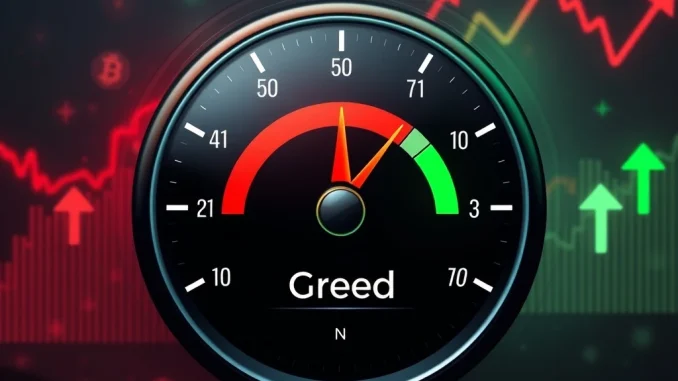
The cryptocurrency market constantly evolves. Therefore, understanding investor psychology becomes crucial. The **Crypto Fear & Greed Index** offers valuable insights. This tool helps gauge prevailing **crypto market sentiment**. Recently, the index registered 60. This reading indicates a persistent state of ‘Greed’.
Understanding the Crypto Fear & Greed Index
The **Crypto Fear & Greed Index** provides a snapshot of the cryptocurrency market’s emotional state. Software development platform Alternative offers this widely recognized metric. It ranges from 0 to 100. A score of 0 signifies ‘Extreme Fear’. Conversely, a score of 100 represents ‘Extreme Greed’. This index helps investors understand whether the market feels overly fearful or overly euphoric. It serves as a counter-indicator for many. When the market shows extreme fear, it can signal a buying opportunity. When extreme greed prevails, it might suggest a market correction is due. Therefore, monitoring this index is vital for informed decision-making.
As of August 18, the index stood at 60. This marks a four-point decrease from the previous day. Despite this slight dip, the index remains firmly within the ‘Greed’ zone. This suggests that positive sentiment still dominates. Investors generally feel confident. They continue to accumulate assets. However, persistent greed can sometimes lead to irrational exuberance. This might precede price corrections. Thus, a balanced perspective is essential.
Key Factors Influencing Market Volatility
The **Crypto Fear & Greed Index** incorporates several critical factors. Each factor contributes to the overall score. These elements provide a comprehensive view of **crypto market sentiment**. Understanding them reveals how the index calculates its daily reading. Here are the primary components:
Volatility (25%): This factor measures current **market volatility**. It compares current Bitcoin price fluctuations to average historical values. Higher volatility often indicates fear or uncertainty. Conversely, lower volatility can suggest stability. A significant increase in volatility typically pushes the index towards ‘Fear’.
Market Momentum/Volume (25%): This component assesses the market’s overall health. It analyzes trading volume and market momentum. High buying volumes in a rising market indicate strong positive sentiment. Low volumes or declining prices suggest fear. Strong momentum usually drives the index towards ‘Greed’.
Social Media (15%): The index analyzes cryptocurrency-related hashtags on social media. It specifically looks at Twitter trends. Increased discussion and positive sentiment on social platforms contribute to a higher ‘Greed’ score. Negative sentiment, conversely, pulls it towards ‘Fear’.
Decoding the Current Crypto Greed Zone
A reading of 60 firmly places the market in the **crypto greed zone**. This indicates a prevailing sense of optimism. Investors feel confident. They expect further price increases. Historically, prolonged periods of ‘Greed’ can precede market pullbacks. Therefore, caution remains advisable. The market often experiences corrections after extended bullish runs. This pattern suggests that while optimism is good, over-optimism can be risky. Investors should always consider their risk tolerance. They must also conduct thorough research. This prevents impulsive decisions driven by euphoria.
Currently, the index reflects a resilient mood. Despite recent price movements, the overall sentiment holds strong. This suggests underlying confidence in the crypto space. However, it also highlights the need for prudence. The market can shift quickly. Sudden news or regulatory changes can alter sentiment. Thus, staying informed is paramount. Investors must balance enthusiasm with strategic planning. This approach helps navigate the dynamic crypto landscape effectively.
Bitcoin Dominance and Broader Market Trends
Bitcoin dominance plays a significant role in the index’s calculation (10%). Bitcoin’s market capitalization relative to the total crypto market cap influences this factor. When Bitcoin’s dominance increases, it often indicates a flight to safety. Investors might be moving from altcoins to Bitcoin. This can sometimes signal caution. Conversely, a decrease in Bitcoin dominance often suggests a flourishing altcoin market. This can indicate increased risk appetite. The index considers this dynamic. It helps reflect broader market sentiment beyond just price movements.
Another crucial factor is Google Trends (10%). This component analyzes search queries related to cryptocurrencies. High search interest for terms like ‘Bitcoin price’ or ‘buy crypto’ can indicate growing public interest. Such interest often correlates with rising prices. Therefore, it contributes to a higher ‘Greed’ score. Conversely, declining search interest might suggest waning enthusiasm. This would push the index towards ‘Fear’. These combined factors offer a holistic view of the market’s emotional state. They provide valuable context for investors.
It is worth noting that the surveys factor (15%) is currently paused. This means the index relies on the other five components more heavily. Despite this, the index remains a robust indicator. Its methodology ensures a comprehensive assessment of market psychology. The pause in surveys does not diminish its overall accuracy. It continues to provide reliable insights into prevailing market conditions.
Navigating Market Sentiment: Investor Insights
The **Crypto Fear & Greed Index** serves as a valuable tool. It helps investors gauge the collective mood. However, it should not be the sole basis for investment decisions. It offers a supplementary perspective. Investors should combine this insight with fundamental analysis. Technical analysis also provides crucial data. Understanding market cycles is also important. These combined approaches lead to more informed choices. Relying only on sentiment can be misleading. Markets are complex. Many factors influence price action. Therefore, a multi-faceted approach is always best.
When the index shows ‘Greed’, consider taking profits. Alternatively, rebalance your portfolio. This proactive approach manages risk. Conversely, ‘Extreme Fear’ might present buying opportunities. This strategy aligns with the adage: ‘Be fearful when others are greedy, and greedy when others are fearful.’ Ultimately, the index helps investors avoid emotional traps. It encourages a more rational approach to market participation. This fosters long-term success.
The **Crypto Fear & Greed Index** remains a powerful barometer. It accurately reflects prevailing **crypto market sentiment**. Its current reading of 60 indicates continued ‘Greed’. This suggests optimism still drives investor behavior. However, prudent investors recognize the need for caution. They understand the potential for increased **market volatility**. They also monitor factors like **Bitcoin dominance**. By using the index wisely, investors can better navigate the dynamic cryptocurrency landscape. This leads to more strategic and less emotional investment decisions.
Frequently Asked Questions (FAQs)
What is the Crypto Fear & Greed Index?
The Crypto Fear & Greed Index is a tool that measures the emotional state of the cryptocurrency market. It ranges from 0 (Extreme Fear) to 100 (Extreme Greed), helping investors understand whether the market is overly fearful or overly euphoric.
How is the Crypto Fear & Greed Index calculated?
The index considers six main factors: volatility (25%), market momentum/volume (25%), social media (15%), surveys (15% – currently paused), Bitcoin dominance (10%), and Google Trends (10%). Each factor contributes to the final score, reflecting various aspects of market sentiment.
What does a ‘Greed’ reading (like 60) mean for the crypto market?
A ‘Greed’ reading indicates that investors are feeling optimistic and confident, expecting further price increases. While this suggests positive momentum, prolonged periods of ‘Greed’ can sometimes signal that the market is overbought and might be due for a correction, prompting caution among investors.
How does Bitcoin dominance affect the index’s score?
Bitcoin dominance, which accounts for 10% of the index, measures Bitcoin’s market capitalization relative to the total crypto market. An increase in Bitcoin dominance can sometimes indicate a shift to safer assets, while a decrease might suggest growing interest and risk appetite in altcoins, both influencing the overall sentiment score.
Should investors solely rely on the Crypto Fear & Greed Index for decisions?
No, the Crypto Fear & Greed Index should not be the sole basis for investment decisions. It serves as a valuable supplementary tool to gauge market sentiment. Investors should combine its insights with fundamental analysis, technical analysis, and their own risk assessment for a more comprehensive and informed investment strategy.