The cryptocurrency landscape constantly evolves. Understanding its pulse is crucial for investors. Recently, the Crypto Fear & Greed Index signaled a notable shift. This key indicator moved to a neutral reading of 50. This change reflects a significant improvement in overall investor sentiment across the digital asset space.
Understanding the Crypto Fear & Greed Index
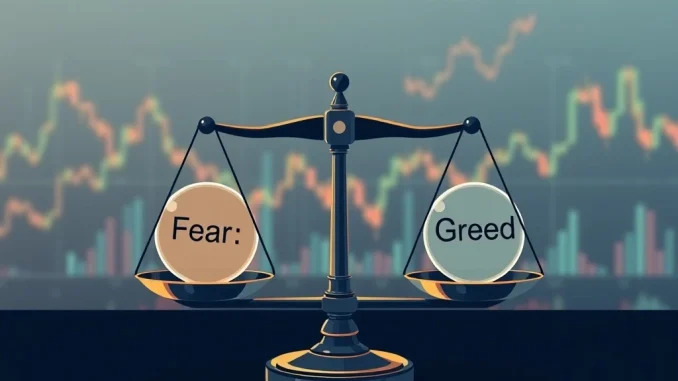
The Crypto Fear & Greed Index serves as a vital barometer for the cryptocurrency market. Data provider Alternative compiles this index. It offers a snapshot of current market psychology. The index operates on a straightforward scale. Zero represents extreme fear, while 100 signifies extreme optimism. This tool helps market participants gauge prevailing emotions. Extreme fear often indicates a potential buying opportunity. Conversely, extreme greed might suggest a market correction is imminent.
Furthermore, the index considers several factors to determine its score. Each component carries a specific weight:
- Volatility (25%): This measures current price fluctuations and drawdowns.
- Trading Volume (25%): High trading volume in a positive market suggests strong buying interest.
- Social Media Mentions (15%): Analysis of relevant hashtags and sentiment from various platforms.
- Surveys (15%): Polling investors about their market outlook.
- Bitcoin’s Market Cap Dominance (10%): An increase in Bitcoin’s dominance can indicate a flight to safety.
- Google Search Volume (10%): Tracking search trends for crypto-related terms.
Consequently, these diverse inputs create a comprehensive picture of market sentiment. The recent 13-point rise to 50 demonstrates a clear shift. It moved the market from a state of ‘fear’ directly into ‘neutral’ territory.
Decoding Improved Investor Sentiment
The move to a neutral 50 on the Crypto Fear & Greed Index carries significant implications. Previously, the market experienced higher levels of fear. This often leads to panic selling. Now, investor sentiment appears more balanced. Investors are less anxious. They are also less excessively exuberant. A neutral reading suggests a period of equilibrium. Buyers and sellers are finding common ground. This can pave the way for more stable price action. It also indicates a reduction in emotional trading decisions.
For many, this shift represents a positive development. It suggests that the market has absorbed recent negative news or corrections. Furthermore, it implies a more rational approach is taking hold. Long-term holders might view this as a healthy consolidation phase. Short-term traders, however, may look for clearer directional signals. Understanding this underlying sentiment is critical. It helps participants make informed decisions. The market is not driven by extreme emotions. Instead, it reflects a more measured outlook.
The Dynamics of Overall Market Sentiment
Analyzing the broader market sentiment provides deeper insights. The index’s components collectively paint this picture. For example, reduced volatility can contribute to a neutral score. Similarly, consistent trading volumes without extreme spikes also play a role. When social media mentions become less polarized, it further supports a balanced view. The aggregated data indicates that extreme emotional responses have subsided. This creates a more predictable trading environment. Thus, the current neutral reading suggests stability.
Moreover, shifts in market sentiment are rarely permanent. They can change rapidly based on new information. Regulatory announcements, major economic data, or significant technological advancements can all influence the index. Therefore, continuous monitoring remains essential. A sustained neutral period could build a stronger foundation. This foundation supports future growth. Conversely, a quick return to fear or greed would signal renewed instability. The market is currently in a wait-and-see mode. Participants are evaluating future catalysts.
Bitcoin Market Dominance and Its Impact
Bitcoin’s market capitalization dominance plays a crucial role in the index. Bitcoin often leads the broader cryptocurrency market. Its performance heavily influences overall sentiment. When Bitcoin’s dominance increases, it sometimes suggests investors are moving away from altcoins. They seek the relative safety of Bitcoin. This can be a sign of fear. Conversely, a decreasing dominance might indicate a return of risk appetite for altcoins. The index factors this into its calculation. It reflects how Bitcoin’s standing affects collective investor confidence.
Currently, Bitcoin’s stability has contributed to the neutral reading. Its price movements have been less volatile recently. This helps calm the broader market. The Bitcoin market remains the largest segment of the crypto ecosystem. Therefore, its health directly impacts the overall index score. Any significant shifts in Bitcoin’s price or market share will likely move the index. Investors often watch Bitcoin closely. Its trends frequently foreshadow movements in other digital assets. This reinforces its central role in market sentiment.
Navigating Cryptocurrency Sentiment Shifts
The shift to neutral in the Crypto Fear & Greed Index highlights evolving market dynamics. Cryptocurrency sentiment is rarely static. It constantly reacts to internal and external pressures. This recent movement from ‘fear’ to ‘neutral’ suggests resilience. The market has processed previous anxieties. It is now settling into a more balanced state. This can be an opportune time for careful analysis. Investors should consider their strategies without undue emotional influence. Future shifts could stem from various sources. These include global economic indicators or significant technological breakthroughs within the crypto space.
Ultimately, the index serves as a valuable tool. It helps investors navigate complex market conditions. While it does not predict future prices, it offers a strong indication of prevailing emotions. A neutral reading suggests a pause. It is a moment for reflection rather than reaction. Staying informed about these sentiment shifts is vital. It empowers participants to make more strategic decisions. The journey of cryptocurrency sentiment is ongoing. Adaptability remains key for all market participants.
Conclusion
The Crypto Fear & Greed Index reaching a neutral 50 marks a significant moment. It reflects improved investor sentiment. This shift moves the market away from extreme fear. It signifies a more balanced outlook. Understanding this index is crucial. It provides insights into the emotional state of the Bitcoin market and the broader cryptocurrency space. As cryptocurrency sentiment continues to evolve, staying informed about these indicators remains paramount for strategic decision-making.
Frequently Asked Questions (FAQs)
Q1: What is the Crypto Fear & Greed Index?
A1: The Crypto Fear & Greed Index is a tool that measures the current emotional state of the cryptocurrency market. It ranges from 0 (extreme fear) to 100 (extreme greed), indicating whether investors are overly fearful or optimistic.
Q2: How is the Crypto Fear & Greed Index calculated?
A2: The index uses a weighted average of several factors: volatility (25%), trading volume (25%), social media mentions (15%), surveys (15%), Bitcoin’s market cap dominance (10%), and Google search volume (10%).
Q3: What does a neutral reading of 50 on the index mean for investor sentiment?
A3: A neutral reading of 50 indicates a balanced market. It suggests that extreme fear or greed has subsided. Investors are neither excessively anxious nor overly optimistic, leading to more rational market behavior.
Q4: Why is Bitcoin’s market cap dominance included in the index?
A4: Bitcoin’s market cap dominance is included because Bitcoin often acts as a bellwether for the entire cryptocurrency market. Its performance and relative strength against altcoins provide insights into overall market confidence and risk appetite.
Q5: How can the Crypto Fear & Greed Index help cryptocurrency investors?
A5: The index helps investors by providing a quick overview of market psychology. It can serve as a contrarian indicator, suggesting potential buying opportunities during extreme fear or caution during extreme greed. It encourages making decisions based on data rather than emotion.