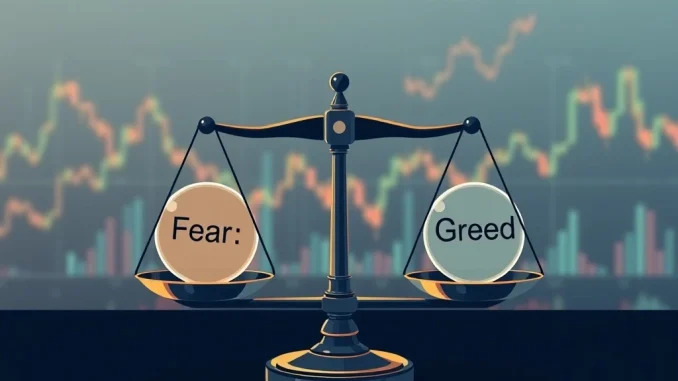
The **Crypto Fear & Greed Index** recently shifted, moving from a state of ‘greed’ to a ‘neutral’ stance. This notable change reflects evolving **market sentiment** across the digital asset landscape. Understanding this index is crucial for any participant in the **cryptocurrency market**. The index, a popular tool for gauging collective emotions, now sits at 52. This score represents a five-point drop from the previous day, according to data from Alternative. Consequently, this movement prompts a closer look at what ‘neutral’ truly signifies for investors.
Understanding the Crypto Fear & Greed Index
The **Crypto Fear & Greed Index** serves as a vital barometer for the digital asset space. It distills complex market dynamics into a single, easily digestible number. The index operates on a scale from 0 to 100. A score of 0 indicates ‘Extreme Fear’, suggesting investors are highly anxious. Conversely, a score of 100 signifies ‘Extreme Greed’, pointing to excessive optimism. This range helps market participants quickly assess the prevailing emotional climate.
The index does not predict future price movements directly. Instead, it measures current **investor sentiment**. Many analysts consider it a contrarian indicator. For example, periods of extreme fear often present buying opportunities for long-term holders. Conversely, extreme greed might signal a market due for a correction. Therefore, monitoring this index provides valuable context for trading decisions. The current reading of 52 falls squarely in the middle, indicating a balanced outlook.
How the Index is Calculated: A Multi-Factor Approach
The calculation of the **Crypto Fear & Greed Index** incorporates several key factors. Each component contributes a specific weight to the final score. This multi-faceted approach aims to capture a comprehensive view of **market sentiment**. The index aggregates data from various sources, ensuring a robust and well-rounded assessment. Here are the primary components:
- Volatility (25%): This measures the current price fluctuations of Bitcoin. High volatility compared to average levels often indicates fear or uncertainty.
- Trading Volume (25%): High trading volumes in a positive market suggest strong buying pressure. Similarly, high volumes during a price drop can signal panic selling.
- Social Media Mentions (15%): The sentiment of crypto-related discussions on platforms like Twitter influences this component. Positive or negative buzz directly impacts the score.
- Surveys (15%): These polls, though currently paused, gauge the opinions of crypto investors directly. They offer a snapshot of collective expectations.
- Bitcoin Dominance (10%): An increasing Bitcoin market cap dominance often suggests investors are moving away from altcoins into the perceived safety of Bitcoin. This can reflect caution.
- Google Search Volume (10%): Trends in Google searches for terms like ‘Bitcoin price manipulation’ or ‘cryptocurrency crash’ can indicate fear. Conversely, searches for ‘how to buy Bitcoin’ might signal growing interest.
Each factor offers a unique perspective on the overall health and emotional state of the **cryptocurrency market**. By combining these diverse data points, the index provides a holistic view of **Bitcoin sentiment** and beyond.
The Significance of a Neutral Market Sentiment
A score of 52 places the **Crypto Fear & Greed Index** firmly in the ‘neutral’ zone. This position suggests neither overwhelming optimism nor pervasive fear. Instead, it points to a period of indecision or consolidation. Investors might feel cautious, but not panicked. They might also lack strong conviction for aggressive buying. This neutrality can signify a waiting game for many participants in the **cryptocurrency market**.
Historically, neutral periods can precede significant market movements. They often represent a pause before a clear trend emerges. For instance, the market might be absorbing recent news or waiting for new catalysts. This balanced state provides a unique environment for **investor sentiment**. It suggests a lack of clear direction, where both bulls and bears hold their ground. Therefore, understanding this neutral stance becomes crucial for strategic planning.
Furthermore, a neutral reading can reflect a maturing market. Extreme swings might become less frequent as the industry grows. This stability, however temporary, allows for more rational decision-making. It moves away from the emotional trading often seen during periods of extreme fear or greed. Consequently, this shift encourages a more analytical approach to the **cryptocurrency market**.
Impact on Bitcoin Sentiment and Altcoins
The **Bitcoin sentiment** heavily influences the overall **Crypto Fear & Greed Index**. Bitcoin, as the largest cryptocurrency, often dictates the broader market’s direction. A neutral reading for the index therefore implies a neutral outlook for Bitcoin itself. This could mean Bitcoin’s price might consolidate within a range, lacking strong upward or downward momentum. Investors might observe this period for clearer signals.
This neutral sentiment also extends to the altcoin market. When Bitcoin’s direction is unclear, altcoins often follow suit. They might experience reduced volatility or trade sideways. Altcoin traders typically look for strong Bitcoin trends before making significant moves. A neutral **market sentiment** can thus lead to a quieter period for the broader **cryptocurrency market**, including many smaller digital assets. However, some altcoins might still show independent movements based on specific project news or developments.
Navigating the Cryptocurrency Market with Neutral Sentiment
For investors, a neutral **market sentiment** calls for careful consideration. It is not a signal for aggressive action. Instead, it suggests a time for re-evaluation and patience. Traders might tighten their stop-loss orders. They could also reduce position sizes. Long-term investors, conversely, might continue dollar-cost averaging. This strategy involves buying fixed amounts regularly, regardless of price. It helps mitigate risks associated with market timing.
Furthermore, this period offers an opportunity for research. Investors can explore new projects. They can also deepen their understanding of existing assets. A neutral market allows for less emotionally driven decisions. This contrasts sharply with periods of extreme fear or greed. During those times, panic selling or FOMO (Fear Of Missing Out) often dictates actions. Therefore, the current 52 reading on the **Crypto Fear & Greed Index** encourages a disciplined approach.
Ultimately, the index remains a tool, not a definitive trading signal. It offers valuable insight into the prevailing **investor sentiment**. Combining this insight with fundamental analysis and technical indicators provides a more comprehensive strategy. The shift to neutral simply means the market is taking a breath. It is a moment for observation before the next significant trend takes hold in the **cryptocurrency market**.
Frequently Asked Questions (FAQs)
What is the Crypto Fear & Greed Index?
The Crypto Fear & Greed Index is a tool that measures the current emotional state of the cryptocurrency market. It ranges from 0 (Extreme Fear) to 100 (Extreme Greed), helping investors gauge collective sentiment.
How is the Crypto Fear & Greed Index calculated?
It is calculated based on several factors, including market volatility (25%), trading volume (25%), social media mentions (15%), surveys (15%), Bitcoin’s market cap dominance (10%), and Google search volume (10%).
What does a ‘neutral’ score like 52 mean for investors?
A ‘neutral’ score indicates a balanced market sentiment, with neither extreme fear nor extreme greed dominating. It often suggests a period of indecision, consolidation, or a waiting game for investors before a clear trend emerges.
Is the Crypto Fear & Greed Index a reliable predictor of market movements?
No, the index is not a direct predictor of future price movements. Instead, it serves as a contrarian indicator, reflecting current investor psychology. Many use it to identify potential buying opportunities during extreme fear or caution during extreme greed.
How often does the Crypto Fear & Greed Index update?
The index typically updates daily, providing a fresh snapshot of market sentiment based on the latest data from its various components.
Does the index only track Bitcoin sentiment?
While Bitcoin’s data heavily influences the index due to its market dominance, the index aims to reflect broader cryptocurrency market sentiment. Its components consider overall market activity and public perception, not just Bitcoin specifically.