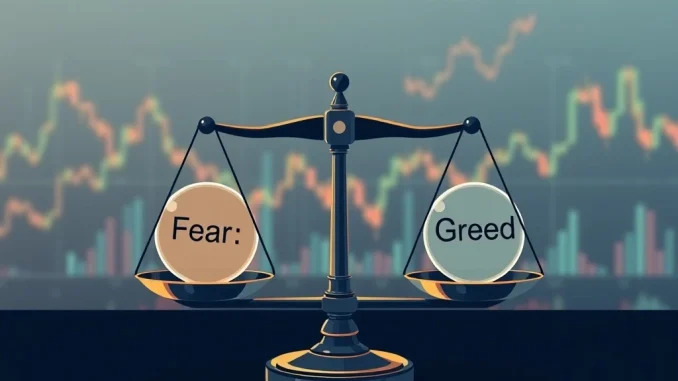
A significant development has captured the attention of cryptocurrency enthusiasts and analysts alike. The **Crypto Fear & Greed Index** has recently experienced a notable rise, climbing three points to reach 49. This movement marks a crucial transition from a state of ‘Fear’ into more balanced ‘Neutral’ territory. Such a shift in the **Crypto Fear & Greed Index** often signals improving **investor sentiment** across the digital asset landscape. Consequently, understanding this index and its implications is vital for anyone engaged with the **cryptocurrency market**.
Understanding the Crypto Fear & Greed Index
The **Crypto Fear & Greed Index** serves as a powerful barometer for gauging the prevailing mood in the cryptocurrency space. Developed by Alternative.me, it distills complex market data into a single, easily digestible number. The index operates on a straightforward scale: 0 represents ‘Extreme Fear,’ while 100 signifies ‘Extreme Greed.’ Therefore, a reading closer to 0 indicates widespread panic and selling pressure. Conversely, a score nearer 100 suggests euphoria and potential overvaluation.
This index provides a unique perspective on market psychology. It helps investors understand whether the market is currently experiencing irrational exuberance or undue panic. Traders often use this tool to inform their strategies. For example, extreme fear might present buying opportunities for contrarian investors. On the other hand, extreme greed could signal a time for caution or profit-taking.
How the Index Measures Market Sentiment
The calculation of the **Crypto Fear & Greed Index** is a sophisticated process, incorporating several key factors. Each component contributes a specific weight to the final score, ensuring a comprehensive assessment of **market sentiment**. These factors include:
- Volatility (25%): This measures the current price fluctuations of Bitcoin and compares them to average values over 30 and 90 days. High volatility often indicates fear.
- Trading Volume (25%): High trading volumes in a positive market suggest strong buying interest, indicating greed. Conversely, high volume during a downturn might point to fear.
- Social Media Mentions (15%): An analysis of specific crypto-related hashtags and keywords on platforms like Twitter helps gauge public interest and sentiment.
- Surveys (15%): Although currently paused, these surveys historically collected direct feedback from investors regarding their market outlook.
- Bitcoin’s Market Cap Dominance (10%): An increasing dominance of Bitcoin can sometimes indicate fear, as investors might be fleeing altcoins for the perceived safety of BTC. Conversely, decreasing dominance might suggest growing confidence in altcoins. This component also provides insight into overall **Bitcoin sentiment**.
- Google Search Volume (10%): Analyzing search trends for terms like ‘Bitcoin price manipulation’ or ‘cryptocurrency crash’ can reveal underlying fear or curiosity.
By combining these diverse data points, the index offers a holistic view. It moves beyond simple price action to reflect the deeper psychological currents influencing the **cryptocurrency market**.
The Significance of a Neutral Reading for Investor Sentiment
The recent ascent of the **Crypto Fear & Greed Index** to 49 is particularly noteworthy. Moving into the ‘Neutral’ zone signifies a crucial shift from the preceding ‘Fear’ state. This transition suggests that widespread panic or extreme pessimism has subsided. Instead, investors are now exhibiting a more balanced and cautious outlook. A neutral reading implies that the market is neither driven by overwhelming optimism nor paralyzed by intense fear. Consequently, this creates a more stable environment for price discovery.
Historically, periods of extreme fear often precede market bottoms, offering strategic entry points. Conversely, extreme greed frequently signals potential tops. Therefore, a neutral reading indicates a period of equilibrium. It suggests that the market participants are evaluating fundamentals more objectively. This balanced **market sentiment** can lead to more sustainable price movements. It also reduces the likelihood of sudden, dramatic swings driven purely by emotion. For the **cryptocurrency market**, this shift can foster greater confidence among both retail and institutional investors.
Implications for the Cryptocurrency Market
This move to neutral territory carries several important implications for the broader **cryptocurrency market**. Firstly, it indicates a potential stabilization after a period of uncertainty. Investors may feel more comfortable making decisions based on analysis rather than impulse. Secondly, a neutral **investor sentiment** often suggests a period of consolidation. Prices might trade within a range as the market digests recent movements and anticipates future catalysts. This could provide opportunities for accumulation for long-term holders.
Furthermore, the improved **Bitcoin sentiment**, as reflected partly in the dominance factor, can have a ripple effect. As Bitcoin often leads the market, a more confident outlook for BTC can positively influence altcoins. However, it is essential to remember that ‘neutral’ does not imply a lack of volatility. Rather, it suggests a more rational and less emotionally charged market. This phase allows for a clearer assessment of underlying projects and technological advancements. Ultimately, this shift fosters a healthier ecosystem for growth and innovation.
Looking Ahead: What Drives Future Market Sentiment?
While the current neutral reading offers a degree of comfort, **market sentiment** remains dynamic. Several factors will continue to influence the **Crypto Fear & Greed Index** moving forward. Macroeconomic conditions, such as inflation rates and interest rate decisions, always play a significant role. Regulatory developments worldwide also exert considerable influence on the **cryptocurrency market**. New legislation or enforcement actions can quickly alter investor perceptions. Technological advancements within the crypto space, including upgrades to major networks or breakthroughs in decentralized finance (DeFi), also drive sentiment.
The performance of major cryptocurrencies, particularly Bitcoin and Ethereum, will continue to be critical. Significant price movements in these assets often dictate the overall market mood. Monitoring the components of the index, such as social media trends and trading volumes, will provide ongoing insights. Therefore, staying informed about these various elements is crucial for understanding where **investor sentiment** might head next. The journey from fear to neutrality is a positive step, but vigilance remains paramount in the ever-evolving digital asset landscape.
In conclusion, the rise of the **Crypto Fear & Greed Index** to 49 and its shift to neutral territory represents a welcome change. It reflects an improvement in overall **investor sentiment**, moving away from widespread fear. This balanced outlook offers a more stable environment for the **cryptocurrency market**. While not indicative of a definitive bull run, it certainly suggests a more mature and less emotionally driven market phase. Investors should continue to monitor this crucial indicator alongside other fundamental and technical analyses to navigate the exciting world of digital assets.
Frequently Asked Questions (FAQs)
Q1: What is the Crypto Fear & Greed Index?
The Crypto Fear & Greed Index is a tool that measures the current emotional state of the cryptocurrency market. It uses various data points to assign a score between 0 (Extreme Fear) and 100 (Extreme Greed), helping investors gauge market sentiment.
Q2: Why did the Crypto Fear & Greed Index move to 49 (Neutral)?
The index rose to 49 due to improving investor sentiment. This indicates a decrease in widespread fear and a more balanced outlook among market participants, driven by factors like volatility, trading volume, and social media activity.
Q3: How is the Crypto Fear & Greed Index calculated?
It’s calculated using a weighted average of several factors: volatility (25%), trading volume (25%), social media mentions (15%), surveys (15%), Bitcoin’s market cap dominance (10%), and Google search volume (10%).
Q4: What does a ‘Neutral’ reading on the index mean for the cryptocurrency market?
A ‘Neutral’ reading suggests that the market is neither dominated by extreme optimism nor extreme pessimism. It implies a more balanced and rational period, potentially leading to more stable price movements and objective evaluation of assets rather than emotional trading.
Q5: Does the Crypto Fear & Greed Index predict future price movements?
While the index is not a direct predictor, it serves as a strong indicator of prevailing market psychology. Extreme readings (fear or greed) often precede market reversals, making it a valuable tool for understanding potential shifts in the cryptocurrency market. However, it should be used in conjunction with other analytical methods.