The cryptocurrency market often moves with significant emotional swings. Investors frequently experience euphoria during price surges and panic during corrections. Understanding these collective emotions is crucial. The Crypto Fear & Greed Index provides a valuable tool for this purpose. It helps gauge the prevailing mood among participants. Recently, this key indicator took a notable dip, signaling a significant shift in market psychology.
Understanding the Crypto Fear & Greed Index
The Crypto Fear & Greed Index is a unique barometer. It helps measure the current emotional state of the crypto market. Software development platform Alternative provides this index. It ranges from 0 to 100. A score of 0 signifies extreme fear. Conversely, 100 indicates extreme greed. This index helps traders and investors assess whether the market is overly bullish or bearish. Furthermore, it offers insights into potential opportunities or risks. The index is not a trading signal itself. Instead, it serves as a sentiment gauge.
Several factors contribute to the index’s calculation. Each factor carries a specific weighting. These components offer a comprehensive view of crypto market sentiment. Currently, surveys are paused. However, the other five factors continue to provide valuable data. They collectively paint a picture of investor psychology. Understanding these components is essential for interpreting the index’s movements. This comprehensive approach ensures a robust measurement of market emotions.
The Recent Plunge: What 44 Means for Sentiment
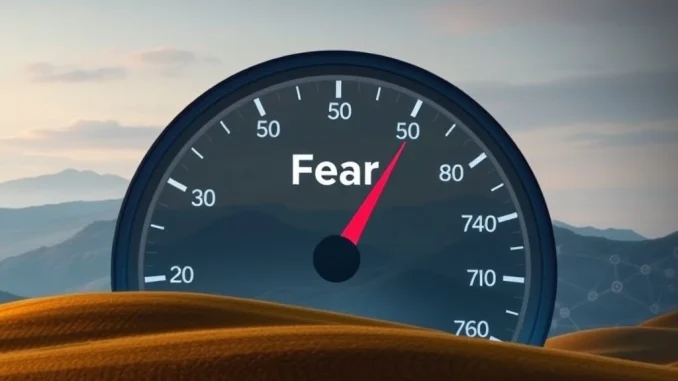
As of August 20, the Crypto Fear & Greed Index stands at 44. This marks a significant decline. It dropped 12 points from the previous day’s reading. This new level is the lowest in approximately two months. The index previously hit 42 on June 22. This shift moved the index from the ‘Greed’ zone into the ‘Fear’ zone. Such a move indicates a noticeable cooling of investor enthusiasm. It suggests a rise in caution across the market. Many investors become more hesitant during these periods. This decline reflects growing uncertainty. Therefore, many market participants are adopting a more conservative stance.
A score of 44 falls squarely within the ‘Fear’ territory. This zone suggests that investors are becoming worried. They might be selling assets. They could also be holding back from new investments. Historically, periods of ‘Fear’ can precede market bottoms. However, they can also signal further declines. Therefore, monitoring this index is crucial. It provides a real-time snapshot of the market’s emotional state. This drop highlights a notable change in collective investor psychology. It merits careful attention from all market participants.
Key Factors Influencing Crypto Market Sentiment
The Crypto Fear & Greed Index synthesizes data from six different sources. These factors combine to provide a holistic view of crypto market sentiment. Each component contributes uniquely to the overall score. Understanding these elements helps explain the index’s fluctuations. Furthermore, it offers deeper insights into market dynamics. Here are the primary factors:
- Volatility (25%): This factor measures current market volatility. It compares current Bitcoin volatility with average values. High volatility often signals a fearful market. Conversely, low volatility might suggest complacency.
- Market Momentum/Volume (25%): This component analyzes trading volume and market momentum. High buying volume on strong uptrends indicates greed. Conversely, high selling volume on downtrends suggests fear.
- Social Media (15%): The index monitors keywords and hashtags on social media platforms. It analyzes the sentiment of public discussions. More positive sentiment indicates greed. More negative sentiment points to fear.
- Surveys (15%): Investor surveys were previously a component. These surveys asked participants about their market outlook. However, this factor is currently paused.
- Bitcoin Dominance (10%): This factor assesses Bitcoin’s share of the total crypto market cap. Increasing Bitcoin dominance can indicate fear. Investors often flock to Bitcoin as a ‘safe haven’ during uncertain times. A decrease might suggest rising altcoin interest.
- Google Trends (10%): The index analyzes Google search queries related to cryptocurrencies. Rising search volumes for ‘Bitcoin price manipulation’ or ‘crypto crash’ suggest fear. Searches for ‘how to buy crypto’ might indicate growing interest or greed.
These diverse inputs provide a robust measure. They capture various facets of investor behavior. Therefore, the index offers a comprehensive view of the market’s mood. Its recent decline suggests that multiple factors are contributing to increased caution. This multi-faceted approach ensures a reliable assessment. It helps stakeholders navigate complex market conditions.
Navigating Increased Crypto Volatility and Market Fear
The shift into the ‘Fear’ zone often coincides with increased crypto volatility. Volatility refers to the degree of variation of a trading price over time. When the index shows fear, prices can become more unpredictable. Sudden drops or sharp bounces are common during these periods. This environment presents both risks and potential opportunities. Investors must approach the market with caution. Prudent risk management becomes paramount. Excessive leverage can be particularly dangerous during high volatility.
Periods of significant market fear can test investor resolve. Some see these times as buying opportunities. The adage ‘buy when there’s blood in the streets’ comes to mind. However, this strategy carries inherent risks. There is no guarantee that prices will recover quickly. Others prefer to reduce exposure or wait on the sidelines. They wait for clearer signs of recovery. Understanding your own risk tolerance is essential. Emotional decisions often lead to poor outcomes. Therefore, maintaining a disciplined approach is crucial. This helps navigate uncertain market conditions effectively.
Implications of Market Fear for Bitcoin Dominance and Beyond
When market fear takes hold, it often impacts asset allocation. We frequently observe changes in Bitcoin dominance during these times. As mentioned, Bitcoin often acts as a ‘safe haven’ asset within the crypto space. Investors might move funds from altcoins into Bitcoin during periods of uncertainty. This flight to quality increases Bitcoin’s share of the total market capitalization. Conversely, when greed prevails, altcoins tend to perform strongly. Investors seek higher returns in riskier assets. Therefore, a rising Bitcoin dominance alongside a fearful index reading is a common pattern.
The current fear sentiment extends beyond just Bitcoin. It affects the broader cryptocurrency ecosystem. Altcoins, in particular, can experience sharper declines. Their smaller market caps make them more susceptible to market shifts. Furthermore, new projects might struggle to gain traction. Funding for ventures could also become scarcer. This widespread caution impacts various segments of the market. It affects trading volumes, liquidity, and overall investor confidence. Consequently, the entire crypto landscape feels the effects of heightened fear. This makes a careful approach vital for all participants.
Strategies for Investors Amidst Current Crypto Market Sentiment
Current crypto market sentiment suggests caution. However, it does not necessarily mean panic. Investors have several strategies to consider during fearful periods. First, revisiting your investment thesis is important. Ensure your long-term goals remain aligned with your holdings. Second, dollar-cost averaging can be effective. This involves investing a fixed amount regularly. It helps mitigate the impact of volatility. Third, focus on fundamental analysis. Strong projects with solid use cases often weather downturns better. Fourth, avoid impulsive decisions. Reacting to short-term price movements can be detrimental. Patience is often rewarded in volatile markets.
Finally, consider portfolio diversification. Spreading investments across different assets can reduce risk. While Bitcoin dominance may rise, other assets could still recover. Education remains a powerful tool. Understanding market cycles and historical trends provides context. The Crypto Fear & Greed Index serves as a guide. It signals the prevailing mood. It does not predict future prices. Therefore, combine its insights with thorough research. This comprehensive approach empowers investors. It allows them to make informed decisions even during challenging times. Remaining calm and rational is key.
Conclusion: Monitoring the Crypto Fear & Greed Index
The recent fall of the Crypto Fear & Greed Index to 44 is a significant development. It signals a clear shift from ‘Greed’ to ‘Fear’ in the market. This marks the lowest point in two months. Such a decline reflects growing investor apprehension. It also highlights increased crypto volatility. The index, powered by factors like market momentum and Bitcoin dominance, provides a crucial barometer. It offers valuable insights into the collective emotional state of the market. While market fear can be unsettling, it also presents opportunities for disciplined investors. Understanding these shifts is vital. It enables more informed decision-making. Investors should continue to monitor this index closely. It offers a continuous pulse check on the dynamic cryptocurrency landscape.
Frequently Asked Questions (FAQs)
What is the Crypto Fear & Greed Index?
The Crypto Fear & Greed Index is a tool that measures the current emotional state of the cryptocurrency market. It ranges from 0 (extreme fear) to 100 (extreme greed), helping investors gauge overall market sentiment.
How is the Crypto Fear & Greed Index calculated?
The index uses six factors: volatility (25%), market momentum/volume (25%), social media (15%), surveys (15% – currently paused), Bitcoin dominance (10%), and Google Trends (10%). These factors are weighted and combined to produce a single score.
What does a low score on the index indicate?
A low score, like 44 (entering the ‘Fear’ zone), indicates that investors are becoming anxious and fearful. This often suggests a potential undervaluation of assets or a period of high caution and selling pressure.
Does Bitcoin dominance influence the Fear & Greed Index?
Yes, Bitcoin dominance is one of the factors (10% weighting). An increase in Bitcoin’s market share often suggests fear, as investors tend to move funds into Bitcoin as a perceived safer asset during uncertain times.
How should investors react to increased market fear?
During periods of increased market fear, investors should prioritize caution and research. Strategies like dollar-cost averaging, focusing on strong fundamentals, and avoiding emotional decisions can be beneficial. It’s crucial to assess personal risk tolerance.
Is the Crypto Fear & Greed Index a buy or sell signal?
No, the Crypto Fear & Greed Index is not a direct buy or sell signal. It is a sentiment indicator. It provides insight into the prevailing market mood, which can help investors make more informed decisions when combined with other analysis methods.