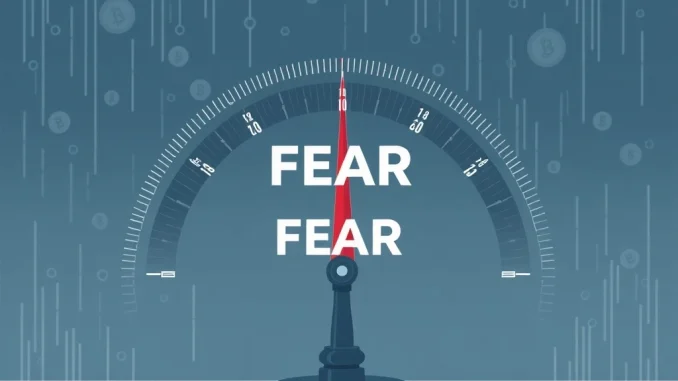
The Crypto Fear & Greed Index recently plummeted to 25, indicating a significant shift in market sentiment. This drop places the market firmly into “extreme fear” territory. Investors often watch this indicator closely. It provides a snapshot of the prevailing emotional state among cryptocurrency participants.
Understanding the Crypto Fear & Greed Index Drop
The Crypto Fear & Greed Index serves as a vital barometer for the digital asset market. Alternative.me compiles this index. It measures market sentiment on a scale from 0 to 100. A score of 0 signifies extreme fear, while 100 denotes extreme optimism. This week, the index fell nine points. It moved from a “fear” reading to a more intense “extreme fear” level. This rapid change suggests growing investor apprehension. Such shifts can influence trading decisions. Therefore, understanding its components is crucial for any serious investor.
The index relies on several weighted factors to gauge sentiment accurately:
- Volatility (25%): It measures current Bitcoin price fluctuations and compares them with average values. High volatility often signals fear.
- Market Volume (25%): Strong buying volumes in a rising market indicate greed. Conversely, high selling volumes can suggest fear.
- Social Media (15%): It analyzes Bitcoin-related hashtags and sentiment on various platforms. More negative sentiment pushes the index down.
- Surveys (15%): These polls ask investors about their market outlook. However, this component is currently paused.
- Bitcoin Dominance (10%): A rising Bitcoin dominance can indicate fear. Investors often move to safer assets during uncertain times.
- Google Trends (10%): It examines search queries for terms like “Bitcoin price manipulation” or “Bitcoin crash.” High search volumes for such terms indicate fear.
What Drives Extreme Fear Crypto?
The recent plunge into extreme fear crypto territory reflects a combination of market pressures. High volatility often accompanies significant price drops. This can trigger panic selling. Trading volumes also play a role. When selling volume increases substantially, it indicates a lack of confidence. Social media sentiment frequently amplifies these feelings. A surge in negative discussions about cryptocurrencies pushes the index lower. For instance, widespread FUD (Fear, Uncertainty, Doubt) can quickly spread across platforms. This creates a negative feedback loop.
Furthermore, Bitcoin’s market dominance influences the index. When Bitcoin’s share of the total crypto market cap rises, it sometimes signals a flight to perceived safety. Investors might sell altcoins to consolidate into Bitcoin. This indicates a cautious approach. Google search trends offer another lens. Increased searches for “crypto crash” or “bear market” directly contribute to the fear component. Consequently, these combined factors paint a clear picture of prevailing market anxiety.
Bitcoin Market Sentiment and its Impact
Bitcoin market sentiment holds significant weight within the overall index calculation. Bitcoin remains the largest cryptocurrency by market capitalization. Its price movements often dictate the broader market direction. A sharp decline in Bitcoin’s value typically triggers widespread fear across altcoin markets. This is because many altcoins are highly correlated with Bitcoin. When Bitcoin experiences high volatility, the entire crypto ecosystem feels the ripple effect.
Moreover, Bitcoin’s dominance factor directly influences the index. A higher dominance often suggests that investors are moving funds from riskier altcoins back into Bitcoin. This behavior points to increased caution. Therefore, a negative shift in Bitcoin’s sentiment can quickly pull the entire Crypto Fear & Greed Index down. It highlights Bitcoin’s foundational role in the digital asset space.
Interpreting Market Sentiment Crypto: A Deeper Look
Understanding market sentiment crypto is more than just observing a number. It involves interpreting what that number implies for investment strategies. Historically, the Fear & Greed Index has often served as a contrarian indicator. Legendary investor Warren Buffett famously advised: “Be fearful when others are greedy, and greedy when others are fearful.” This philosophy suggests that periods of extreme fear might present buying opportunities for long-term investors. Conversely, extreme greed could signal an impending market correction.
However, the index is not a standalone trading signal. It provides context. During periods of extreme fear, prices are typically low. This may attract investors looking for discounted assets. Nevertheless, further drops are always possible. Therefore, combining the index with fundamental analysis and technical indicators is prudent. It offers a more complete picture of market conditions.
Navigating Current Crypto Market Analysis
Given the current extreme fear crypto reading, how should investors approach the market? A thorough crypto market analysis becomes paramount. For some, extreme fear periods are times for accumulation. They might use strategies like Dollar-Cost Averaging (DCA). This involves investing a fixed amount regularly, regardless of price. DCA helps mitigate risk during volatile times. It averages out the purchase price over time.
Other investors might opt for holding their existing assets. This strategy is often called “HODLing.” It involves riding out market downturns with a long-term perspective. However, new investors should exercise caution. Entering a market during extreme fear requires careful research. It also demands a strong understanding of personal risk tolerance. Always conduct your own due diligence. Never invest more than you can afford to lose. The market remains unpredictable.
Conclusion
The Crypto Fear & Greed Index dropping to 25 signals a period of significant apprehension in the cryptocurrency market. This shift to extreme fear reflects various pressures, from volatility to social media sentiment. While such periods can test investor resolve, they also offer opportunities for strategic reflection. Understanding the underlying factors and maintaining a disciplined approach are key. Investors should prioritize research and risk management above all else. This ensures informed decisions even amidst widespread market fear.
Frequently Asked Questions (FAQs)
Q1: What is the Crypto Fear & Greed Index?
A1: The Crypto Fear & Greed Index is a tool that measures the current sentiment of the cryptocurrency market. It ranges from 0 (extreme fear) to 100 (extreme greed), indicating whether investors are feeling anxious or overly optimistic.
Q2: How is the Crypto Fear & Greed Index calculated?
A2: It is calculated using several factors, each with a specific weight: volatility (25%), trading volume (25%), social media mentions (15%), surveys (15% – currently paused), Bitcoin’s market dominance (10%), and Google search volume (10%).
Q3: What does an “extreme fear” reading on the index signify?
A3: An “extreme fear” reading, like the current 25, indicates that investors are very anxious and fearful about the market’s future. This often leads to selling pressure and lower prices, as people try to exit their positions.
Q4: Can the Crypto Fear & Greed Index predict market movements?
A4: While not a precise predictor, the index often acts as a contrarian indicator. Periods of extreme fear can sometimes precede market bottoms, while extreme greed might signal an upcoming correction. However, it should be used alongside other analysis tools.
Q5: How does Bitcoin’s performance influence the index?
A5: Bitcoin, being the largest cryptocurrency, heavily influences the index. Its price volatility, trading volume, and market dominance are significant components. Strong movements in Bitcoin’s price often dictate the overall sentiment reflected in the index.
Q6: What should investors consider during periods of extreme fear?
A6: During extreme fear, investors often consider strategies like Dollar-Cost Averaging (DCA) or holding (HODLing) for the long term. It’s crucial to conduct thorough research, understand personal risk tolerance, and avoid making impulsive decisions based solely on emotion.