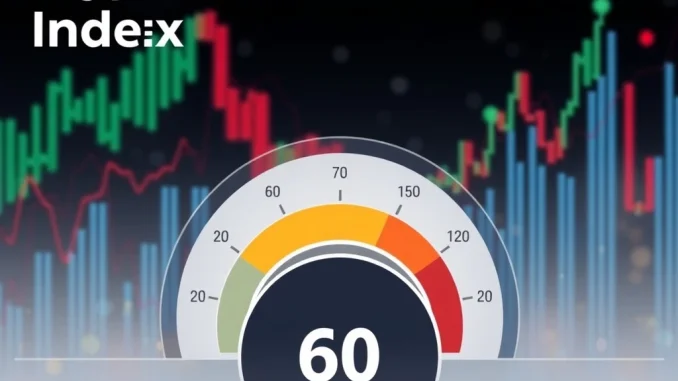
The cryptocurrency market constantly fluctuates. Investors often seek tools to gauge its mood. One such tool is the Crypto Fear & Greed Index. This index provides a snapshot of current market sentiment. It helps traders and investors understand whether the market is experiencing fear or greed. Recently, the index saw a notable shift. It fell to 60 as of August 15. This marked a 15-point drop from the previous day. Despite this decrease, the index impressively held its position in the ‘Greed’ zone. This resilience suggests underlying strength in the crypto market sentiment.
Understanding the Crypto Fear & Greed Index
The Crypto Fear & Greed Index is a valuable barometer. It offers insights into the prevailing emotional state of the crypto market. Software development platform Alternative provides this index. It ranges from 0 to 100. A score of 0 indicates extreme fear. Conversely, a score of 100 signals extreme greed. Therefore, higher numbers suggest a more optimistic market. Lower numbers point to increased caution or panic.
The index compiles data from several key factors. Each factor contributes a specific weight to the overall score. These components aim to provide a holistic view of market behavior. Understanding these factors is crucial. They reveal what drives the index’s movements. Furthermore, they help interpret its readings effectively.
Key Factors Shaping Market Sentiment
The index incorporates six distinct factors. Each plays a role in determining the overall score. These factors are:
- Volatility (25%): This measures current price fluctuations. It compares them to average volatility levels. High volatility often suggests a fearful market.
- Market Momentum/Volume (25%): This assesses the market’s health. Strong buying volumes indicate positive momentum. Weak volumes suggest caution.
- Social Media (15%): Analysis of social media trends is included. Hashtags and mentions are monitored. Positive sentiment on platforms like Twitter can push the index higher.
- Surveys (15%): These gauge investor sentiment directly. Currently, surveys are paused. This means their weight is temporarily reallocated among other factors.
- Bitcoin Dominance (10%): This measures Bitcoin’s market capitalization share. A rising Bitcoin dominance often indicates fear. Investors might be moving from altcoins to Bitcoin. They see Bitcoin as a safer haven.
- Google Trends (10%): This tracks search queries for crypto-related terms. High search volumes for ‘Bitcoin price manipulation’ or ‘crypto crash’ might signal fear. Conversely, ‘buy Bitcoin’ suggests greed.
These diverse inputs ensure a comprehensive assessment. They capture various facets of market psychology.
Decoding Recent Market Sentiment: Why 60 Matters
On August 15, the Crypto Fear & Greed Index registered 60. This represented a 15-point drop. The previous day’s reading was higher. Despite this decline, the index remained firmly in the ‘Greed’ zone. The ‘Greed’ zone typically ranges from 50 to 74. This sustained position is significant. It suggests that even with a sentiment dip, optimism still prevails. Investors are not yet moving into widespread fear.
A score of 60 indicates moderate greed. It implies that investors are generally confident. They are willing to take on more risk. This contrasts sharply with scores in the ‘Fear’ or ‘Extreme Fear’ zones. Those zones suggest investor panic. They often lead to selling pressure. The current reading, however, shows continued buying interest. It also reflects a belief in future price appreciation. This resilience is a positive sign for the market.
Implications of a Sustained Greed Zone
Staying in the greed zone has several implications. Firstly, it shows continued investor interest. People are still looking to enter or expand their crypto portfolios. Secondly, it might signal potential for profit-taking. When greed becomes extreme (75-100), corrections often follow. Therefore, a score of 60 might be a healthy moderation. It suggests enthusiasm without being overly euphoric. This can prevent rapid market overheating. Ultimately, it promotes more sustainable growth.
Navigating Market Volatility with the Index
The market volatility component significantly influences the index. High volatility can quickly shift sentiment. For example, sudden price drops often trigger fear. Conversely, sharp rallies can fuel greed. The index captures these rapid changes. It provides real-time updates. This helps investors react to market dynamics. However, the index is a tool, not a crystal ball. It reflects sentiment, not future price action directly.
Investors use the index in various ways. Some use it as a contrarian indicator. They buy when there is extreme fear. They sell when there is extreme greed. Others use it to confirm their own market views. It can validate their investment decisions. It provides an objective measure of the collective mood. This helps reduce emotional trading. Informed decisions are always better than impulsive ones.
The Role of Bitcoin Dominance and Google Trends
Bitcoin dominance is a crucial factor. When Bitcoin’s share of the total crypto market cap rises, it often signals caution. Investors may be de-risking from smaller altcoins. They move into Bitcoin, perceived as less risky. Conversely, a falling Bitcoin dominance suggests altcoin season. This often correlates with higher market confidence. The index considers this dynamic. It provides a nuanced view of market health.
Google Trends also offers unique insights. It reflects public interest and sentiment. Spikes in search terms like ‘crypto bubble’ can indicate fear. Similarly, increased searches for specific altcoins might suggest speculative interest. These search patterns reveal collective anxiety or excitement. They contribute to the overall crypto market sentiment. This broad data input enhances the index’s accuracy.
Conclusion: A Resilient Crypto Market Sentiment
The recent fall of the Crypto Fear & Greed Index to 60 is noteworthy. Yet, its continued presence in the ‘Greed’ zone speaks volumes. It highlights a resilient crypto market sentiment. Despite minor setbacks, investor confidence remains robust. The index, driven by factors like volatility, momentum, social media, Bitcoin dominance, and Google Trends, provides a comprehensive overview. While surveys are paused, the remaining factors offer valuable insights. Investors should use this tool wisely. It helps in understanding market psychology. However, it should always be part of a broader analysis. Informed decisions lead to better outcomes in the dynamic world of cryptocurrency.
Frequently Asked Questions (FAQs)
What is the Crypto Fear & Greed Index?
The Crypto Fear & Greed Index is a tool that measures the current emotional state of the cryptocurrency market. It ranges from 0 (extreme fear) to 100 (extreme greed), providing insights into whether investors are feeling fearful or optimistic.
How is the Crypto Fear & Greed Index calculated?
The index is calculated using six weighted factors: volatility (25%), market momentum/volume (25%), social media (15%), surveys (15% – currently paused), Bitcoin dominance (10%), and Google Trends (10%).
What does a score of 60 on the Crypto Fear & Greed Index mean?
A score of 60 indicates that the market is in the ‘Greed’ zone. This suggests that investors are generally optimistic and willing to take on more risk, even if the sentiment has slightly weakened from previous highs.
Why did the index fall to 60 but stay in ‘Greed’?
The index fell by 15 points, indicating a decrease in overall market enthusiasm. However, because its previous level was likely higher in the ‘Greed’ or even ‘Extreme Greed’ zone, a drop to 60 still keeps it within the ‘Greed’ threshold (typically 50-74).
How does Bitcoin dominance affect the index?
Bitcoin dominance measures Bitcoin’s share of the total crypto market capitalization. A rising Bitcoin dominance can indicate fear, as investors might move from altcoins to Bitcoin as a perceived safe haven. This factor contributes 10% to the index’s calculation.
Should I base my investment decisions solely on the Crypto Fear & Greed Index?
No, the index is a valuable sentiment tool but should not be the sole basis for investment decisions. It is best used as one component of a broader market analysis, combined with fundamental and technical research, to make informed choices.