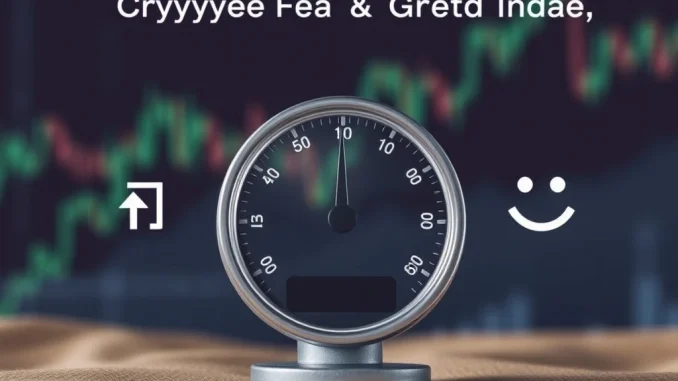
The cryptocurrency world is always buzzing with activity, and understanding its pulse can be a game-changer for investors and enthusiasts alike. One of the most talked-about indicators for gauging this pulse is the Crypto Fear & Greed Index. Recently, this index has seen a significant shift, climbing to a robust 74 as of July 17th. This four-point jump from the previous day firmly places the market sentiment in the ‘Greed’ zone, signaling a notable increase in optimism among participants. But what exactly does this mean for the future of digital assets?
Understanding the Crypto Fear & Greed Index: What Does 74 Mean?
Provided by the software development platform Alternative, the Crypto Fear & Greed Index is more than just a number; it’s a barometer for the collective emotional state of the crypto market. Ranging from 0 to 100, the index offers a quick snapshot:
- 0-24: Extreme Fear – Investors are highly worried, often indicating a potential buying opportunity.
- 25-49: Fear – Market is nervous, but not in panic mode.
- 50-74: Greed – Investors are becoming optimistic and eager, suggesting potential overvaluation.
- 75-100: Extreme Greed – The market is highly exuberant, often a signal for a potential correction.
A reading of 74, therefore, puts us squarely in the ‘Greed’ territory, bordering on ‘Extreme Greed’. This indicates that market participants are feeling confident, perhaps even euphoric, about the current price action and future prospects of cryptocurrencies. While ‘greed’ might sound negative, in the context of this index, it primarily reflects strong buying interest and positive sentiment.
Decoding the Drivers: What Influences This Crucial Crypto Market Sentiment?
The beauty of the Crypto Fear & Greed Index lies in its multi-faceted approach to gauging market sentiment. It doesn’t rely on just one metric but aggregates data from six different sources, each contributing a specific weight to the final score. This comprehensive methodology provides a more holistic view of the market’s emotional landscape.
Here’s a breakdown of the factors:
| Factor | Weight | Explanation |
|---|---|---|
| Volatility | 25% | Measures the current volatility and max drawdowns of Bitcoin compared to its average over the last 30 and 90 days. High volatility often signals fear. |
| Market Momentum/Volume | 25% | Analyzes the current volume and market momentum, comparing it with average values. High buying volumes usually indicate greedy or bullish behavior. |
| Social Media | 15% | Scans Twitter hashtags and posts related to Bitcoin, analyzing their speed and volume. A rapid increase in mentions often indicates a high level of public interest and potential FOMO (Fear Of Missing Out). |
| Surveys | 15% | Originally gathered public opinion through weekly polls. (Note: Currently paused, as per the index provider.) |
| Bitcoin Dominance | 10% | Measures Bitcoin’s share of the total crypto market capitalization. A rising dominance often indicates fear (as people flee altcoins to BTC, seen as safer), while a falling dominance can signal greed (as people invest in riskier altcoins). |
| Google Trends | 10% | Analyzes Google search trends for terms related to Bitcoin and cryptocurrencies. A surge in search queries for terms like ‘Bitcoin price manipulation’ often indicates fear, while ‘buy Bitcoin’ suggests greed. |
The combination of these factors paints a comprehensive picture, moving beyond mere price action to capture the underlying psychological state of the market. The current high reading suggests a strong influence from positive momentum, social media buzz, and perhaps even a shift in Bitcoin dominance.
Navigating Cryptocurrency Volatility in the Greed Zone
While the surge into the ‘greed zone’ is exciting, it’s crucial to understand its implications, especially concerning cryptocurrency volatility. The crypto market is inherently volatile, and periods of high greed can sometimes precede significant corrections. Why? Because when everyone is optimistic and buying, prices can become overextended, creating an environment ripe for profit-taking.
Historically, the Fear & Greed Index has often acted as a contrarian indicator:
- Extreme Fear: Often a good time to consider buying, as prices might be oversold due to panic.
- Extreme Greed: Can be a warning sign to consider taking profits or exercising caution, as the market might be overheated.
The current 74 reading, while not ‘Extreme Greed’ yet, is certainly nudging towards it. This means that while the sentiment is overwhelmingly positive, smart investors remain vigilant, monitoring for signs of reversal or excessive exuberance that could lead to a pull-back. It’s a delicate balance between riding the wave of optimism and being prepared for potential shifts.
Beyond Bitcoin Dominance: The Broader Market Impact of Rising Sentiment
While Bitcoin dominance is a specific component of the index, the overall sentiment reflected by the index score impacts the entire cryptocurrency ecosystem. When the market is in ‘greed’ mode, it’s not just Bitcoin that benefits. Often, we see a spillover effect into altcoins, as investors become more willing to take on higher risks in search of greater returns. This can lead to broader market rallies, with various digital assets experiencing significant price increases.
A rising Fear & Greed Index can:
- Boost Altcoin Performance: As Bitcoin’s dominance potentially wanes (or stabilizes at a lower level), capital might flow into altcoins, driving their prices up.
- Attract New Investors: Positive sentiment and rising prices often draw in new retail investors, further fueling the market’s upward momentum.
- Increase Trading Volume: Higher confidence typically translates to increased trading activity across all major cryptocurrencies.
However, it’s also important to remember that a high index reading doesn’t guarantee continued gains. Market sentiment can shift rapidly due to macroeconomic news, regulatory developments, or unexpected black swan events. Therefore, while the current optimism is a positive sign, a diversified approach and continuous monitoring remain key.
Actionable Insights: How to Leverage This Market Sentiment
For both seasoned traders and new investors, the Crypto Fear & Greed Index offers valuable insights. Here’s how you can potentially leverage this information:
- For Traders: The current ‘greed’ level suggests that short-term upward momentum might be strong. However, it also flags the need for increased caution. Consider tightening stop-losses, taking partial profits, or being prepared for quick reversals if the index moves into ‘Extreme Greed’ or shows signs of rapid decline.
- For Long-Term Investors: While short-term fluctuations might be tempting, long-term investors might view this as a period of market strength. It’s a good time to re-evaluate your portfolio’s risk exposure. Avoid making impulsive decisions based solely on the index; instead, integrate it into your broader investment strategy.
- Risk Management: Regardless of the index’s reading, always prioritize risk management. Never invest more than you can afford to lose, and consider dollar-cost averaging to smooth out the effects of volatility.
- Stay Informed: The index is a lagging indicator to some extent. Complement its insights with fundamental analysis, technical analysis, and staying updated on news that could impact the market.
The Road Ahead: Will the Greed Persist?
The current surge in the Crypto Fear & Greed Index to 74 reflects a strong wave of optimism that has swept through the crypto market. This improved sentiment, fueled by various contributing factors, has pushed the market firmly into the ‘Greed’ zone, suggesting confidence and increased buying activity. While this period of exuberance can be exciting and profitable, it also serves as a reminder of the inherent volatility and the importance of strategic decision-making.
Whether this ‘greed’ persists will depend on a confluence of factors, including global economic conditions, regulatory clarity, institutional adoption, and the continued development within the crypto space. As always, a balanced approach that combines sentiment analysis with sound fundamental and technical research will be crucial for navigating the dynamic world of cryptocurrencies. The index is a powerful tool, but it’s just one piece of the puzzle.
Frequently Asked Questions (FAQs)
Q1: What is the Crypto Fear & Greed Index?
The Crypto Fear & Greed Index is a tool that measures the current emotional state of the cryptocurrency market. It ranges from 0 (Extreme Fear) to 100 (Extreme Greed), helping investors understand if the market is overly fearful or overly optimistic.
Q2: What does it mean if the index is in the ‘Greed’ zone?
When the index is in the ‘Greed’ zone (typically 50-74), it means that market participants are becoming optimistic and eager to buy. This often indicates strong positive momentum and potentially overvalued assets, though it can also signal continued upward movement.
Q3: How is the Crypto Fear & Greed Index calculated?
The index is calculated using a weighted average of six key factors: volatility (25%), market momentum/volume (25%), social media (15%), surveys (15% – currently paused), Bitcoin dominance (10%), and Google Trends (10%).
Q4: Can the Crypto Fear & Greed Index predict market crashes?
While the index can serve as a contrarian indicator, especially when it reaches ‘Extreme Greed’ levels, it is not a standalone predictor of market crashes. High greed often precedes corrections, but it should be used in conjunction with other analytical tools and market knowledge.
Q5: How does Bitcoin dominance affect the index?
Bitcoin dominance measures BTC’s share of the total crypto market. A rising dominance often reflects fear (investors moving to BTC as a perceived safe haven), while a falling dominance can indicate greed (investors diversifying into riskier altcoins). This factor contributes 10% to the index’s overall score.
Q6: Should I buy when the index shows ‘Fear’ and sell when it shows ‘Greed’?
This is a common contrarian strategy. Buying during ‘Extreme Fear’ can be opportune as assets might be oversold, while selling or taking profits during ‘Extreme Greed’ can protect against potential corrections. However, this strategy isn’t foolproof and should be part of a broader, well-researched investment plan.