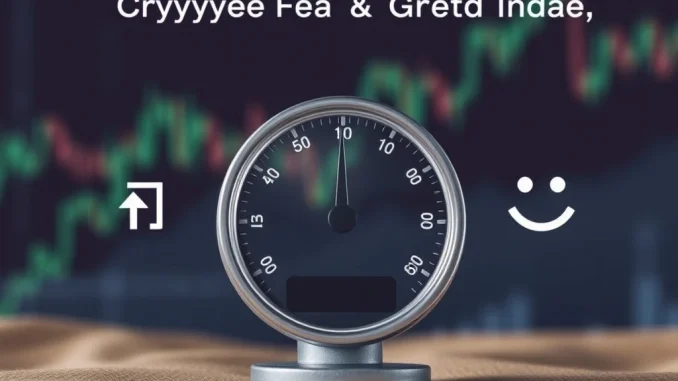
The cryptocurrency market often moves with significant emotional swings. Understanding these shifts is crucial for participants. The **Crypto Fear and Greed Index**, a widely recognized barometer, recently rose to 70. This reading places the market firmly in the ‘Greed’ zone. Such a high number suggests growing investor confidence and enthusiasm. It provides a snapshot of the prevailing **crypto market sentiment**.
Understanding the Crypto Fear and Greed Index
The **Crypto Fear and Greed Index**, provided by software development platform Alternative, serves as a vital tool. It measures the prevailing emotions and sentiment in the cryptocurrency market. The index ranges from 0 to 100. A score of 0 signifies extreme fear, indicating that investors are overly worried. Conversely, a score of 100 indicates extreme greed, suggesting investors are overly optimistic. On August 11, the index stood at 70, up one point from the previous day. This movement reinforces the ‘Greed’ classification. Consequently, many market participants monitor this index closely.
The index incorporates six distinct factors to generate its comprehensive score. Each factor contributes a specific weight to the overall calculation. These elements aim to capture different facets of market behavior and investor psychology. Here are the components:
- Volatility (25%): This measures the current volatility and maximum drawdowns of Bitcoin. High volatility often signals a fearful or uncertain market.
- Market Momentum/Volume (25%): This compares current market volume and momentum to average values. Strong, sustained buying volume typically indicates positive sentiment.
- Social Media (15%): It analyzes social media posts for keywords related to cryptocurrencies. Increased mentions and positive sentiment on platforms like Twitter can reflect growing interest.
- Surveys (15%): This component gauges investor sentiment through weekly polls. However, this factor is currently paused.
- Bitcoin Dominance (10%): Bitcoin’s market cap share relative to the total crypto market influences this factor. A rising Bitcoin dominance can indicate fear, as investors often move to Bitcoin as a ‘safe haven.’
- Google Trends (10%): It examines Google search queries for crypto-related terms. A surge in specific search terms might signal public interest or panic.
By combining these diverse data points, the index offers a holistic view. It helps investors gauge the collective mood of the market. Therefore, it acts as a valuable counter-indicator for some traders.
Decoding Current Crypto Market Sentiment
A reading of 70 on the **Crypto Fear and Greed Index** unequivocally indicates a ‘Greed’ sentiment. This means investors are feeling confident and optimistic about future price movements. Historically, periods of ‘Greed’ can precede market corrections. When sentiment becomes overly bullish, prices may become unsustainable. Conversely, extreme ‘Fear’ often signals market bottoms. It represents a point where panic selling might exhaust itself. Consequently, many traders use this as a contrarian indicator. They consider buying when others are fearful and selling when others are greedy.
The sustained presence in the ‘Greed’ zone suggests a robust demand for cryptocurrencies. It also indicates a willingness among investors to take on more risk. This improved sentiment stems from various factors. These can include positive news, regulatory clarity, or significant technological advancements within the crypto space. However, it is essential to exercise caution. High greed levels can sometimes lead to irrational exuberance. This might inflate asset prices beyond their intrinsic value. Therefore, a balanced perspective remains vital.
Impact on Bitcoin Price Action
The **Bitcoin price action** is intrinsically linked to overall crypto market sentiment. As the largest cryptocurrency by market capitalization, Bitcoin often leads the broader market. When the **Crypto Fear and Greed Index** shifts, Bitcoin’s price typically reacts. A rise into the ‘Greed’ zone, like the current 70 reading, often accompanies upward price momentum for Bitcoin. Investors become more willing to buy, pushing demand higher. This increased demand directly influences Bitcoin’s valuation.
Historically, periods of extreme greed have sometimes marked local tops for Bitcoin. For instance, during major bull runs, the index often climbs well into the 80s or 90s. Such peaks frequently precede pullbacks or corrections. Conversely, when the index plummets into the ‘Extreme Fear’ zone (below 20), it has often coincided with significant buying opportunities for Bitcoin. These moments of panic selling can present attractive entry points for long-term investors. Therefore, understanding the index’s implications for Bitcoin is paramount. It helps in anticipating potential market turning points. However, it never guarantees future outcomes.
The Role of Market Psychology in Crypto
Understanding **market psychology** is fundamental for navigating volatile cryptocurrency markets. Human emotions, particularly fear and greed, significantly influence investment decisions. Greed drives investors to chase rising prices. They often fear missing out on potential gains, a phenomenon known as FOMO. This can lead to impulsive buying, even at inflated prices. Conversely, fear prompts panic selling. Investors might liquidate assets at a loss, fearing further price declines. These emotional responses often override rational analysis.
The **Crypto Fear and Greed Index** effectively quantifies these collective emotions. It provides a tangible measure of the market’s psychological state. When greed dominates, speculative activity tends to increase. This can create bubbles or unsustainable rallies. Conversely, widespread fear can lead to capitulation events. Such events often mark significant market bottoms. Recognizing these psychological patterns helps investors. They can then avoid making emotionally driven mistakes. Moreover, it allows them to adopt a more disciplined approach. Therefore, a keen awareness of market psychology is invaluable for any crypto participant.
Leveraging Cryptocurrency Analysis for Informed Decisions
Effective **cryptocurrency analysis** goes beyond simply observing price charts. Incorporating sentiment indicators like the **Crypto Fear and Greed Index** adds significant depth. While the index provides a broad overview of market emotions, it should not be the sole basis for investment decisions. Instead, investors should combine it with other analytical methods. This includes technical analysis, which studies price patterns and trading volumes. Furthermore, fundamental analysis evaluates the underlying technology, use cases, and team behind a cryptocurrency. By integrating these approaches, investors gain a more comprehensive understanding of the market.
For example, if the index shows ‘Greed,’ a savvy investor might look for signs of overextension in price charts. They might also consider the project’s long-term viability. Conversely, during periods of ‘Fear,’ an investor might assess if a strong project is being oversold. They can then identify potential buying opportunities. This multi-faceted approach helps in making more informed and less emotional decisions. It also promotes robust risk management strategies. Consequently, a holistic approach to cryptocurrency analysis empowers investors to navigate market cycles more effectively.
The recent rise of the **Crypto Fear and Greed Index** to 70 underscores a prevailing optimistic sentiment in the market. While ‘Greed’ can be a sign of strong demand and upward momentum, it also serves as a reminder for caution. Understanding the components of the index and its historical implications for **Bitcoin price action** is crucial. Ultimately, successful participation in the crypto market requires more than just following sentiment. It demands a balanced approach, integrating **market psychology** insights with thorough **cryptocurrency analysis**. This ensures decisions are rational, not emotional, leading to more sustainable investment strategies.
Frequently Asked Questions (FAQs)
What does a Crypto Fear and Greed Index of 70 mean?
A reading of 70 on the Crypto Fear and Greed Index signifies ‘Greed.’ This indicates that investors are feeling optimistic and confident about the cryptocurrency market’s future performance. They are generally more willing to buy assets, potentially driving prices higher.
How is the Crypto Fear and Greed Index calculated?
The index uses six weighted factors: volatility (25%), market momentum/volume (25%), social media (15%), surveys (15% – currently paused), Bitcoin dominance (10%), and Google Trends (10%). These factors collectively measure market sentiment.
Can the Crypto Fear and Greed Index predict Bitcoin price movements?
While the index is a strong indicator of market sentiment, it is not a direct predictor of future Bitcoin price movements. Historically, extreme fear often coincides with market bottoms, and extreme greed can precede market tops. However, it should be used as one tool among many in comprehensive cryptocurrency analysis.
Why is market psychology important in cryptocurrency trading?
Market psychology is crucial because human emotions like fear and greed heavily influence investment decisions. These emotions can lead to irrational buying (FOMO) or panic selling, causing significant market volatility. Understanding these psychological drivers helps investors make more rational choices.
Should I invest when the Crypto Fear and Greed Index shows ‘Greed’?
Investing when the index shows ‘Greed’ requires careful consideration. While it indicates positive sentiment, it can also suggest that the market might be overbought. Many experienced traders use it as a contrarian indicator, considering selling or taking profits during periods of extreme greed, and buying during extreme fear.
What other tools should I use with the Crypto Fear and Greed Index for analysis?
For comprehensive cryptocurrency analysis, combine the index with technical analysis (chart patterns, indicators), fundamental analysis (project utility, team, technology), and macroeconomic factors. This multi-faceted approach provides a more complete market picture and helps in making informed decisions.