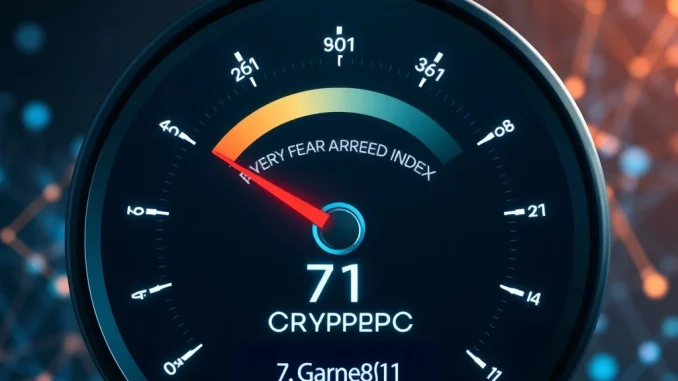
Are you feeling the buzz in the crypto markets? The Crypto Fear & Greed Index, a widely watched barometer of market sentiment, has remained unchanged at a robust 71 as of July 11. This consistent reading keeps the market firmly entrenched in the ‘Greed zone,’ a fascinating signal for anyone tracking the pulse of digital assets. But what exactly does this unwavering ‘Greed’ signal mean for investors, and how is this crucial indicator calculated?
Decoding the Crypto Fear & Greed Index: What Does 71 Mean?
The Crypto Fear & Greed Index is more than just a number; it’s a snapshot of the prevailing emotional state of the cryptocurrency market. Provided by the software development platform Alternative, this index ranges from 0 to 100. A score of 0 signifies ‘Extreme Fear,’ indicating that investors are highly apprehensive and potentially overselling, while 100 represents ‘Extreme Greed,’ suggesting euphoria and a potential for market overvaluation.
When the index stands at 71, as it currently does, it clearly places the market in the ‘Greed’ territory. This level suggests that investors are generally optimistic, confident, and perhaps even experiencing a touch of FOMO (Fear Of Missing Out). While optimism can fuel upward price movements, a prolonged stay in the higher ‘Greed zone’ can also signal that the market might be due for a correction as assets become overbought. It’s a delicate balance between healthy bullish sentiment and potential irrational exuberance.
How is Crypto Market Sentiment Measured?
Understanding the methodology behind the Crypto Fear & Greed Index is key to appreciating its insights. The index is a composite of six different factors, each weighted to contribute to the final score. These factors aim to capture various aspects of crypto market sentiment, from price volatility to social media chatter. Here’s a breakdown:
- Volatility (25%): This factor measures the current volatility and maximum drawdowns of Bitcoin compared to its average values over the last 30 and 90 days. High volatility often indicates a fearful market, while lower volatility can suggest stability or even complacency.
- Market Momentum/Volume (25%): This component assesses the current volume and market momentum of Bitcoin. High buying volumes and strong upward momentum typically point towards a greedy market, whereas low volumes and declining prices suggest fear.
- Social Media (15%): The index analyzes cryptocurrency-related hashtags and mentions on social media platforms, particularly Twitter. A surge in positive sentiment and high engagement can indicate growing public interest and greed.
- Surveys (15%): While currently paused, this factor previously involved weekly polls asking investors about their market outlook. These surveys provided direct insights into investor sentiment.
- Bitcoin Dominance (10%): This measures Bitcoin’s share of the total cryptocurrency market capitalization. An increasing Bitcoin dominance can sometimes indicate fear, as investors might be moving their funds into the perceived safer haven of Bitcoin. Conversely, a decreasing dominance might suggest a shift towards altcoins, often seen during periods of market exuberance.
- Google Trends (10%): The index analyzes Google search trends for cryptocurrency-related terms. A spike in searches for terms like ‘Bitcoin price manipulation’ or ‘crypto bubble’ often signals fear, while searches for ‘how to buy crypto’ or ‘Bitcoin halving’ might suggest growing interest and greed.
The Role of Bitcoin Dominance in Market Sentiment
It’s interesting to note the specific weighting given to Bitcoin dominance. At 10%, it might seem smaller than volatility or momentum, but its qualitative impact is significant. Bitcoin, being the largest and most established cryptocurrency, often acts as the bellwether for the entire market. When Bitcoin’s dominance rises, it can sometimes be interpreted as investors seeking safety, pulling funds from more volatile altcoins and parking them in Bitcoin during uncertain times. Conversely, when Bitcoin’s dominance falls, it often signals a ‘risk-on’ environment where investors are more comfortable venturing into altcoins, a characteristic often seen during periods of high ‘Greed.’
The index’s inclusion of Bitcoin dominance highlights the interconnectedness of the crypto ecosystem and how the king coin’s movements ripple through the entire market, influencing overall crypto market sentiment.
Navigating the Market: Actionable Insights from the Greed Zone
So, what should you do when the Crypto Fear & Greed Index is consistently in the ‘Greed zone’ at 71? It’s crucial to remember that this index is a sentiment indicator, not a definitive buy or sell signal. However, it offers valuable actionable insights:
- Exercise Caution: A high ‘Greed’ score suggests that the market might be getting overheated. While prices can continue to rise, the risk of a correction increases. It’s a time to be cautious about new, large investments and perhaps consider taking some profits if you’ve been in the market for a while.
- Avoid FOMO: The ‘Greed zone’ is precisely when FOMO is strongest. Don’t let the fear of missing out drive irrational decisions. Stick to your investment strategy and avoid chasing pumps.
- Look for Contrarian Opportunities: Historically, periods of ‘Extreme Fear’ have often presented excellent buying opportunities, while ‘Extreme Greed’ has sometimes preceded pullbacks. While not a guarantee, a contrarian approach might involve being more reserved during greed and more active during fear.
- Combine with Other Analysis: The index is best used as one tool in a comprehensive analytical toolkit. Combine its insights with technical analysis, fundamental research, and macroeconomic factors before making any investment decisions.
The Ever-Shifting Sands of Market Momentum
The 25% weighting given to market momentum and volume underscores its importance in gauging current market activity. Strong positive momentum, coupled with high trading volumes, indicates robust buying interest and often confirms a bullish trend. However, understanding this factor also involves recognizing when momentum might be waning, even if the overall index remains high. A high index score with declining momentum could be a subtle sign that the underlying buying pressure is softening, a key detail for discerning traders.
Conclusion: A Steady Pulse in the Crypto Heartbeat
The unwavering reading of 71 on the Crypto Fear & Greed Index signals a period of sustained optimism in the market. While being in the ‘Greed zone’ can feel exciting, it’s also a powerful reminder for investors to remain vigilant and make informed decisions. This index, by synthesizing various data points from volatility to Bitcoin dominance and market momentum, provides a unique lens through which to view the collective psychology of crypto participants. Use it as a guide, not a gospel, to navigate the dynamic and often unpredictable world of cryptocurrencies.
Frequently Asked Questions (FAQs)
1. What is the Crypto Fear & Greed Index?
The Crypto Fear & Greed Index is a tool developed by Alternative.me that measures the prevailing emotional sentiment in the cryptocurrency market. It ranges from 0 (Extreme Fear) to 100 (Extreme Greed), indicating whether investors are feeling fearful or overly optimistic.
2. How is the Crypto Fear & Greed Index calculated?
The index is calculated using six weighted factors: volatility (25%), market momentum/volume (25%), social media activity (15%), surveys (15% – currently paused), Bitcoin dominance (10%), and Google Trends (10%). Each factor contributes to the overall score, reflecting different aspects of market behavior.
3. What does a ‘Greed’ score of 71 signify?
A score of 71 falls firmly within the ‘Greed’ zone. This indicates that investors are generally feeling optimistic, confident, and potentially experiencing FOMO. While it suggests strong market interest, it can also be a signal to exercise caution as markets in extreme greed can be prone to corrections.
4. Can I use the Crypto Fear & Greed Index to predict market movements?
No, the Crypto Fear & Greed Index is a sentiment indicator, not a predictive tool for future price movements. It reflects the current emotional state of the market. While historical trends show that extreme fear can be a buying opportunity and extreme greed a selling signal, it should always be used in conjunction with other technical and fundamental analysis tools.
5. Why is Bitcoin Dominance a factor in the index?
Bitcoin dominance measures Bitcoin’s market capitalization relative to the total crypto market. It’s included because Bitcoin often leads the market. A rising dominance can sometimes indicate a ‘flight to safety’ (fear), while a falling dominance might suggest increased risk appetite and a shift to altcoins (greed).
6. Are there any limitations to the Crypto Fear & Greed Index?
Yes, like any single indicator, it has limitations. It’s primarily based on Bitcoin data, may not perfectly reflect altcoin sentiment, and can sometimes be a lagging indicator. It also doesn’t account for external macroeconomic events or unforeseen news. It’s best viewed as one piece of a larger analytical puzzle.