The cryptocurrency market recently witnessed a significant procedural development. Three proposed exchange-traded funds (ETFs) have registered tickers with the U.S. Depository Trust and Clearing Corporation (DTCC). This move brings the **Fidelity SOL ETF**, the Canary HBAR ETF, and the Canary XRP ETF into the spotlight. This **DTCC listing** signals growing institutional interest in diverse digital assets. However, it is vital to remember that it does not guarantee immediate **SEC approval**. Investors and market observers are now closely watching these developments. They anticipate the next steps in the regulatory journey for these innovative **crypto ETFs**.
Understanding the DTCC Listing for Crypto ETFs
The appearance of new **crypto ETFs** on the DTCC website marks an important procedural step. The DTCC is a vital financial market infrastructure company. It provides crucial clearing, settlement, and information services. For an ETF, a DTCC ticker registration often precedes a market listing. This process allows for the efficient processing and settlement of future trades. However, understanding its limitations is equally crucial. This registration occurs independently of the U.S. Securities and Exchange Commission’s (SEC) review process. Consequently, it does not guarantee that an ETF will be approved for trading or listed on an exchange.
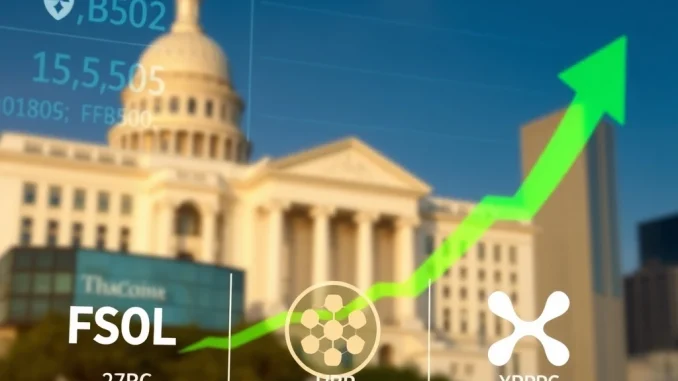
Specifically, the **Fidelity SOL ETF** (FSOL), the Canary HBAR ETF (HBR), and the Canary XRP ETF (XRPC) have now secured these tickers. This development brings them one step closer to a potential market debut. Yet, the path ahead involves further regulatory scrutiny. The ultimate decision rests with the SEC. Therefore, this **DTCC listing** should be viewed as a procedural milestone, not a final endorsement of an ETF’s launch.
What the DTCC Does: Key Functions
- Central Clearing: The DTCC centralizes and streamlines the clearing and settlement of securities transactions.
- Risk Mitigation: It significantly reduces risk for market participants. This enhances overall market stability.
- Ticker Registration: ETFs typically register tickers with the DTCC before their official launch. This prepares the groundwork for potential trading.
The **DTCC listing** essentially prepares the plumbing for an ETF. It ensures that if approved, the fund can integrate smoothly into existing financial systems. This technical readiness is a necessary, but not sufficient, condition for market entry. Investors should therefore manage their expectations carefully. The journey to a fully launched **crypto ETF** remains complex.
The Significance of Fidelity SOL ETF and Others
The proposed **Fidelity SOL ETF** represents a notable expansion in the realm of crypto investment products. Solana (SOL) is a high-performance blockchain. It is known for its speed and scalability. An ETF tracking Solana could offer mainstream investors regulated exposure to this growing ecosystem. This would bypass the complexities of direct crypto ownership. Similarly, the Canary HBAR ETF aims to provide exposure to Hedera (HBAR). Hedera is a public ledger designed for enterprise-grade decentralized applications. Its unique hashgraph consensus mechanism offers high transaction throughput and low fees.
Furthermore, the Canary **XRP ETF** is particularly noteworthy. XRP is a digital asset primarily used for payments on the Ripple network. Its regulatory status has been a subject of intense debate and legal battles. The appearance of an **XRP ETF** on the DTCC website suggests renewed confidence from issuers. They believe in the potential for regulatory clarity. These ETFs, if approved, could unlock significant institutional capital. They would provide a familiar investment vehicle for these digital assets. This could dramatically increase their liquidity and adoption.
Why These Specific Assets?
- Solana (SOL): A leading smart contract platform. It offers high transaction speeds and a vibrant decentralized application (dApp) ecosystem.
- Hedera (HBAR): A unique enterprise-grade public network. It focuses on stability, security, and governance.
- XRP (XRPC): A digital asset designed for fast, low-cost international payments. It holds a prominent position in the cross-border remittance sector.
The choice of these specific cryptocurrencies for new **crypto ETFs** reflects a broader market trend. Issuers are looking beyond Bitcoin and Ethereum. They aim to capitalize on the growth of alternative layer-1 blockchains and specialized payment networks. This diversification provides investors with more options. It also signals a maturing digital asset market. However, each of these assets carries its own unique risk profile. Investors must understand these before considering any potential ETF.
Navigating the Path to SEC Approval
Achieving **SEC approval** for a cryptocurrency ETF is a rigorous process. The SEC has historically been cautious. They cite concerns over market manipulation, investor protection, and valuation methodologies. For years, the commission rejected numerous applications for spot Bitcoin ETFs. This changed with the landmark approval of several spot Bitcoin ETFs in early 2024. This decision set a precedent. It signaled a potential shift in the SEC’s stance towards digital asset products.
However, the path for other **crypto ETFs**, especially those tracking altcoins, remains challenging. The SEC applies strict standards. They require robust surveillance-sharing agreements. These agreements aim to prevent fraud and manipulation. Furthermore, the underlying markets for Solana, Hedera, and XRP may not yet meet the same regulatory comfort level as Bitcoin’s. Therefore, while the recent Bitcoin ETF approvals are encouraging, they do not guarantee similar outcomes for these newer applications. The commission assesses each application on its own merits. It considers the specific characteristics of the underlying asset and its market.
Key Hurdles for SEC Approval
- Market Surveillance: Ensuring robust agreements to detect and prevent market manipulation.
- Investor Protection: Safeguarding retail investors from potential risks associated with volatile assets.
- Valuation Methods: Establishing reliable and transparent pricing mechanisms for the underlying cryptocurrencies.
- Custody Solutions: Ensuring secure and regulated custody of the digital assets.
The ongoing dialogue between ETF issuers and the SEC is crucial. Issuers must demonstrate that their proposed **crypto ETFs** comply with all regulatory requirements. They must also address the SEC’s concerns effectively. This often involves providing detailed information on market structure, liquidity, and security measures. The outcome for the **Fidelity SOL ETF**, Canary HBAR ETF, and Canary **XRP ETF** will depend heavily on these ongoing discussions and the SEC’s evolving regulatory framework.
What This Means for the Crypto Market and Investors
The potential approval of more **crypto ETFs** could have profound implications. It could significantly increase accessibility to digital assets for traditional investors. ETFs offer a familiar and regulated investment vehicle. This allows investors to gain exposure without managing private keys or navigating crypto exchanges. Consequently, this could lead to increased institutional adoption. More capital might flow into the Solana, Hedera, and XRP ecosystems. This influx could potentially boost their market capitalization and liquidity.
Moreover, the launch of these ETFs could foster greater market maturity. It might encourage more rigorous regulatory oversight. This could ultimately benefit all participants. For existing crypto investors, these ETFs offer another way to diversify portfolios. They also provide opportunities for arbitrage and enhanced price discovery. However, investors must remain aware of the inherent volatility of cryptocurrencies. Even within a regulated ETF structure, the underlying asset’s price fluctuations will persist. Therefore, due diligence is essential before making any investment decisions.
Potential Market Impacts
- Increased Liquidity: More accessible investment avenues can lead to higher trading volumes.
- Mainstream Adoption: Traditional investors gain easier entry into the crypto space.
- Price Impact: Significant capital inflows could positively influence the prices of SOL, HBAR, and XRP.
- Regulatory Clarity: Further ETF approvals might signal a clearer regulatory path for the broader crypto industry.
The development of these **crypto ETFs** signifies a growing convergence between traditional finance and the digital asset world. This trend is likely to continue. It will shape how investors interact with cryptocurrencies in the coming years. The DTCC listing is a small but important step in this ongoing evolution. It highlights the industry’s persistent efforts to integrate digital assets into the mainstream financial system.
Beyond the DTCC: The Future of Crypto ETFs
The appearance of the **Fidelity SOL ETF**, Canary HBAR ETF, and Canary **XRP ETF** on the DTCC website represents more than just individual product applications. It reflects a broader industry trend. Asset managers are actively exploring new ways to offer regulated exposure to a wider range of digital assets. Following the success of Bitcoin ETFs, attention naturally shifts to other prominent cryptocurrencies. Ethereum ETFs are already a major topic of discussion. Many expect their eventual approval.
Looking ahead, we might see even more specialized **crypto ETFs**. These could track baskets of cryptocurrencies, specific sectors within crypto (e.g., DeFi, gaming), or even inverse products. The regulatory landscape will continue to evolve. This evolution will likely influence the pace and scope of new ETF approvals. As regulators gain more experience with digital assets, their approach may become more nuanced. This could potentially open doors for even more innovative investment products. The market’s demand for diversified and regulated crypto exposure remains strong. This demand will undoubtedly drive further product development.
In conclusion, the DTCC listings for the **Fidelity SOL ETF**, Canary HBAR ETF, and Canary **XRP ETF** are noteworthy. They demonstrate the ongoing institutional push for greater crypto integration. While these listings are merely procedural, they represent tangible progress. The ultimate decision rests with the SEC. However, these developments underscore the growing momentum behind **crypto ETFs**. They also highlight the industry’s commitment to bridging the gap between traditional finance and the dynamic world of digital assets. Investors will eagerly await the next chapter in this unfolding story.
Frequently Asked Questions (FAQs)
Q1: What does a DTCC listing mean for a crypto ETF?
A DTCC listing means that an ETF has registered its ticker with the Depository Trust and Clearing Corporation. This prepares the fund for potential trading and settlement processes. It is a procedural step for market readiness. However, it does not imply **SEC approval** for the ETF to launch.
Q2: Does the DTCC listing guarantee SEC approval for the Fidelity SOL ETF or other crypto ETFs?
No, a DTCC listing does not guarantee **SEC approval**. The DTCC operates independently of the SEC. The SEC conducts its own rigorous review process. It assesses factors like market surveillance, investor protection, and potential manipulation risks before approving any **crypto ETFs**.
Q3: Which specific crypto ETFs appeared on the DTCC website?
Three proposed **crypto ETFs** appeared on the DTCC website. These include the **Fidelity SOL ETF** (FSOL), the Canary HBAR ETF (HBR), and the Canary **XRP ETF** (XRPC). Each aims to provide exposure to a different underlying digital asset.
Q4: Why are these particular cryptocurrencies (Solana, Hedera, XRP) being considered for ETFs?
Solana, Hedera, and XRP are prominent digital assets with significant market capitalization and distinct use cases. Solana offers high-speed transactions, Hedera provides an enterprise-grade public ledger, and XRP focuses on cross-border payments. Issuers see potential in offering regulated exposure to these diverse and growing ecosystems through **crypto ETFs**.
Q5: How does this DTCC listing relate to recent spot Bitcoin ETF approvals?
The recent spot Bitcoin ETF approvals set a precedent for **SEC approval** of crypto-backed products. While encouraging, these new DTCC listings for altcoin ETFs still face the SEC’s stringent review process. The commission evaluates each asset individually, considering its market structure and regulatory readiness. This **DTCC listing** is a step in that direction.
Q6: What are the potential benefits of an XRP ETF for investors?
An **XRP ETF**, if approved, could offer investors regulated and accessible exposure to XRP without direct ownership. It could simplify investment, potentially increase liquidity for XRP, and attract institutional capital. This could also signal greater regulatory clarity for XRP’s status, benefiting its broader market adoption.