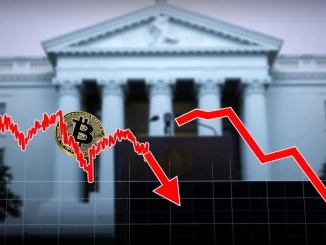
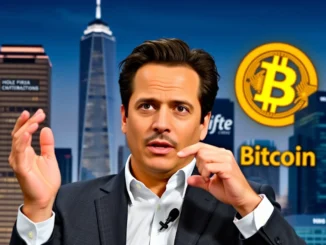
The recent volatility in the digital asset space has sparked widespread discussion. Many investors naturally wonder about the long-term health of the cryptocurrency market. However, Matt Hougan, Chief Investment Officer at Bitwise, offers a clear and reassuring perspective. He characterizes the latest crypto crash as a temporary adjustment, not a fundamental shift. This expert insight provides crucial context for understanding current market dynamics and future potential.
Bitwise CIO Assesses the Recent Crypto Crash
The recent downturn in the cryptocurrency market generated significant headlines. President Donald Trump’s remarks on tariffs for Chinese imports initially triggered this swift market reaction. Yet, the underlying cause, according to the Bitwise CIO, was more about market mechanics. Hougan explained that the plunge primarily stemmed from the liquidation of excessive leverage. This means that highly indebted positions were forcibly closed, amplifying the downward pressure. Importantly, this event differed from previous, more severe market corrections. There were no major institutional bankruptcies, for example. Furthermore, technical failures remained minimal across the ecosystem. Investor panic also appeared limited, suggesting a more mature response from market participants. Consequently, the rapid recovery observed in many assets supports this assessment of a short-term phenomenon.
Understanding the Market Adjustment, Not a Structural Change
Matt Hougan’s distinction between a ‘temporary adjustment’ and a ‘structural change’ is vital for investors. A temporary adjustment indicates a short-term correction within an ongoing trend. Conversely, a structural change would imply a fundamental alteration to the market’s long-term trajectory. The Bitwise CIO emphasized that the core underpinnings of the cryptocurrency market remain robust. This recent dip, therefore, should be viewed through that lens. It served to flush out speculative excess rather than expose systemic flaws. Investors can find reassurance in this analysis, understanding that the market’s foundational elements are still strong. This perspective encourages a focus on long-term investment strategies.
Hougan highlighted several key observations during the event:
- Liquidation of Excessive Leverage: This was the primary driver of the rapid price drop.
- Absence of Major Institutional Bankruptcies: A sign of improved risk management within larger entities.
- Limited Investor Panic: Indicating growing market maturity and confidence among participants.
- Minimal Technical Failures: The underlying infrastructure largely held up under stress.
DeFi Resilience Shines During Volatility
A crucial takeaway from the recent crypto crash was the exceptional performance of decentralized finance (DeFi) protocols. Platforms like Uniswap (UNI), Hyperliquid (HYPE), and Aave (AAVE) continued to operate normally. This uninterrupted functionality underscores the inherent strength and robust design of these decentralized systems. While some centralized exchanges faced temporary issues, the DeFi ecosystem proved its mettle. This demonstrated its capacity to withstand significant market stress. The seamless operation of these protocols offers a compelling case for the future of decentralized finance. It also builds confidence in the broader cryptocurrency market infrastructure. This DeFi resilience is a powerful indicator for investors seeking reliable and transparent financial services.
Core Growth Drivers Remain Unaffected by Market Adjustment
The Bitwise CIO concluded that the recent event does not impact the market’s core growth drivers. These fundamental forces continue to propel the digital asset space forward. First, an improving regulatory environment provides greater clarity and legitimacy. Governments worldwide are developing frameworks for cryptocurrencies. This reduces uncertainty and fosters wider adoption. Second, increasing institutional participation signals growing mainstream acceptance. Major financial institutions are allocating capital and resources to digital assets. Finally, competition with traditional finance drives innovation and efficiency within crypto. These factors collectively underpin the long-term upward trend. Therefore, this short-term market adjustment merely represents a pause. It does not derail the overarching narrative of growth and innovation.
The Future Outlook: Sustained Growth and DeFi Resilience
Looking ahead, Matt Hougan maintains a positive outlook for the cryptocurrency market. He anticipates that the mid- to long-term upward trend will resume after this short-term correction. The market’s ability to absorb significant leverage liquidation without systemic failure is a testament to its evolving maturity. Furthermore, the robust DeFi resilience demonstrated during the crash provides a strong foundation. It highlights the technological advancements and inherent stability of decentralized applications. Investors should view such events as opportunities. They allow for a re-evaluation of positions and a reinforcement of long-term conviction. The confluence of regulatory progress, institutional adoption, and technological innovation continues to shape a promising future for digital assets.
Ultimately, the Bitwise CIO‘s analysis offers a balanced perspective. It acknowledges the market’s inherent volatility while underscoring its underlying strength. This nuanced view helps investors navigate complex market conditions with greater confidence. The digital asset landscape is dynamic, but its fundamental growth drivers remain firmly in place. Consequently, the path forward appears poised for continued expansion and innovation.
FAQs on the Recent Crypto Market Volatility
Q1: What caused the recent crypto crash, according to Bitwise CIO Matt Hougan?
A1: According to Matt Hougan, the recent crypto crash was primarily triggered by President Donald Trump’s remarks on tariffs for Chinese imports. However, the plunge was fundamentally driven by the liquidation of excessive leverage within the market.
Q2: Was the recent crypto crash a structural change or a temporary adjustment?
A2: Matt Hougan characterized the recent event as a temporary adjustment, not a structural change. He emphasized that the market’s core growth drivers remain intact, suggesting a short-term correction within an ongoing upward trend.
Q3: How did DeFi protocols perform during the market downturn?
A3: DeFi protocols such as Uniswap (UNI), Hyperliquid (HYPE), and Aave (AAVE) operated normally during the crash. This demonstrated significant DeFi resilience, with only some centralized exchanges experiencing temporary issues.
Q4: What are the core growth drivers for the cryptocurrency market?
A4: The core growth drivers for the cryptocurrency market, as identified by the Bitwise CIO, include an improving regulatory environment, increasing institutional participation, and growing competition with traditional finance. These factors are expected to continue fueling long-term growth.
Q5: What is the mid- to long-term outlook for the cryptocurrency market?
A5: The Bitwise CIO believes that the mid- to long-term upward trend for the cryptocurrency market will resume after this short-term correction. The market’s underlying strength and the resilience of its core components suggest continued positive momentum.