The world of cryptocurrency is no stranger to regulatory debates, but a recent warning from a prominent U.S. Senator has ignited a fresh wave of concern. At the heart of the matter is a proposed crypto bill, the Digital Asset Market Structure Act, which critics fear could inadvertently create pathways for established companies to sidestep existing financial oversight. This isn’t just about crypto; it’s about the very foundations of how businesses are regulated in the digital age.
Understanding the Crypto Bill Controversy
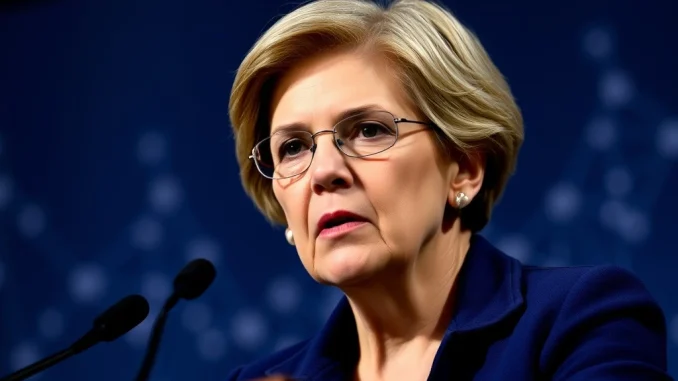
During a recent hearing in Washington, D.C., U.S. Senator Elizabeth Warren, a well-known voice on financial regulation and a long-standing critic of the cryptocurrency industry, voiced significant apprehension regarding the Digital Asset Market Structure Act, often referred to as the CLARITY Act. Her primary concern? That if this crypto bill becomes law, it could empower non-cryptocurrency companies to tokenize their assets specifically to avoid the robust oversight of the Securities and Exchange Commission (SEC).
Cointelegraph reported Warren’s assertion that even major listed companies like Meta and Tesla could theoretically circumvent all existing SEC regulations simply by listing their stocks on a blockchain. She highlighted this as a “serious problem,” suggesting a potential loophole that could undermine investor protection and market integrity. The idea is that by repackaging traditional securities as tokenized assets, companies might attempt to move them into a less regulated space, thus escaping the rigorous disclosure and compliance requirements currently enforced by the SEC.
The Critical Role of SEC Regulations for Digital Assets
Why are SEC regulations so vital, especially when it comes to digital assets? The Securities and Exchange Commission’s primary mission is to protect investors, maintain fair, orderly, and efficient markets, and facilitate capital formation. For decades, it has established rules to ensure transparency, prevent fraud, and hold companies accountable for the information they provide to the public. These regulations cover everything from initial public offerings (IPOs) to ongoing financial reporting for publicly traded companies.
The concern Senator Warren raises is that tokenization, while a powerful technological innovation, could be misused. If a company’s stock, traditionally regulated as a security, is simply moved onto a blockchain without being subject to equivalent regulatory scrutiny, it creates a potential vulnerability. This could:
- Undermine Investor Protection: Without SEC oversight, investors might lack access to critical financial information, making it harder to make informed decisions and increasing their risk of fraud.
- Create Regulatory Arbitrage: Companies might choose to tokenize assets not for technological benefits, but purely to operate in a less regulated environment, giving them an unfair advantage over traditional companies that adhere to strict SEC rules.
- Fragment Market Oversight: A patchwork of regulations, or a lack thereof, could lead to a less stable and predictable market for all participants.
Elizabeth Warren’s Consistent Stance on Crypto Regulation
Senator Elizabeth Warren has consistently been one of the most vocal critics of the cryptocurrency industry, often citing concerns about consumer protection, illicit finance, and market stability. Her remarks at the CLARITY Act hearing are not an isolated incident but rather a continuation of her long-standing call for more stringent oversight of digital assets.
She has previously likened parts of the crypto market to the “Wild West,” emphasizing the need for robust frameworks to prevent financial crime and protect ordinary investors. Her argument is that if traditional finance is heavily regulated to safeguard the public, the rapidly growing crypto sector should not be an exception. Her current warning underscores her belief that legislative efforts must be carefully crafted to close potential loopholes, rather than inadvertently creating new ones.
The Industry’s Call for Sensible Crypto Regulation
While Senator Warren raises valid concerns, the cryptocurrency industry itself often advocates for clear and comprehensive crypto regulation, albeit from a different perspective. Ripple CEO Brad Garlinghouse, also present at the hearing, highlighted the significant participation of Americans in the cryptocurrency economy, stating that over 55 million individuals are now involved.
Garlinghouse’s perspective, widely shared by many in the crypto space, is that a “sensible regulatory framework” is not just desirable but essential. He argued that such a framework, particularly concerning crypto market structure, should have been established long ago. The industry often seeks clarity to foster innovation, attract institutional investment, and provide legal certainty for businesses operating in this nascent sector. Without clear rules, companies face uncertainty, which can stifle growth and push development overseas.
Navigating the Future of Digital Assets and Oversight
The debate surrounding the CLARITY Act and Senator Warren’s warnings highlights a fundamental tension: how to foster innovation in digital assets while simultaneously ensuring robust investor protection and market integrity. It’s a complex balancing act that requires careful consideration from lawmakers, industry leaders, and regulators alike.
The outcome of discussions around this crypto bill and similar legislative efforts will undoubtedly shape the future of the digital asset landscape in the U.S. Will regulators find a way to adapt existing frameworks, or will entirely new approaches be necessary? The answers will determine whether the U.S. remains a leader in digital innovation while upholding its commitment to financial oversight.
Conclusion: A Crucial Juncture for Crypto and Regulation
Senator Elizabeth Warren’s recent warning serves as a potent reminder of the ongoing challenges in regulating the rapidly evolving cryptocurrency space. Her concerns about the Digital Asset Market Structure Act potentially allowing companies to bypass vital SEC regulations underscore the need for meticulous legislative drafting. While the crypto industry, represented by figures like Brad Garlinghouse, clamors for regulatory clarity to foster growth and adoption, the debate remains centered on how to achieve this without compromising investor safety and market fairness. As lawmakers continue to deliberate, the decisions made today will have profound and lasting impacts on the future of digital assets and the broader financial ecosystem.
Frequently Asked Questions (FAQs)
Q1: What is the Digital Asset Market Structure Act (CLARITY Act)?
A1: The Digital Asset Market Structure Act, or CLARITY Act, is a proposed U.S. bill aimed at establishing a regulatory framework for digital assets. It seeks to clarify which digital assets fall under the purview of different regulatory bodies, such as the SEC and the CFTC.
Q2: Why is Senator Elizabeth Warren concerned about this crypto bill?
A2: Senator Warren is concerned that the CLARITY Act, if passed, could inadvertently create a loophole allowing traditional, non-cryptocurrency companies (like Meta or Tesla) to tokenize their assets and list them on a blockchain, thereby potentially avoiding existing SEC regulations designed for investor protection.
Q3: How could companies supposedly avoid SEC regulations through tokenization?
A3: Warren suggests that by converting traditional securities (like stocks) into blockchain-based tokens, companies might attempt to move them into a less regulated environment, bypassing the strict disclosure, reporting, and compliance requirements enforced by the SEC for traditional securities.
Q4: What is Ripple CEO Brad Garlinghouse’s perspective on crypto regulation?
A4: Brad Garlinghouse emphasizes the widespread participation in the cryptocurrency economy (over 55 million Americans) and advocates for a “sensible regulatory framework.” He believes clear and appropriate regulations are essential for the industry’s growth, innovation, and long-term stability, and should have been established much earlier.
Q5: Why is a clear regulatory framework important for the cryptocurrency market?
A5: A clear regulatory framework provides legal certainty for businesses, encourages institutional investment, protects consumers from fraud, and fosters innovation by establishing clear rules of engagement. Without it, the industry faces uncertainty, which can hinder growth and push development overseas.