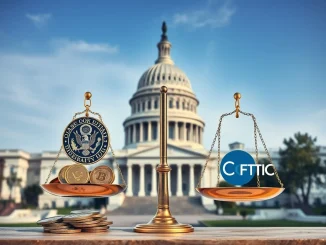
The financial world is buzzing with a crucial development: the traditional banking sector is sounding the alarm. As the digital asset revolution continues its relentless march, a significant point of contention has emerged around crypto bank licenses. This isn’t just a minor regulatory hiccup; it’s a foundational debate about who gets to operate within the established financial system and under what rules.
US Banking Groups Raise the Alarm: What’s Their Core Concern?
Traditional US banking groups and credit unions are not sitting idly by as cryptocurrency firms seek to enter their regulated turf. They’ve collectively voiced strong objections to the Office of the Comptroller of the Currency (OCC), expressing profound “policy and process concerns” regarding the granting of national bank charters to crypto entities. Their letter to the OCC highlights several critical areas of apprehension:
- The Heart of the Matter: These established financial institutions are primarily worried about the implications of stablecoin issuers, like Circle and Ripple Labs, operating under the same regulatory umbrella as traditional banks. They argue that stablecoins, despite their design, introduce unique risks not fully addressed by current banking frameworks.
- Policy & Legal Quandaries: The groups point to potential gaps in existing regulations and legal ambiguities. They question whether the current banking laws are robust enough to handle the unique operational models and risk profiles associated with digital asset businesses.
- Transparency Demands: A key demand from these groups is greater transparency. They’re pushing for more detailed public disclosure about the applications submitted by crypto firms, ensuring a level playing field and informed public discourse about these unprecedented moves.
Who Are the Key Stablecoin Issuers Seeking Banking Charters?
The spotlight is firmly on prominent stablecoin issuers and other financial services companies that have thrown their hats into the ring for national bank charters. Firms like Circle, known for its USDC stablecoin, and Ripple Labs, a major player in enterprise blockchain and cross-border payments, are at the forefront. BitGo, a digital asset trust company, has also pursued a similar path.
- Circle’s Vision: Circle aims to become a full-reserve national bank. The company argues that this status would enhance trust and stability for its USDC stablecoin, bringing it further into the highly regulated financial system and potentially expanding its utility.
- Ripple’s Ambitions: Ripple’s pursuit of a national bank charter signals a broader ambition to integrate its blockchain solutions more deeply into traditional finance. This could allow them to offer regulated payment services directly, bypassing some existing intermediaries.
- The Drive for Legitimacy: For these crypto firms, obtaining a bank license isn’t just about expansion; it’s about gaining legitimacy, regulatory clarity, and direct access to the vast financial infrastructure that comes with a federal charter. It’s a move to bridge the gap between the nascent crypto economy and the established financial world.
OCC Crypto Applications: Navigating the Regulatory Labyrinth
The Office of the Comptroller of the Currency (OCC) finds itself at a critical juncture, tasked with evaluating these groundbreaking OCC crypto applications. As the primary regulator for national banks and federal savings associations, the OCC plays a pivotal role in shaping the future intersection of crypto and traditional finance.
- A New Frontier: The OCC’s approach to crypto has evolved significantly. While previous leadership showed a more open stance towards providing clarity for crypto firms, the current landscape demands careful consideration of new challenges and risks.
- Balancing Innovation & Risk: The OCC’s mandate is to ensure the safety and soundness of the banking system while fostering innovation. This requires a delicate balance, especially when dealing with novel technologies and business models that may not fit neatly into existing regulatory boxes.
- The Public Comment Process: The letter from banking groups underscores the importance of the public comment period and transparent review processes for such significant applications. It emphasizes that the decisions made now will have long-lasting implications for the entire financial ecosystem.
The Stakes for Ripple Circle Bank and the Wider Crypto Industry
The outcome of these applications holds immense implications, not just for Ripple Circle Bank specifically, but for the entire cryptocurrency industry. Granting national bank charters to crypto firms could:
- Boost Legitimacy: Elevate the perception of crypto assets within the mainstream financial system, potentially encouraging wider adoption by institutional and retail investors.
- Enhance Consumer Protection: Subject crypto operations to rigorous banking regulations, offering greater consumer safeguards, deposit insurance considerations, and stability that the nascent crypto market currently lacks.
- Spur Innovation: Create a more robust and regulated environment that could foster further innovation in financial technology, leading to new products and services that blend traditional finance with digital assets.
- Level the Playing Field?: Or, conversely, traditional banks argue it could create an uneven playing field if crypto firms aren’t held to the exact same stringent capital, liquidity, and compliance standards. This is a core part of their US banking concerns.
Challenges and Roadblocks
The path to full bank licensure for crypto firms is fraught with challenges that both regulators and applicants must address:
- Regulatory Parity: Ensuring crypto firms meet the same capital, liquidity, and risk management standards as traditional banks is paramount to maintain systemic stability.
- AML/KYC Compliance: Adapting existing Anti-Money Laundering (AML) and Know Your Customer (KYC) frameworks to the unique characteristics of digital assets, especially those that enable rapid, global transfers, is a complex task.
- Systemic Risk: Assessing potential systemic risks that could arise from the integration of volatile digital assets into the banking system requires new analytical tools and frameworks.
- Congressional Scrutiny: The issue is likely to attract significant attention from lawmakers, potentially leading to new legislation or policy directives that could further shape the regulatory landscape.
The Road Ahead: A Compelling Summary
The debate surrounding crypto bank licenses highlights the ongoing tension and evolution at the intersection of traditional finance and the burgeoning digital asset economy. As US banking groups voice their US banking concerns to the OCC regarding OCC crypto applications, the regulatory landscape is undeniably shifting. The decisions made by the OCC regarding stablecoin issuers like Ripple Circle Bank will set crucial precedents for how digital assets are integrated into the financial mainstream.
This isn’t just a bureaucratic tussle; it’s a foundational moment that will shape the future of finance, demanding careful consideration of innovation, risk, and regulatory integrity. The financial world watches keenly as this unprecedented chapter unfolds, eager to see how the traditional banking system and the crypto industry will ultimately coexist and potentially converge.