In the fast-paced world of cryptocurrency, understanding the broader financial landscape is just as crucial as tracking blockchain developments. This week brings a series of pivotal economic events from the United States that could send ripples across all financial markets, including your digital asset portfolio. From inflation data to insights from the Federal Reserve, these announcements are key drivers of investor sentiment and, consequently, market volatility. Let’s dive into what’s on the horizon and how you can prepare.
Why Economic Events Matter for Crypto Investors
While often seen as a separate entity, the crypto market is not immune to macroeconomic forces. Major economic indicators and central bank policies directly influence liquidity, risk appetite, and the flow of capital. High inflation, for instance, can lead central banks to tighten monetary policy, which typically makes risk assets like cryptocurrencies less attractive. Conversely, signs of economic slowdown might prompt a more dovish stance, potentially boosting investor confidence in speculative assets.
This week’s lineup of U.S. economic data and speeches offers critical insights into the health of the economy and the future direction of monetary policy. Being informed allows you to anticipate potential shifts and make more strategic decisions in your crypto investments.
The Pivotal CPI Report: What to Expect
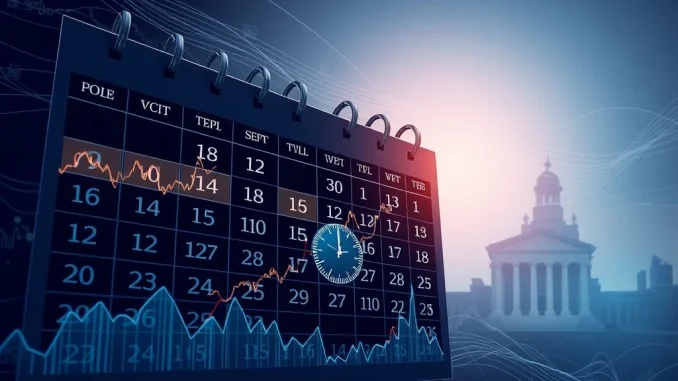
Kicking off the week with a bang, Monday, July 15, at 12:30 UTC, brings the highly anticipated U.S. Consumer Price Index (CPI) for June. The CPI report is the primary gauge of inflation, measuring the average change over time in the prices paid by urban consumers for a market basket of consumer goods and services.
- Significance: A higher-than-expected CPI indicates persistent inflation, which could pressure the Federal Reserve to maintain or even increase interest rates. This can lead to a stronger U.S. dollar and potentially dampen demand for risk assets like Bitcoin and Ethereum.
- Market Reaction: Traders and algorithms are highly sensitive to CPI figures. Expect immediate price reactions across traditional and crypto markets as the data is released.
- Your Takeaway: Pay close attention to both the headline CPI and core CPI (which excludes volatile food and energy prices) to get a clearer picture of underlying inflationary trends.
Navigating FOMC Speeches: Decoding Federal Reserve Signals
Throughout the week, a parade of FOMC speeches will offer further clues into the Federal Reserve’s thinking. These public addresses by members of the Federal Open Market Committee are invaluable for market participants seeking to understand the central bank’s stance on inflation, employment, and future interest rate policy.
Here’s who to listen to and when (all times UTC):
Monday, July 15: A Chorus of Voices
- 13:15 U.S. FOMC Member Bowman Speaks: Known for her hawkish leanings, her comments on inflation and economic strength will be closely watched.
- 16:45 U.S. Fed Vice Chair for Supervision Barr Speaks: While focused on financial regulation, his remarks can sometimes touch upon broader economic conditions and stability.
- 17:00 U.S. FOMC Member Barkin Speaks: As President of the Richmond Fed, his regional insights and outlook on the economy provide a valuable perspective.
- 18:45 U.S. Fed Collins Speaks: The Boston Fed President’s views on the dual mandate (maximum employment and price stability) are always significant.
- 23:45 U.S. Fed Logan Speaks: As President of the Dallas Fed, her comments on energy and regional economic conditions can offer unique insights.
Wednesday, July 16: More Central Bank Insights
- 12:00 U.S. FOMC Member Barkin Speaks: A second opportunity to hear from him, potentially reiterating or elaborating on earlier comments.
- 14:00 U.S. Fed Vice Chair for Supervision Barr Speaks: Another address from Barr, reinforcing his perspective on financial stability.
- 20:30 U.S. FOMC Member Williams Speaks: The President of the New York Fed and Vice Chair of the FOMC, Williams is a key figure. His remarks often carry significant weight regarding monetary policy direction.
Thursday, July 17: Concluding Remarks
- 14:00 U.S. FOMC Member Kugler Speaks: As a Fed Governor, her insights on economic data and policy implications are important.
- 16:45 U.S. FOMC Member Daly Speaks: The San Francisco Fed President often provides a nuanced view on labor market conditions and inflation.
- 17:30 U.S. Fed Governor Cook Speaks: As a Fed Governor, her perspective on the economy and financial system contributes to the overall policy outlook.
- 22:30 U.S. Fed Waller Speaks: A prominent hawk, Waller’s comments on inflation and the path of interest rates are highly influential.
Each of these speeches can introduce new nuances or reinforce existing narratives about the economy, directly influencing investor confidence and contributing to market volatility. Listen for phrases related to “data dependency,” “inflation expectations,” and “labor market tightness.”
Beyond CPI: PPI and Initial Jobless Claims
While the CPI report and FOMC speeches dominate the headlines, other vital economic events this week offer a broader economic picture:
Wednesday, July 16
- 12:30 U.S. PPI (June): The Producer Price Index measures inflation from the perspective of producers. It’s often seen as a leading indicator for consumer inflation. If producer costs are rising, it’s likely those costs will eventually be passed on to consumers.
- 18:00 U.S. Beige Book: This report provides anecdotal information on current economic conditions by district. It’s a qualitative assessment that offers color to the quantitative data, giving a glimpse into how businesses and consumers are truly feeling on the ground.
Thursday, July 17
- 12:30 U.S. Initial Jobless Claims: This weekly report indicates the number of individuals filing for unemployment benefits for the first time. It’s a key real-time indicator of the health of the labor market. A rising number could signal a weakening economy, while a low number suggests strength. The labor market’s strength is a critical factor for the Federal Reserve in its policy decisions.
Strategies for the Week: Mitigating Crypto Market Impact
Given the density of significant economic events, this week is poised for potential market volatility. Here’s how crypto investors can approach it:
- Stay Informed: Bookmark reliable financial news sources and monitor real-time data releases. Understanding the context behind the numbers is crucial.
- Risk Management: Consider adjusting your portfolio’s risk exposure. If you anticipate significant downside volatility, you might reduce leverage or increase stablecoin holdings temporarily.
- Look for Confirmation: Don’t react to a single data point. Wait for confirmation from multiple sources or subsequent events. The market often overreacts to initial releases.
- Long-Term Perspective: For long-term holders, short-term market fluctuations driven by economic data might present buying opportunities rather than reasons for panic.
- Observe Correlations: Pay attention to how Bitcoin and Ethereum react to U.S. dollar strength, bond yields, and equity market movements. Increasingly, crypto assets are showing correlation with traditional risk assets.
Conclusion: A Week of Economic Unveilings
This week promises to be a dynamic period for financial markets, with a strong focus on U.S. economic health and the Federal Reserve’s policy intentions. The CPI report, combined with a flurry of FOMC speeches and other key indicators like PPI and Initial Jobless Claims, will provide critical insights into the inflationary environment and the state of the labor market. For crypto investors, these economic events are not just background noise; they are fundamental drivers of sentiment and capital flows that directly influence market volatility. By staying informed and adopting a measured approach, you can navigate the potential turbulence and position your portfolio more effectively. Remember, knowledge is your strongest asset in an ever-evolving market.
Frequently Asked Questions (FAQs)
Q1: What is the CPI report and why is it important for crypto?
A1: The Consumer Price Index (CPI) measures inflation. A higher CPI can signal that the Federal Reserve might tighten monetary policy (e.g., raise interest rates) to combat inflation. This typically makes risk assets like cryptocurrencies less attractive, potentially leading to price declines.
Q2: Why are FOMC speeches so closely watched?
A2: FOMC (Federal Open Market Committee) members are key decision-makers for U.S. monetary policy. Their speeches offer insights into the Federal Reserve’s views on the economy, inflation, and future interest rate decisions. These insights directly influence market expectations and can cause significant market volatility.
Q3: How do Initial Jobless Claims impact financial markets?
A3: Initial Jobless Claims report the number of new unemployment benefit applications. It’s a real-time indicator of labor market health. A rising number suggests economic weakness, potentially prompting the Fed to ease policy, while a low number indicates strength, possibly leading to tighter policy. Both scenarios can impact investor sentiment and market direction.
Q4: What is the Beige Book?
A4: The Beige Book is a qualitative report published by the Federal Reserve, providing anecdotal information on current economic conditions across its twelve districts. It offers a ground-level view of how businesses and consumers perceive the economy, complementing quantitative data and informing the FOMC’s policy discussions.
Q5: How can I prepare my crypto portfolio for potential market volatility this week?
A5: To prepare for potential market volatility, consider staying informed about economic releases, practicing risk management (e.g., adjusting leverage, increasing stablecoin holdings), avoiding overreaction to single data points, and maintaining a long-term perspective. Observing correlations between crypto and traditional assets can also be beneficial.