A significant hurdle has emerged for the proposed Digital Asset Market Structure Clarity Act (CLARITY Act). This crucial legislation aims to shape the future of crypto regulation in the United States. However, U.S. Senator Elizabeth Warren, a prominent cryptocurrency critic, has reiterated her firm opposition to the bill. Her stance introduces a new layer of complexity to the ongoing debate surrounding digital assets and their oversight.
CLARITY Act Faces Opposition: Senator Warren’s Warning
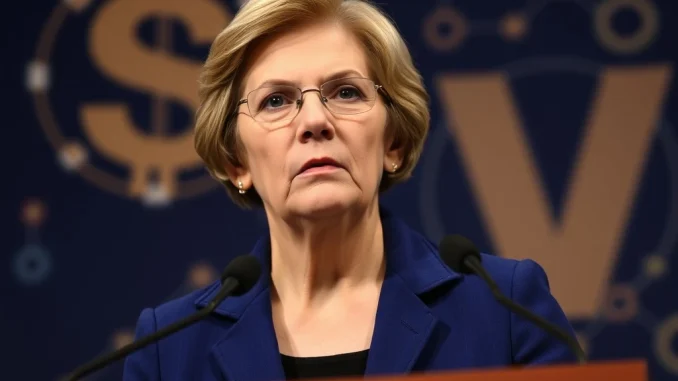
Senator Elizabeth Warren recently voiced her strong disapproval of the CLARITY Act. She shared her concerns during a recent MSNBC interview. Warren argued that the legislation, already passed by the House, could encourage corruption among elected officials. This accusation highlights her consistent skepticism towards the cryptocurrency industry and its potential influence on policy.
Her opposition is not new. Senator Warren has frequently expressed worries about the unregulated aspects of digital assets. She often cites risks to consumers and financial stability. Consequently, her current stance aligns with her broader legislative efforts. These efforts typically aim to impose stricter controls on the crypto sector. Her comments underscore a growing divide in Washington regarding the appropriate regulatory approach for cryptocurrencies.
Unpacking the CLARITY Act: Aims and Divisions
The Digital Asset Market Structure Clarity Act seeks to establish a clear regulatory framework for the cryptocurrency industry. Its primary goal is to provide much-needed clarity. Currently, the regulatory landscape for digital assets is fragmented. This bill proposes a division of responsibilities. It assigns oversight roles between two key financial regulators: the Securities and Exchange Commission (SEC) and the Commodity Futures Trading Commission (CFTC).
Specifically, the CLARITY Act aims to:
- Define which digital assets fall under securities law.
- Clarify which digital assets are considered commodities.
- Reduce regulatory uncertainty for crypto businesses.
- Foster innovation within a defined legal structure.
This division intends to streamline the regulatory process. It seeks to provide a predictable environment for both established firms and emerging startups. However, critics like Senator Warren believe it may open doors to undue influence.
Senator Elizabeth Warren’s Concerns: Corruption and Oversight
Senator Elizabeth Warren‘s primary concern centers on the potential for corruption. She fears the CLARITY Act might create loopholes. These loopholes, she suggests, could allow special interests to influence policy decisions. Her criticism implies that the bill, despite its stated goals, might not adequately protect the public interest. Instead, it could benefit industry insiders.
Furthermore, Warren has consistently advocated for robust consumer protections. She also pushes for stringent anti-money laundering measures within the crypto space. Her current opposition to the CLARITY Act stems from a belief that it falls short in these areas. She contends that any regulatory framework must prioritize transparency and accountability. Otherwise, it risks legitimizing practices that could harm ordinary investors and the broader financial system.
Her warnings resonate with other lawmakers who share similar concerns. They often argue that the rapid growth of digital assets requires cautious and comprehensive oversight. Consequently, the debate around the CLARITY Act reflects a fundamental disagreement. It pits those prioritizing innovation and clear rules against those emphasizing risk mitigation and strict government control.
The Broader Push for Crypto Regulation in the U.S.
The push for comprehensive crypto regulation has gained significant momentum in the U.S. Congress. Lawmakers from both parties acknowledge the need for a unified approach. The current patchwork of state and federal regulations creates confusion. It also poses challenges for businesses operating in the digital asset space. Various proposals have emerged to address this regulatory vacuum.
The CLARITY Act represents one significant attempt to provide this framework. It passed the House with bipartisan support, signaling a desire for action. Republican leaders on the Senate Banking Committee have announced their intention to pass the bill by September 30. This timeline suggests a strong commitment to advancing the legislation. However, Senator Warren’s vocal opposition could significantly complicate its path in the Senate. Her influence among progressive Democrats is substantial.
The outcome of this legislative battle will undoubtedly shape the future of digital assets in the United States. It will determine how these innovative technologies are integrated into the existing financial system. Moreover, it will set precedents for global regulatory efforts.
Defining Digital Asset Oversight: The SEC and CFTC Roles
A core element of the CLARITY Act involves defining the distinct roles of the SEC CFTC. The Securities and Exchange Commission traditionally oversees investment contracts. Meanwhile, the Commodity Futures Trading Commission regulates commodity markets. This distinction becomes complex with digital assets. Many tokens exhibit characteristics of both securities and commodities.
For instance, some tokens might start as securities. They may then evolve into commodities as their networks decentralize. The CLARITY Act aims to provide a ‘howey test’ equivalent for digital assets. This would offer a clear pathway for classification. This clarity is vital for exchanges, developers, and investors. It helps them understand which rules apply to specific digital tokens. Without this clear division, regulatory arbitrage and uncertainty persist.
Senator Warren’s concerns, however, extend to whether this proposed framework adequately empowers regulators. She questions if it provides sufficient tools to prevent market manipulation and illicit finance. Ultimately, the debate highlights the challenges of fitting novel technologies into existing regulatory boxes.
Looking Ahead: The Future of Crypto Legislation
The CLARITY Act is scheduled for consideration in the Senate starting in September. This marks a critical juncture for crypto regulation. Senator Warren’s opposition, while significant, is part of a broader, complex legislative landscape. Other senators hold diverse views on digital assets. Some advocate for more permissive environments, while others align with Warren’s cautious approach.
The legislative process often involves negotiations and compromises. Therefore, the final form of any crypto regulation bill might differ substantially from its initial version. Stakeholders across the crypto industry are closely watching these developments. The outcome will influence investment, innovation, and consumer protection within the digital asset ecosystem for years to come. Ultimately, the path forward for comprehensive crypto regulation remains uncertain, yet critically important.
Frequently Asked Questions (FAQs)
What is the Digital Asset Market Structure Clarity Act (CLARITY Act)?
The CLARITY Act is proposed U.S. legislation. It aims to create a clear regulatory framework for the cryptocurrency industry. It seeks to divide oversight responsibilities between the SEC and the CFTC, defining which digital assets are securities and which are commodities.
Why does Senator Elizabeth Warren oppose the CLARITY Act?
Senator Elizabeth Warren opposes the CLARITY Act because she believes it could encourage corruption among elected officials. She argues that the bill may not adequately protect consumers or prevent illicit financial activities within the digital asset market.
What is the current status of the CLARITY Act?
The CLARITY Act has already passed the U.S. House of Representatives. It is now scheduled for consideration in the Senate, with Republican leaders aiming to pass it by September 30.
How would the CLARITY Act impact the SEC and CFTC?
The CLARITY Act would establish clear lines of authority for the SEC and CFTC over digital assets. It would define specific criteria for classifying digital assets as either securities (under SEC jurisdiction) or commodities (under CFTC jurisdiction), aiming to reduce regulatory ambiguity.
What are the main arguments for and against increased crypto regulation?
Proponents argue that crypto regulation provides clarity, fosters innovation, and protects investors. Opponents, like Senator Warren, often express concerns about potential for corruption, insufficient consumer protection, and risks to financial stability from an unregulated market.
How does the CLARITY Act relate to broader crypto regulation efforts in the U.S.?
The CLARITY Act is one of several legislative proposals aiming to establish a comprehensive federal framework for crypto regulation in the U.S. It represents a significant bipartisan effort to address the current fragmented regulatory landscape for digital assets.