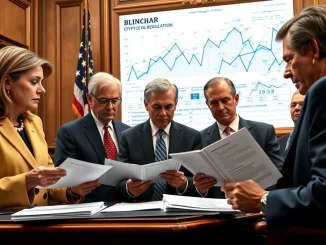
The United States regulatory landscape for digital assets faces an imminent shift. CFTC Commissioner Kristin Johnson, the sole Democratic voice on the U.S. Commodity Futures Trading Commission, will step down on September 3. This departure marks a pivotal moment for the agency. It also raises questions about the future trajectory of digital asset regulation.
Kristin Johnson’s Departure: A Key Shift for the CFTC
Kristin Johnson, a respected legal scholar, announced her resignation from the CFTC. Bloomberg first reported this significant development. Her tenure at the commission has been notable. She consistently advocated for a robust regulatory framework for emerging technologies. Her departure on September 3 will leave a void in the agency’s leadership structure. Furthermore, it highlights ongoing challenges in federal oversight of cryptocurrencies.
Johnson’s work focused heavily on market integrity and consumer protection. She frequently emphasized the need for clarity in the digital asset space. Therefore, her exit could reshape the commission’s approach. Industry participants now watch closely for any resulting policy changes.
The Immediate Impact on CFTC Leadership
Following Johnson’s departure, the CFTC will operate under the sole leadership of Acting Chair Caroline Pham. This transition centralizes authority during a critical period. The agency must navigate complex regulatory issues. Moreover, it faces increasing calls for clear guidelines for digital markets. Acting Chair Pham will lead the commission with two Republican commissioners. This dynamic could influence future enforcement actions and policy directions. The agency’s structure shifts significantly. This means its future decisions will carry considerable weight for the crypto industry.
Advocating for Robust Digital Asset Regulation
In her resignation statement, Kristin Johnson stressed the need for increased support for the CFTC. She believes the agency needs more resources to fulfill its expanded role. This includes, crucially, the oversight of digital assets. Johnson has consistently argued for a comprehensive approach. This approach would address the unique risks and opportunities presented by cryptocurrencies. She championed a proactive stance. She urged regulators to adapt quickly to technological advancements.
Her advocacy underscores a broader consensus. Many believe federal agencies require more tools and funding. These resources are essential for effective digital asset regulation. Without them, the rapidly evolving crypto market could pose greater risks. Johnson’s voice for stronger oversight will certainly be missed.
The Evolving Landscape of Crypto Regulation
The CFTC plays a vital role in the regulation of derivatives markets. This includes certain digital assets classified as commodities. However, the line between commodities and securities in the crypto space remains contentious. This ambiguity creates regulatory challenges. Various agencies, including the SEC and the CFTC, often have overlapping jurisdictions. Consequently, the industry faces uncertainty. They seek clear rules to foster innovation responsibly. The ongoing debate highlights the complexities of establishing a unified framework for crypto regulation.
- Jurisdictional Clarity: The division of power between the CFTC and SEC remains a key issue.
- Consumer Protection: Safeguarding investors from fraud and manipulation is a top priority.
- Market Integrity: Ensuring fair and orderly markets for digital assets is essential.
- Innovation Balance: Regulators aim to protect consumers without stifling technological progress.
What Johnson’s Exit Means for the Future of Crypto
The departure of CFTC Commissioner Kristin Johnson could usher in a new phase for U.S. crypto regulation. Her absence may lead to different policy priorities. Acting Chair Pham will now guide the agency’s strategy. Therefore, industry stakeholders are closely monitoring upcoming announcements. The focus remains on how the CFTC will address critical issues. These include stablecoins, decentralized finance (DeFi), and token classifications.
Many anticipate continued efforts to bring digital asset markets under a clear regulatory umbrella. However, the path forward remains complex. Collaboration among federal agencies is paramount. This cooperation will help establish consistent rules. Ultimately, the goal is to provide stability for investors and innovators alike. The coming months will reveal the true impact of this significant leadership change.
Kristin Johnson’s departure marks a notable moment for the U.S. regulatory apparatus. Her calls for enhanced support for the CFTC and clear guidelines for digital asset regulation resonate deeply. As the agency transitions, the cryptocurrency industry watches with keen interest. The decisions made in the coming months will undoubtedly shape the future of digital finance in America.
Frequently Asked Questions (FAQs)
Q1: Who is Kristin Johnson and why is her departure significant?
Kristin Johnson served as a Democratic commissioner at the U.S. Commodity Futures Trading Commission (CFTC). Her departure is significant because she was the sole Democrat on the commission. She also strongly advocated for robust digital asset regulation. Her exit creates a leadership shift at a critical time for crypto oversight.
Q2: When will CFTC Commissioner Kristin Johnson step down?
CFTC Commissioner Kristin Johnson will officially step down from her role on September 3, 2024. This date marks the end of her tenure at the commission.
Q3: Who will lead the CFTC after Johnson’s resignation?
After Kristin Johnson steps down, the CFTC will operate under the sole leadership of Acting Chair Caroline Pham. She will guide the agency’s regulatory efforts, particularly concerning digital assets.
Q4: What was Kristin Johnson’s stance on digital asset regulation?
Kristin Johnson consistently called for the CFTC to receive more support and resources. She believed these were necessary to carry out its expanded role, especially in regulating digital assets. She advocated for clear, comprehensive rules to protect markets and consumers.
Q5: How might Johnson’s departure impact future crypto regulation?
Johnson’s departure could lead to shifts in the CFTC‘s regulatory priorities. As the commission operates with a new leadership dynamic, its approach to various aspects of crypto regulation, including enforcement and policy-making, may evolve. Industry participants are closely monitoring these potential changes.
Q6: What role does the CFTC play in regulating digital assets?
The CFTC regulates digital assets that it classifies as commodities, such as Bitcoin and Ethereum (for futures contracts). It oversees derivatives markets involving these assets. The agency aims to prevent fraud and manipulation, ensuring market integrity within its jurisdiction. This makes its role crucial for the broader digital asset regulation landscape.