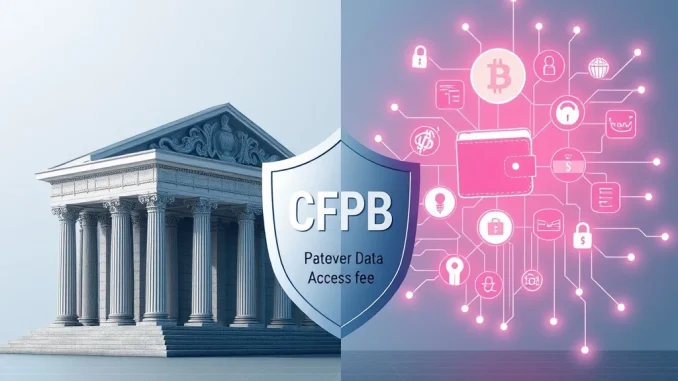
The financial landscape is currently buzzing with a critical debate. A powerful coalition of US crypto and fintech groups has recently issued a strong warning. They urge the Consumer Financial Protection Bureau (CFPB) to uphold crucial regulations. These rules prevent large banks from imposing fees on consumer financial data. This move is seen as vital for the future of digital finance. It directly impacts innovation within the burgeoning crypto sector.
The groups sent a detailed letter to the agency. They argued against any policy change allowing banks to charge for data access. Such a change, they contend, would severely harm market competition. Furthermore, it could stifle the rapid pace of financial innovation. This situation could have far-reaching consequences for consumers. Ultimately, it affects how they manage their digital assets.
The CFPB at a Crossroads: Protecting Innovation
The CFPB stands as a pivotal regulatory body. Its mission involves protecting consumers in the financial marketplace. The agency now faces significant pressure from various industry stakeholders. On one side, large banks seek new revenue streams. They propose charging for access to valuable consumer data. On the other side, fintech groups and crypto advocates stand firm. They champion open access and innovation. This creates a challenging decision for the bureau.
Access to consumer data fuels many modern financial services. For instance, budgeting apps rely on this data. So do personalized financial advice platforms. Crypto wallets and stablecoin services also depend on secure, accessible information. Blocking or charging for this access would create significant barriers. It would hinder the development of new, user-friendly applications. Consequently, consumers would have fewer choices.
Unpacking the Consumer Data Controversy
Banks typically hold vast amounts of customer financial data. They argue that managing and securing this data incurs costs. Therefore, they suggest a fee structure for third-party access. However, the opposing coalition highlights existing regulations. These rules already mandate data sharing without additional charges. The groups believe allowing new fees would set a dangerous precedent. It would essentially monetize data that consumers already own.
Such fees would disproportionately affect smaller fintech groups. New startups often operate on tighter budgets. They rely on cost-effective data access to compete with established banks. Imposing charges would raise their operating costs considerably. This could create an unfair playing field. It might even force some innovative companies out of business. Ultimately, competition would suffer.
The Stakes for Crypto Innovation and Digital Wallets
The debate holds particular significance for crypto innovation. Many digital asset services integrate with traditional banking. For example, users often link bank accounts to fund digital wallets. They also use them to buy or sell stablecoins. If banks charge for this data connection, these processes become more expensive. Furthermore, it could make integration more complex. This directly impedes the growth of the crypto ecosystem.
The letter specifically mentions digital wallets and stablecoins. These technologies depend on seamless data flow. Restricting access could undermine their utility. Imagine a scenario where using a digital wallet costs extra. Or perhaps linking a stablecoin exchange becomes prohibitive. These barriers would discourage adoption. Consequently, it slows the mainstream acceptance of cryptocurrencies.
The Coalition of Fintech Groups and Their Argument
The coalition includes a broad spectrum of industry players. These are not just obscure crypto startups. They represent established fintech groups, consumer advocates, and blockchain organizations. Their collective voice carries substantial weight. They emphasize that consumers own their data. Therefore, they should control its access and usage without extra fees. This principle underpins their entire argument.
Their primary arguments center on several key points:
- Undermining Innovation: New fees would stifle emerging technologies.
- Harming Competition: Smaller players cannot afford high data access costs.
- Restricting Consumer Choice: Fewer innovative products would reach the market.
- Violating Data Ownership: Consumers should not pay to access their own information.
- Impacting Digital Assets: Specifically, digital wallets and stablecoins face significant threats.
Broader Implications for Digital Wallets and Stablecoins
The outcome of this CFPB decision will shape the future of digital finance. It extends beyond just crypto. It impacts every company relying on shared consumer financial data. If banks succeed in charging fees, a precedent is set. This could cascade across other industries. Consequently, the vision of an open, interconnected financial system might diminish.
Stablecoins play a crucial role in the crypto economy. They offer stability amidst volatile markets. Many users convert fiat currency to stablecoins via bank transfers. This often involves data exchange. Imposing fees on this exchange would make stablecoins less attractive. It would also increase transactional friction. Ultimately, this hinders their potential as a bridge between traditional and decentralized finance.
What’s Next for Data Access and Fees?
The CFPB must now carefully consider these arguments. They face a complex balancing act. They must weigh bank profitability against consumer protection and market innovation. The decision will have long-lasting effects. It will define the accessibility of consumer data for years to come. Stakeholders eagerly await the bureau’s response.
The plea from US crypto and fintech groups underscores a fundamental principle. Open access to consumer-owned data drives innovation. It also fosters a competitive market. The CFPB has a unique opportunity to safeguard these principles. Their decision will significantly impact the trajectory of digital finance. It will either empower or restrict future crypto innovation.
Frequently Asked Questions (FAQs)
This critical debate raises several important questions for consumers and industry participants alike. Here are some frequently asked questions regarding the CFPB‘s role and the future of consumer data access.
Q: What is the main concern raised by crypto and fintech groups?
A: They are concerned that allowing large banks to charge fees for access to consumer data will stifle innovation. This practice could also harm competition in the financial sector.
Q: How would bank fees on consumer data affect digital wallets and stablecoins?
A: Such fees could make it more expensive and complex to link digital wallets to bank accounts. This would also affect stablecoin transactions. It could ultimately restrict their use and adoption.
Q: What is the CFPB‘s role in this situation?
A: The CFPB is the Consumer Financial Protection Bureau. It is a regulatory agency tasked with protecting consumers in the financial marketplace. They must decide whether to allow banks to impose these new fees.
Q: Why do banks want to charge for consumer data access?
A: Banks argue that managing and securing vast amounts of customer financial data incurs significant costs. They believe charging fees would help offset these expenses.
Q: What is the core argument of the fintech groups coalition?
A: The coalition argues that consumers own their financial data. Therefore, they should not have to pay extra fees for other companies to access it. They believe current regulations already cover data sharing.