In an era where global supply chains are constantly evolving and emerging markets are rapidly adopting new technologies, the automotive industry is undergoing a significant transformation. For those keenly observing shifts in innovation and economic development, the latest announcement from Chinese auto giant BYD signals a powerful wave of change. BYD, a global leader in electric vehicle (EV) manufacturing, is making a strategic move into Pakistan, aiming to establish local EV assembly operations by mid-2026. This bold step is set to reshape Pakistan’s automotive landscape, offering a compelling case study in how global players are navigating complex market dynamics to drive the future of transportation.
BYD’s Bold Leap into Pakistan’s Automotive Future
BYD, recognized globally for its dominance in electric vehicle sales, is expanding its footprint into South Asia with a significant investment in Pakistan. The company has announced plans to commence local assembly of electric vehicles by mid-2026. This initiative is a clear signal of BYD’s intent to capture a substantial share of Pakistan’s burgeoning EV market, which is ripe for disruption.
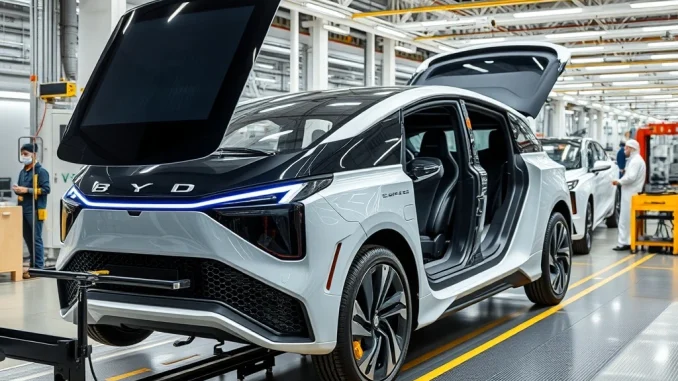
The venture involves a crucial partnership with Mega Motor Company, a subsidiary of the Pakistani utility Hub Power. Together, they will operate a state-of-the-art plant near Karachi, designed with an impressive annual capacity of 25,000 units. Construction for this facility began in April, highlighting the rapid pace at which this project is moving forward. Initially, the focus will be on meeting domestic demand within Pakistan, but there’s potential for future exports of right-hand-drive models, contingent on favorable freight costs and market conditions.
Bypassing Barriers: Why Local EV Assembly Matters
One of the primary drivers behind BYD’s decision to establish local EV assembly in Pakistan is the strategic advantage it offers in circumventing existing import restrictions. Historically, high tariffs and stringent import policies have posed significant hurdles to the widespread adoption of electric vehicles in the country. By assembling vehicles locally, BYD can bypass these barriers, making their EVs more accessible and competitively priced for Pakistani consumers.
Danish Khaliq, Vice President of Sales and Strategy for BYD Pakistan, emphasized that the new plant will integrate imported parts with locally produced non-electric components. This hybrid approach is key to achieving cost efficiency and navigating the regulatory landscape. Local assembly isn’t just about avoiding tariffs; it’s also a crucial step in reducing overall production costs, which aligns with BYD’s broader strategy to seek cost-advantaged locations beyond China, where profit margins have faced pressure.
Powering Up Pakistan’s Electric Vehicles Demand
The move comes at a pivotal time for Pakistan’s automotive sector. While traditional internal combustion engine (ICE) vehicles still dominate, there’s a growing recognition of the need for sustainable transportation solutions. Plug-in hybrids, in particular, are seen as a practical stepping stone for Pakistani drivers, given the current limitations in public charging infrastructure across the country. The government’s proactive measures, such as a 45% tariff cut for EV chargers implemented in January 2025, further underscore the supportive environment for electric vehicle adoption.
BYD’s early success in the market is already evident. The company’s Pakistan unit reported a profit of 444 million rupees (US$1.56 million) in the quarter ending March 2025, reflecting strong initial traction. Analysts anticipate a significant surge in demand for electric vehicles and plug-in hybrids. Khaliq projects a threefold to fourfold growth in total EV and plug-in hybrid sales in Pakistan in 2025, up from approximately 1,000 units in 2024. BYD is ambitiously targeting a 30–35% market share within this expanding segment.
Strategic Expansion: BYD’s Global Vision
The Pakistan project is an integral part of BYD‘s expansive global strategy, which involves diversifying its production base beyond China. This includes similar ventures in Southeast Asia and the Middle East, demonstrating a clear focus on emerging markets. While the company aims for rapid expansion, it also faces inherent challenges, including potential supply chain disruptions and navigating diverse regulatory environments.
Interestingly, BYD’s global strategy also includes adjustments to its European operations. The company has announced a slower rollout for its Hungarian plant, with mass production delayed until 2026 and initial operations below capacity. Conversely, BYD plans to accelerate output in Turkey, leveraging lower labor costs. These strategic recalibrations highlight BYD’s dynamic approach to optimizing production costs and maximizing its global footprint, even as the European Union considers tariffs to incentivize Chinese EV investment.
What Does This Mean for Pakistani Drivers?
For Pakistani consumers, BYD’s entry promises more choices and potentially more affordable access to advanced automotive technology. The initial offerings will include the Shark 6 plug-in hybrid pickup truck, set to debut shortly. This model is designed to appeal to a market segment traditionally dominated by ICE vehicles, offering a practical and environmentally friendlier alternative.
The competitive landscape is also heating up, with other global players like MG and Haval also entering the plug-in hybrid segment. This increased competition is likely to benefit consumers through more diverse models and competitive pricing. BYD Pakistan’s Vice President of Sales and Strategy, Danish Khaliq, expressed confidence in meeting the mid-2026 production timeline, citing robust pre-order interest and strong government support for green energy initiatives. The company’s success will largely depend on its ability to effectively integrate local components, ensuring both cost efficiency and long-term profitability.
Conclusion
BYD’s commitment to local EV assembly in Pakistan by 2026 marks a transformative moment for the country’s automotive industry. By strategically addressing import restrictions and focusing on cost reduction, BYD is not only expanding its global reach but also accelerating the adoption of electric vehicles in a key emerging market. This venture underscores a broader global trend of localized production and sustainable innovation, promising a greener, more efficient future for transportation in Pakistan and beyond.
Frequently Asked Questions (FAQs)
Q1: When will BYD start local EV assembly in Pakistan?
BYD plans to begin local electric vehicle assembly in Pakistan by mid-2026.
Q2: Who is BYD partnering with for this venture in Pakistan?
BYD is partnering with Mega Motor Company, a subsidiary of the Pakistani utility Hub Power, for its EV assembly operations in Pakistan.
Q3: What are the main reasons for BYD to start local assembly in Pakistan?
The primary reasons are to bypass import restrictions, reduce production costs, and meet the surging local demand for electric vehicles and plug-in hybrids in Pakistan.
Q4: What types of electric vehicles will BYD initially offer in Pakistan?
BYD’s initial offering will include the Shark 6 plug-in hybrid pickup truck, targeting a market segment that traditionally uses internal combustion engine vehicles.
Q5: How will local assembly impact EV adoption in Pakistan?
Local assembly is expected to make electric vehicles more affordable and accessible by reducing import duties and costs, thereby accelerating their adoption in Pakistan.
Q6: What is BYD’s market share target in Pakistan’s EV segment?
BYD is targeting a 30–35% market share in Pakistan’s electric vehicle and plug-in hybrid segment.