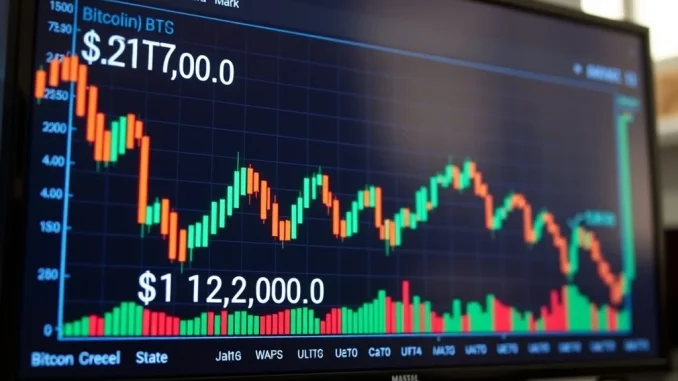
The crypto market has once again captured global attention. Bitcoin (BTC), the leading digital asset, recently experienced a notable price adjustment. This development saw BTC price fall significantly. Specifically, it moved below the crucial $112,000 threshold. Many investors are now watching closely. This shift raises questions about market stability.
Understanding the Recent Bitcoin Drop
On October 26, 2024, Bitcoin (BTC) registered a significant price decline. According to Coin Pulse market monitoring, BTC price fell below $112,000. Data from the Binance USDT market confirmed this movement. BTC was trading at $111,972.1 at that specific time. This sudden Bitcoin drop generated immediate reactions across the global crypto market. Traders and analysts are now evaluating the implications. Such movements are not uncommon in the volatile digital asset space. However, specific thresholds often carry greater psychological weight. Therefore, breaking this level prompts deeper analysis.
Key Factors Influencing the BTC Price
Several factors typically contribute to BTC price fluctuations. Currently, a combination of macroeconomic trends and specific market dynamics appears to be at play. We can identify several key influences:
- Global Economic Indicators: Rising inflation concerns often lead investors to reconsider riskier assets.
- Interest Rate Hikes: Central banks raising rates can make traditional investments more attractive, diverting funds from cryptocurrencies.
- Regulatory Uncertainty: Ongoing discussions and unclear future crypto regulations can make investors cautious.
- Whale Movements: Large sell-offs by significant holders, often called whales, can trigger rapid price drops and impact market liquidity.
These combined pressures likely contributed to the recent fall below BTC $112,000.
Broader Crypto Market Reactions and Volatility
The Bitcoin drop did not occur in isolation. Typically, when BTC experiences a significant move, the broader crypto market follows suit. Many altcoins saw corresponding price declines. Ethereum (ETH), Solana (SOL), and other major cryptocurrencies recorded losses. This interconnectedness highlights Bitcoin’s dominance. It remains the bellwether for the entire digital asset ecosystem. Market volatility is a constant feature of this sector. Yet, periods of sharp decline can test investor resolve. Such events underscore the need for careful risk management. They also remind us of the speculative nature of these investments. Monitoring the total market capitalization provides a clearer picture. It often reflects overall investor confidence. The current environment demands vigilance. Indeed, sudden shifts require quick responses from traders.
Analyzing the Significance of BTC $112,000
The $112,000 level held specific importance for many traders. Historically, such round numbers or previously established support levels act as psychological barriers. A breach below this point often signals increased bearish sentiment. This can lead to further selling pressure. For instance, technical analysts watch these levels closely. They use them to predict potential future price movements. Breaking support can trigger stop-loss orders. These automated sell orders can accelerate a downward trend. Conversely, holding above such levels can indicate resilience. Therefore, the move below BTC $112,000 is more than just a number change. It represents a shift in market dynamics. It also prompts a re-evaluation of short-term price targets. Investors must understand these technical implications. This understanding helps in navigating future volatility.
What This Means for Investors: Latest Cryptocurrency News
The recent Bitcoin drop serves as a crucial piece of cryptocurrency news. It impacts both short-term traders and long-term holders. Short-term traders might see opportunities for quick gains or losses. They often rely on technical analysis and rapid market shifts. Long-term investors, however, may view this as a buying opportunity. They believe in Bitcoin’s fundamental value. Dollar-cost averaging strategies are popular during such dips. This involves buying fixed amounts regularly, regardless of price. Regardless of strategy, informed decision-making is vital. Staying updated with the latest cryptocurrency news is essential. Understanding market trends and global economic influences helps. Moreover, avoiding emotional decisions is always recommended. Prudent investment strategies emphasize research and patience. Always consider your risk tolerance. Diversification remains a key principle.
Expert Outlook and Future Scenarios for BTC Price
Analysts offer various perspectives on the current BTC price action. Some suggest this is a healthy correction. They believe it consolidates gains from previous rallies. Others warn of potential further declines. They point to lingering macroeconomic headwinds. Nevertheless, Bitcoin’s long-term trajectory often remains optimistic among proponents. They cite increasing institutional adoption and technological advancements. However, the short-term outlook remains uncertain. Price predictions vary widely. Some anticipate a retest of lower support levels. Others expect a quick rebound if buying pressure increases. Therefore, investors should monitor key indicators. These include trading volume, market sentiment, and global financial news. The future of Bitcoin (BTC) hinges on a complex interplay of forces. Consequently, staying informed is paramount. This recent event adds another layer of complexity to the crypto market narrative.
The recent fall of BTC price below $112,000 highlights the inherent volatility of the crypto market. While significant, such movements are part of Bitcoin’s journey. They underscore the importance of robust investment strategies. Furthermore, they emphasize continuous engagement with reliable cryptocurrency news. The digital asset landscape continues to evolve rapidly. Investors must remain agile and informed. This ensures they can navigate its inherent risks and opportunities effectively.
Frequently Asked Questions (FAQs)
Q1: What caused Bitcoin’s recent price drop below $112,000?
A1: Several factors contributed, including global macroeconomic concerns like inflation and interest rate hikes, regulatory uncertainties, and potential large-scale selling by significant holders. These combined pressures impacted investor sentiment.
Q2: How does Bitcoin’s price movement affect the broader crypto market?
A2: Bitcoin often acts as a benchmark for the entire crypto market. When BTC experiences a significant price drop, many altcoins typically follow suit, showing corresponding declines. This highlights Bitcoin’s dominant influence on the digital asset ecosystem.
Q3: Is a Bitcoin price drop a bad sign for long-term investors?
A3: Not necessarily. While short-term traders might be impacted, long-term investors often view significant price drops as potential buying opportunities. Many use strategies like dollar-cost averaging to accumulate more Bitcoin at lower prices, believing in its long-term growth potential.
Q4: What is the significance of the $112,000 level for BTC?
A4: The $112,000 level likely served as a psychological support level for many traders and technical analysts. Breaking below such a threshold can signal increased bearish sentiment and trigger further selling pressure, potentially accelerating a downward trend.
Q5: What should investors do during periods of high market volatility?
A5: During volatile periods, it is crucial for investors to remain calm, avoid emotional decisions, and stick to their pre-defined investment strategies. Staying informed with reliable cryptocurrency news, understanding market trends, and considering risk management techniques like diversification are highly recommended.