The dynamic world of cryptocurrency trading constantly offers new data points. Understanding market sentiment is crucial for every participant. One key indicator provides a clear snapshot of collective trader positioning: the Bitcoin long short ratio. This metric reveals how traders on major platforms view future price movements for BTC perpetual futures. Analyzing this ratio offers valuable insights into the prevailing market mood.
Understanding the Bitcoin Long Short Ratio in Perpetual Futures
What exactly is the Bitcoin long short ratio? It represents the proportion of long positions (bets on price increase) versus short positions (bets on price decrease) for BTC perpetual futures contracts. This ratio is a significant barometer for overall BTC trading sentiment. A higher percentage of long positions suggests bullish sentiment. Conversely, a higher percentage of short positions indicates a more bearish outlook among traders.
Furthermore, these perpetual futures contracts are popular instruments in the perpetual futures market. They allow traders to speculate on Bitcoin’s price without an expiry date. Therefore, the long/short ratio on these contracts provides a continuous, real-time pulse of market expectations. Traders often monitor this data closely to inform their strategies.
Current BTC Perpetual Futures Sentiment: A Snapshot
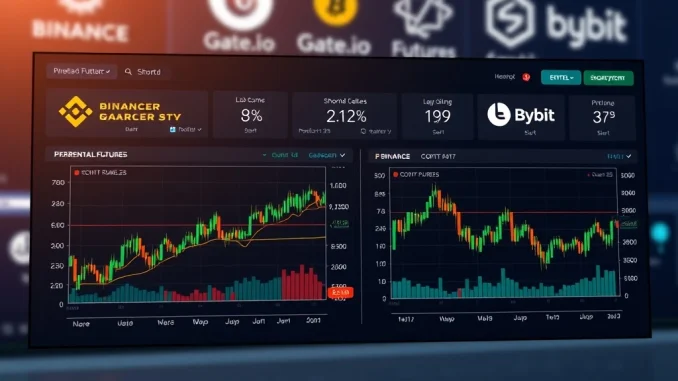
Over the past 24 hours, the BTC perpetual futures market has shown a slight lean towards short positions. This trend is visible across the top three crypto futures exchanges, ranked by open interest. The overall market sentiment indicates a cautious approach from traders. Below is a detailed breakdown of the long/short position ratios:
| Exchange | Long Positions | Short Positions |
|---|---|---|
| Overall | 48.47% | 51.53% |
| Binance | 47.73% | 52.27% |
| Gate.io | 49.37% | 50.63% |
| Bybit | 48.28% | 51.72% |
The data clearly illustrates a predominant short bias. This suggests that more traders anticipate a potential price decline or are hedging existing long spot positions. Consequently, understanding these figures helps gauge the immediate market direction.
Deep Dive into Top Crypto Futures Exchanges’ Data
Each of the top crypto futures exchanges exhibits slightly different characteristics in its long/short ratio. This variation can provide nuanced insights into specific platform user bases. Let’s examine the individual data points.
Binance: Leading the Short Bias
Binance, a global leader in trading volume, shows the strongest short bias. Its ratio stands at 47.73% long / 52.27% short. This indicates a more pronounced bearish sentiment among its vast user base. Furthermore, this stronger conviction in short positions on Binance often reflects broader market trends. Many traders closely watch Binance’s data due to its significant market share. Thus, its ratio can be a strong indicator of overall BTC trading sentiment.
Gate.io: Closer to Equilibrium
Gate.io presents a slightly less bearish picture. The platform’s ratio is 49.37% long / 50.63% short. While still leaning short, it is closer to a balanced state compared to Binance. This suggests a more divided opinion among Gate.io traders. Consequently, their sentiment might be less decisively bearish. This relatively balanced stance provides a different perspective within the larger perpetual futures market.
Bybit: Moderate Short Positioning
Bybit also shows a short-leaning ratio, with 48.28% long / 51.72% short. This position falls between Binance’s more aggressive short bias and Gate.io’s closer equilibrium. Bybit is a popular platform for derivatives trading. Therefore, its ratio is an important component of the overall market picture. The moderate short positioning suggests caution without extreme bearishness among its users.
Interpreting Perpetual Futures Market Dynamics
The overall dominance of short positions in BTC perpetual futures has several implications. Firstly, it signals a cautious or bearish outlook among many active traders. This could be driven by macroeconomic concerns, regulatory news, or technical analysis indicators suggesting a downtrend. Secondly, a significant short interest can sometimes precede a short squeeze. This occurs when price rises force short sellers to cover their positions, further accelerating the upward movement.
However, it is crucial to remember that this ratio is a snapshot. It constantly changes based on new market information and trader reactions. Therefore, combining this data with other technical and fundamental analysis tools is essential. The perpetual futures market is highly liquid and sensitive to various external factors. Consequently, continuous monitoring provides the best understanding.
Strategic Implications for BTC Trading Sentiment
Traders utilize the Bitcoin long short ratio in various strategic ways. A high short ratio, as observed currently, might prompt some to anticipate a potential bounce. They may consider opening long positions if other indicators align. Conversely, those who are already short might view this as confirmation of their thesis. They might hold or even add to their positions.
Furthermore, understanding the sentiment on different crypto futures exchanges can reveal arbitrage opportunities or localized market anomalies. For instance, if one exchange shows a significantly different ratio, it might indicate unique liquidity dynamics. Ultimately, this ratio serves as a crucial piece of the puzzle. It helps traders navigate the complex and often volatile BTC perpetual futures landscape effectively.
Conclusion
The analysis of the BTC perpetual futures long/short ratio across top exchanges offers valuable insights into current BTC trading sentiment. With a slight majority of short positions, the market appears cautious. Binance leads this bearish sentiment, while Gate.io shows a more balanced outlook. Understanding these dynamics is vital for anyone participating in the perpetual futures market. This ratio, when combined with other market analysis tools, empowers traders to make more informed decisions. Always remember that past performance does not guarantee future results.
Frequently Asked Questions (FAQs)
1. What is the BTC perpetual futures long/short ratio?
The BTC perpetual futures long/short ratio measures the proportion of long positions (expecting price increases) against short positions (expecting price decreases) for Bitcoin perpetual futures contracts. It indicates overall market sentiment.
2. Why is this Bitcoin long short ratio important for traders?
This ratio is crucial because it provides a real-time gauge of collective market sentiment. Traders use it to understand if the majority of participants are bullish or bearish, which can influence their own trading strategies and risk management in the perpetual futures market.
3. What does a higher short ratio indicate for BTC trading sentiment?
A higher short ratio, as seen in the current data, indicates that more traders are betting on a price decline for Bitcoin. This suggests a cautious or bearish BTC trading sentiment across the crypto futures exchanges, potentially signaling future price pressure.
4. How do top crypto futures exchanges compare in their ratios?
While all top exchanges (Binance, Gate.io, Bybit) show a slight short bias, the degree varies. Binance exhibits the strongest short sentiment, followed by Bybit, with Gate.io having a more balanced, though still short-leaning, ratio. These differences can reflect the unique characteristics of each platform’s user base.
5. Can the long/short ratio predict Bitcoin’s price?
No, the long/short ratio is an indicator of current sentiment, not a definitive price predictor. While it can suggest potential market movements (like a short squeeze if shorts become too extreme), it should always be used in conjunction with other technical analysis, fundamental analysis, and risk management strategies. It is one tool among many in the complex BTC perpetual futures landscape.