Understanding the pulse of the cryptocurrency market is paramount for traders and investors. Therefore, analyzing key metrics offers valuable insights. One such crucial metric is the **BTC perpetual futures** long/short ratio. This ratio provides a snapshot of trader sentiment on leading **crypto futures exchanges**. It indicates whether market participants are predominantly betting on price increases (long) or decreases (short). Consequently, monitoring these trends can help predict potential market movements. Let’s delve into the latest data and explore its implications for **BTC market sentiment** and **derivatives trading** strategies.
Understanding the **Bitcoin Long Short Ratio**
The **Bitcoin long short ratio** is a powerful indicator. It measures the proportion of open long positions against open short positions for a specific asset. In the context of **BTC perpetual futures**, this ratio reflects the collective sentiment of traders. A high long/short ratio suggests bullish sentiment, as more traders expect prices to rise. Conversely, a low ratio indicates bearish sentiment, with more traders anticipating a price drop. This metric is dynamic; it constantly changes with market activity. Traders use this ratio as a tool to gauge potential market reversals or continuations. For example, an extremely high long ratio might signal an overleveraged market, possibly preceding a short squeeze or a correction. Similarly, an overly low ratio could suggest an impending short squeeze if price action shifts upwards. Therefore, understanding its nuances is essential for informed decision-making in **derivatives trading**.
Perpetual futures contracts are unique. They lack an expiry date, unlike traditional futures. This allows traders to hold positions indefinitely, as long as they meet margin requirements. This perpetual nature makes the long/short ratio particularly relevant. It captures ongoing market expectations without the influence of contract expiry. Furthermore, funding rates also play a role. Positive funding rates mean longs pay shorts, indicating bullish demand. Negative funding rates mean shorts pay longs, reflecting bearish pressure. Both the long/short ratio and funding rates together paint a comprehensive picture of market positioning. Consequently, traders often combine these indicators with technical analysis. This holistic approach helps them form more robust trading strategies. The ratio acts as a sentiment gauge, offering a direct look into the market’s collective conviction.
Analyzing Recent **BTC Perpetual Futures** Data
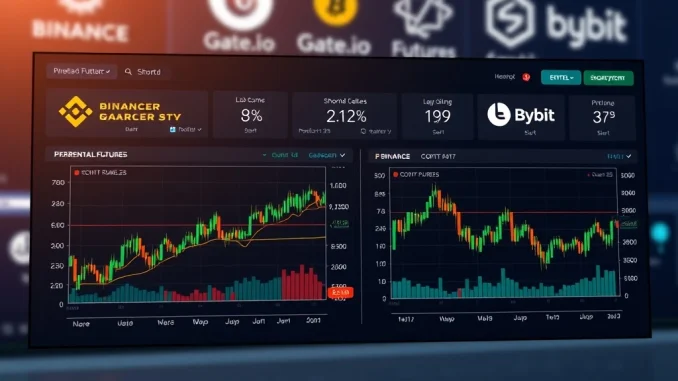
Recent data offers clear insights into current market sentiment. Over the last 24 hours, the long/short position ratios for **BTC perpetual futures** on the world’s top three crypto futures exchanges by open interest present a mixed picture. Overall, the market shows a slight bearish inclination. Specifically, 48.68% of positions are long, while 51.32% are short. This marginal lean towards short positions suggests a cautious outlook among traders. It indicates that slightly more participants are betting on a downward price movement for Bitcoin in the immediate future. This collective positioning is vital for understanding short-term market dynamics. Consequently, a slight majority anticipates potential dips. Here is a breakdown:
| Exchange | Long Ratio | Short Ratio |
|---|---|---|
| Overall | 48.68% | 51.32% |
| Binance | 48.97% | 51.03% |
| Bybit | 51.27% | 48.73% |
| Gate.io | 49.43% | 50.57% |
Looking closer at individual exchanges reveals distinct patterns. Binance, a global leader, shows a ratio of 48.97% long and 51.03% short. This indicates a slightly more pronounced bearish sentiment among its user base, mirroring the overall trend. Similarly, Gate.io reports 49.43% long and 50.57% short, also leaning bearish. However, Bybit stands out as an exception. Its traders are slightly more bullish, with 51.27% long positions versus 48.73% short positions. This divergence highlights varied trader demographics and strategies across different platforms. Therefore, examining individual exchange data offers a more granular understanding of market positioning. These figures provide a real-time pulse of **BTC market sentiment** on these significant platforms. Traders should consider these differences when evaluating market direction.
Implications for **BTC Market Sentiment**
The observed **BTC perpetual futures** long/short ratios carry significant implications for overall **BTC market sentiment**. The slight lean towards short positions across most top exchanges suggests a cautious, if not slightly bearish, outlook in the immediate term. This does not necessarily predict a massive price crash. Instead, it indicates that a marginal majority of traders expect some downward pressure or consolidation. Such sentiment can influence short-term price action. When many traders are short, potential buying pressure might be limited. Conversely, a large concentration of short positions can also set the stage for a short squeeze. If the price unexpectedly moves up, these short positions could be forced to close, buying back Bitcoin and fueling further price increases. This dynamic makes the ratio a double-edged sword for market analysis. Consequently, careful interpretation is always necessary.
Furthermore, the divergence seen on Bybit is noteworthy. Its slightly bullish bias among traders suggests pockets of optimism within the broader market. This could be due to various factors. These include regional differences in trading psychology, specific trading strategies prevalent on the platform, or even different user demographics. Therefore, a comprehensive analysis requires looking beyond the aggregated data. Understanding these localized sentiments helps paint a more complete picture of Bitcoin’s immediate future. Market sentiment is rarely uniform across all participants. It often fluctuates based on news, technical levels, and broader economic indicators. Traders use these ratios to confirm or contradict their own analyses. This helps them refine their **derivatives trading** approaches. A sustained shift in these ratios could signal a more significant change in market direction. Hence, continuous monitoring is crucial.
Navigating Top **Crypto Futures Exchanges**
The data presented comes from the world’s top three **crypto futures exchanges** by open interest. These platforms include Binance, Bybit, and Gate.io. Their combined trading volume and open interest represent a substantial portion of the global **derivatives trading** market. Therefore, their long/short ratio data is highly influential. These exchanges attract millions of traders worldwide. They offer robust infrastructure for perpetual futures contracts. The sheer volume of activity on these platforms means their aggregate data provides a reliable barometer for market sentiment. Ignoring data from these key players would mean missing crucial market signals. Consequently, their data often reflects the broader market’s leanings. The competitive landscape among these exchanges also fosters innovation in trading tools and liquidity. This benefits traders seeking efficient execution and diverse trading options. Furthermore, understanding the specific characteristics of each exchange can be beneficial. Some exchanges might cater to more institutional traders, while others attract retail participants. This distinction can sometimes explain differences in their respective long/short ratios. Therefore, comprehensive market analysis considers the source of the data.
Access to reliable data from these top exchanges is vital for informed decision-making. Traders rely on these platforms for real-time price feeds, order book depth, and various analytical tools. The integrity and liquidity of these exchanges ensure that the long/short ratio data accurately reflects genuine market positioning. Moreover, regulatory environments also play a role. Different jurisdictions have varying rules for **derivatives trading**. This can impact which traders access which platforms. Ultimately, the prominence of these exchanges means their long/short ratio data is a leading indicator for **BTC market sentiment**. It provides a window into how a significant portion of the market is positioned. Hence, market participants should always factor in data from these influential platforms. This helps them make well-rounded trading decisions.
Advanced Strategies in **Derivatives Trading** with Ratios
Incorporating **BTC perpetual futures** long/short ratios into **derivatives trading** strategies can significantly enhance decision-making. Traders often use this ratio as a contrarian indicator. For instance, when the long/short ratio reaches extreme highs, it might suggest an overbought market. Many traders are long, potentially leaving fewer buyers to push prices higher. This scenario could precede a price correction. Conversely, extremely low ratios might indicate an oversold market. Too many traders are short, potentially setting the stage for a short squeeze. This contrarian approach requires careful timing and confirmation from other indicators. Therefore, traders rarely rely solely on the long/short ratio. They combine it with technical analysis tools. These include support/resistance levels, moving averages, and candlestick patterns. This layered analysis provides a more robust trading signal. Consequently, it mitigates risks associated with single-indicator reliance.
Furthermore, observing changes in the **Bitcoin long short ratio** over time is crucial. A rapid shift from predominantly long to predominantly short, or vice-versa, can signal an imminent market move. For example, if the ratio suddenly flips from a strong bullish bias to a bearish one, it could indicate a loss of confidence. This might prompt traders to adjust their positions accordingly. Experienced traders also monitor open interest alongside the long/short ratio. Rising open interest combined with a heavily skewed long ratio suggests increasing leverage and potential volatility. Similarly, decreasing open interest with a bearish ratio might indicate capitulation or a lack of conviction. These combined metrics offer a deeper understanding of market structure and potential liquidity traps. Therefore, mastering the interpretation of these ratios is a key skill. It helps in navigating the complexities of **crypto futures exchanges**. Ultimately, effective risk management remains paramount in all **derivatives trading** strategies. Traders must always use stop-loss orders and manage their position sizing responsibly.
Conclusion
The analysis of **BTC perpetual futures** long/short ratios provides invaluable insights into current **BTC market sentiment**. The slight bearish lean across major **crypto futures exchanges** suggests a cautious outlook among traders. However, the varying sentiment on platforms like Bybit highlights the nuanced nature of market positioning. For those engaged in **derivatives trading**, understanding these ratios is not just academic; it is a practical tool. It helps anticipate potential market shifts and informs strategic decisions. By continuously monitoring these crucial indicators, traders can better navigate the volatile cryptocurrency landscape. This empowers them to make more informed choices in their pursuit of profitable opportunities. Always remember that while ratios offer guidance, they are best used in conjunction with a comprehensive analytical framework. This includes technical and fundamental analysis. The market remains dynamic, requiring constant vigilance and adaptability.
Frequently Asked Questions (FAQs)
What is the BTC perpetual futures long/short ratio?
The BTC perpetual futures long/short ratio compares the number of open long positions (bets on price increase) to open short positions (bets on price decrease) for Bitcoin perpetual futures contracts. It serves as a key indicator of overall market sentiment.
Why is the long/short ratio important for Bitcoin market sentiment?
This ratio is crucial because it offers a direct look into how traders are collectively positioned. A higher long ratio suggests bullish sentiment, while a higher short ratio indicates bearish sentiment. It helps traders gauge the prevailing market mood and potential future price movements.
How do top crypto futures exchanges contribute to this data?
Major **crypto futures exchanges** like Binance, Bybit, and Gate.io hold significant open interest and trading volume. Their aggregated long/short ratio data reflects a substantial portion of the global **derivatives trading** market, making it a reliable indicator for overall **BTC market sentiment**.
Can I use the BTC perpetual futures long/short ratio as my sole trading indicator?
No, it is generally not advisable to use any single indicator in isolation. While the long/short ratio is a powerful tool, it should be combined with other forms of analysis, such as technical analysis (chart patterns, support/resistance) and fundamental analysis, to form a more comprehensive trading strategy.
What does a slight bearish lean in the overall ratio imply?
A slight bearish lean, as observed in the recent data, suggests that a marginal majority of traders are anticipating some downward price pressure or consolidation for Bitcoin in the near term. It indicates caution but does not necessarily predict a significant price crash.
How does the perpetual nature of futures contracts affect this ratio?
Perpetual futures contracts have no expiry date, allowing positions to be held indefinitely. This means the long/short ratio for these contracts captures ongoing, sustained market sentiment without the influence of contract rollovers or expiry-driven volatility, providing a clearer picture of continuous trader positioning.