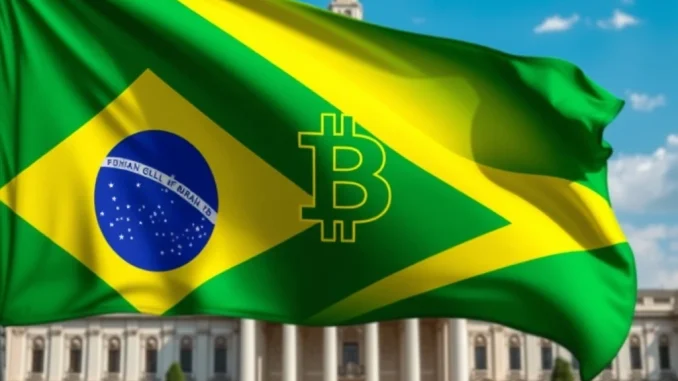
The cryptocurrency world is buzzing with anticipation. Brazil, a major economic player, is holding its first official hearing on a potential Bitcoin reserve. This landmark event signals a significant shift. It could reshape the nation’s financial strategy. Furthermore, it might accelerate global crypto adoption. The Vice President of Brazil, seemingly interested in digital currencies, was recently seen with a Bitcoin book. This occurred just before this crucial discussion. The hearing, scheduled for tomorrow, marks a pivotal moment. It brings the concept of national digital assets to the forefront of national policy.
Brazil Bitcoin: A Nation Explores Digital Assets
Brazil has long shown interest in the evolving digital landscape. The country has explored various aspects of blockchain technology. Moreover, its citizens have embraced cryptocurrencies. This upcoming hearing on a Bitcoin reserve represents a new level of engagement. It moves beyond individual investment. Instead, it considers Bitcoin as a potential strategic asset for the nation. This reflects a growing global trend. Governments are increasingly looking at cryptocurrencies. They are assessing their role in future financial systems. Therefore, Brazil’s proactive approach is noteworthy. It highlights a commitment to understanding and potentially integrating these novel technologies.
The Journey Towards a Potential Bitcoin Reserve
The idea of a national Bitcoin reserve is not new. However, it gains traction as traditional financial systems face challenges. Many nations seek diversification. They aim to protect against inflation. Furthermore, they desire greater financial sovereignty. Bitcoin, with its decentralized nature and limited supply, offers an alternative. It acts as a potential hedge against currency debasement. Consequently, countries like El Salvador have already adopted Bitcoin. They recognize its potential. Brazil’s exploration signals a similar strategic consideration. It aims to bolster its economic resilience. It also seeks to position itself at the forefront of financial innovation.
The upcoming hearing will delve into several key areas:
- Economic Implications: How would a Bitcoin reserve affect Brazil’s economy? Experts will discuss potential benefits and risks.
- Regulatory Frameworks: What legal structures are necessary to manage such a reserve? This includes custody and security.
- Market Volatility: How can the nation mitigate Bitcoin’s price fluctuations? Strategies for risk management will be crucial.
- Technological Infrastructure: What systems are needed to support a national digital asset holding? Secure and robust platforms are essential.
The Global Shift Towards Crypto Adoption
The world is witnessing a rapid pace of crypto adoption. Both individuals and institutions are engaging with digital currencies. Central banks are exploring Central Bank Digital Currencies (CBDCs). Meanwhile, private companies are adding Bitcoin to their balance sheets. This widespread interest underscores a fundamental change. It reflects a growing recognition of blockchain’s potential. Moreover, it highlights Bitcoin’s role as a store of value. Brazil’s hearing adds significant weight to this global narrative. It legitimizes Bitcoin further on the international stage. It also encourages other nations to consider similar strategies. This collective movement points towards a future. In this future, digital assets play a more central role in global finance.
Understanding Bitcoin as a Strategic Asset
For decades, gold has served as a primary reserve asset. It offers stability and acts as a hedge against economic uncertainty. However, Bitcoin shares some of these characteristics. It possesses scarcity and decentralization. Many proponents argue Bitcoin could serve a similar role in the digital age. Its transparent ledger and immutable nature appeal to those seeking financial independence. Furthermore, its global accessibility transcends geographical boundaries. This makes it an attractive option for nations. They are looking to diversify their traditional reserves. Therefore, a Bitcoin reserve represents a modern approach to national treasury management. It aligns with the ongoing digital transformation.
Consider the benefits and challenges of holding Bitcoin:
| Benefits | Challenges |
| Inflation hedge | Price volatility |
| Diversification of reserves | Regulatory uncertainty |
| Financial sovereignty | Security risks (hacking, loss) |
| Attracts innovation | Public perception and education |
| Global accessibility | Scalability concerns |
Pioneering Financial Innovation in South America
Brazil has a strong track record of financial innovation. The country has embraced digital payment systems. It has also developed robust fintech sectors. This progressive mindset makes Brazil a natural leader. It can explore the frontier of digital assets. The upcoming hearing is a testament to this spirit. It demonstrates a willingness to adapt to new technologies. Moreover, it shows an eagerness to explore their potential benefits. If Brazil moves forward with a Bitcoin reserve, it could set a precedent. Other nations in Latin America and beyond might follow suit. This could spark a new wave of sovereign crypto adoption.
The Role of Political Will and Public Discourse
The Vice President’s visible interest in Bitcoin is significant. It indicates a level of political will. This is crucial for such a transformative policy. Public discourse also plays a vital role. Educating the public about Bitcoin’s potential is essential. Addressing concerns about its volatility and environmental impact is necessary. Therefore, the hearing will likely foster broader discussions. It will engage various stakeholders. These include economists, technologists, and policymakers. Their collective input will shape the final decision. This transparent process builds trust. It also ensures a comprehensive understanding of the implications.
The potential for Brazil to establish a Bitcoin reserve is more than just a financial decision. It represents a strategic alignment. It positions the nation at the cutting edge of global finance. This move could attract significant foreign investment. It might also foster a vibrant domestic crypto industry. Furthermore, it could enhance Brazil’s standing. It would be seen as a forward-thinking economy. This bold step reflects a growing confidence in Bitcoin’s long-term value proposition. It also highlights its potential as a legitimate asset class for national treasuries.
Implications for Global Crypto Adoption and Beyond
Brazil’s consideration of a Bitcoin reserve carries significant weight. It could influence the global perception of cryptocurrencies. A positive outcome might encourage other emerging economies. They too could explore similar strategies. This would accelerate mainstream crypto adoption. It would also further integrate digital assets into traditional finance. The ripple effect could be substantial. It could lead to increased liquidity. It might also foster more stable regulatory environments worldwide. Ultimately, Brazil’s decision could mark a turning point. It could usher in a new era of national digital asset management.
The journey towards national Bitcoin reserve is complex. It involves careful consideration of economic, legal, and technological factors. However, the fact that Brazil is even holding such a hearing is a major step. It signals a serious exploration of Bitcoin’s potential. This development underscores Bitcoin’s growing importance. It is no longer just a speculative asset. Instead, it is becoming a recognized tool for national financial strategy. The world watches keenly as Brazil takes this pioneering step. Its outcome could shape the future of sovereign wealth management.
In conclusion, Brazil’s upcoming hearing is a landmark event. It could significantly impact the future of Bitcoin reserve strategies globally. It reflects a growing recognition of digital assets. Moreover, it highlights their potential for national economies. As the world moves towards a more digitized financial landscape, Brazil is positioning itself. It aims to be a leader in this transformative journey. This commitment to financial innovation signals a hopeful future for global crypto adoption.
Frequently Asked Questions (FAQs)
Q1: What is a Bitcoin reserve?
A Bitcoin reserve refers to a nation’s strategic holding of Bitcoin. It is similar to how countries hold gold or foreign currencies. The purpose is typically to diversify national assets. It can also act as a hedge against inflation. Furthermore, it can potentially enhance financial sovereignty in a digital age.
Q2: Why is Brazil considering a Bitcoin reserve?
Brazil is exploring a Bitcoin reserve for several reasons. These include potential economic diversification and protection against global inflation. It also aims to position itself as a leader in financial innovation. The move could attract foreign investment and boost its digital economy.
Q3: Which other countries have adopted Bitcoin or hold significant crypto assets?
El Salvador was the first country to adopt Bitcoin as legal tender. The Central African Republic also made Bitcoin legal tender. Other nations and their central banks are actively researching or piloting Central Bank Digital Currencies (CBDCs). Many institutional investors and corporations also hold Bitcoin on their balance sheets.
Q4: What are the main challenges for a country holding a Bitcoin reserve?
Key challenges include Bitcoin’s price volatility, which can affect the reserve’s value. Regulatory uncertainty and the need for robust security measures are also significant concerns. Additionally, managing public perception and educating citizens about digital assets present hurdles.
Q5: How might this hearing impact global crypto adoption?
If Brazil, a major economy, moves forward with a Bitcoin reserve, it could set a powerful precedent. This might encourage other nations, especially emerging economies, to consider similar strategies. Such a move would further legitimize Bitcoin. It would also accelerate its integration into mainstream finance worldwide.