In the rapidly evolving landscape of technology and innovation, where digital assets and blockchain redefine finance, another frontier is being reshaped: sustainable transport. Just as decentralized networks challenge traditional systems, leading automakers like BMW are exploring alternative energy solutions that could fundamentally alter how we power our vehicles. This deep dive into BMW’s ambitious plan to launch a BMW hydrogen vehicle by 2028 isn’t just about cars; it’s about pioneering new energy paradigms and overcoming the monumental infrastructure challenges that often accompany groundbreaking advancements.
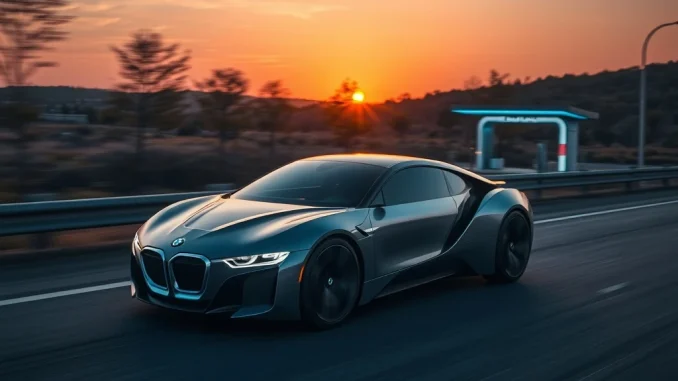
BMW Group has made a significant announcement, committing to hydrogen fuel cell technology. Their goal is to launch their first hydrogen-powered vehicle into series production by 2028. This strategic move positions BMW among a select group of manufacturers exploring hydrogen as a complementary solution to battery electric vehicles (BEVs). The company’s iX5 Hydrogen prototype, based on the X5 model, has already demonstrated competitive performance, showcasing rapid refueling times and zero emissions. While the final production model remains undecided, the commitment is clear.
The Hydrogen Fuel Cell Technology Promise: Why BMW is Investing
Why is BMW, a major player in the automotive industry, making such a strong push for hydrogen when BEVs currently dominate the conversation? Jürgen Guldner, BMW’s General Project Manager for Hydrogen Technology and Vehicle Projects, provides a clear perspective. He emphasizes hydrogen’s potential to address key limitations often associated with BEVs, particularly charging time and range anxiety. As Guldner puts it, “A hydrogen vehicle is an electric vehicle—it’s just a different way of storing energy.”
This statement highlights a crucial point: hydrogen fuel cell vehicles (FCEVs) share many components with BEVs, including electric motors. The core difference lies in energy storage. Instead of a large battery, FCEVs use hydrogen to generate electricity on board, powering the electric motor. This process offers distinct advantages:
- Rapid Refueling: FCEVs can be refueled in approximately 3 to 4 minutes, mirroring the experience of filling up a gasoline car. This is a significant improvement over the often lengthy charging times for BEVs, especially on long journeys.
- Extended Range: Hydrogen tanks can store a large amount of energy, allowing FCEVs to achieve competitive ranges, often comparable to or exceeding many BEVs on a single fill.
- Zero Tailpipe Emissions: Like BEVs, hydrogen fuel cell vehicles produce only water vapor as a byproduct, contributing to cleaner air and a reduction in carbon emissions.
BMW’s approach reflects a broader strategy to diversify its decarbonization portfolio. The automaker acknowledges that not all consumers are suited for battery electric vehicles, and offering a viable hydrogen option provides choice and flexibility for different use cases and preferences.
Navigating the Roadblocks: Sustainable Transport Infrastructure Hurdles
Despite the technological promise, the hydrogen industry faces significant hurdles, particularly in infrastructure development. While BEV charging stations have proliferated globally, hydrogen refueling stations remain remarkably sparse. The disparity is stark:
| Fuel Type | Infrastructure Status (UK Example) | Approx. Station Cost |
|---|---|---|
| Battery Electric Vehicles (BEVs) | 39,733 public charging locations (2025) | $1,000 – $50,000 per charger |
| Hydrogen Fuel Cell Vehicles (FCEVs) | Dwindled from 15 (2019) to 4 (2025) | $1.5 million – $4 million per station |
Jürgen Guldner noted that scaling hydrogen infrastructure is considerably more costly due to the complex nature of storing and dispensing hydrogen. This high upfront investment is a major barrier to widespread adoption. However, proponents argue that a hybrid approach—investing in both BEV and hydrogen infrastructure—could actually reduce overall costs in the long run. David Wong of the Society of Motor Manufacturers and Traders cited modeling showing that a 90% BEV and 10% hydrogen mix in Germany could save an astonishing $40 billion in infrastructure costs compared to a 100% BEV network. This suggests a balanced strategy might be the most economically sound path towards a fully sustainable transport future.
Electric Vehicles vs. Hydrogen: A Complementary Future?
BMW’s strategy hinges on overcoming these infrastructure challenges. The automaker has not yet identified specific target markets for its 2028 launch, citing infrastructure readiness as a key determining factor. Guldner expressed optimism about future improvements, stating, “Right now, it’s simply not here in the UK. But hopefully in the next few years, development will pick up.”
Commercial hydrogen adoption, such as HyHAUL’s focus on long-haul trucking, may serve as a catalyst for broader infrastructure development. Chris Jackson from Protium Green Solutions highlighted that hydrogen’s economics scale better for heavy transport, requiring fewer vehicles to justify station investments compared to passenger cars. If hydrogen infrastructure for commercial fleets grows, it could create a spillover effect, making it more feasible for passenger BMW hydrogen vehicle models.
Despite these efforts, consumer adoption remains uncertain. While surveys suggest interest in hydrogen vehicles, actual sales of FCEVs in 2024 totaled just 12,866 globally, a stark contrast to the 10.8 million BEVs sold. Toyota, a long-time leader in hydrogen technology with its Mirai model, continues to advocate for consumer choice. However, even Toyota’s Paris-based Hype taxi service, once a prominent FCEV fleet, has shifted its focus to BEVs, illustrating the current market realities.
Driving Forward: BMW’s Vision for Automotive Innovation
BMW’s gamble relies on aligning infrastructure growth with consumer demand. The automaker aims for price parity with BEVs through economies of scale as production ramps up. The 2028 launch will be a critical test, determining whether hydrogen can transition from a niche solution to a mainstream option. Guldner acknowledged the need for market validation: “I am always surprised by surveys where many people say they prefer hydrogen. The question is whether these preferences translate into sales.”
The success of BMW’s hydrogen initiative will depend on coordinated industry efforts, significant government investment in infrastructure, and consumer willingness to embrace a dual-technology future. As the world pushes towards decarbonization, the path is unlikely to be singular. A diversified approach, embracing both advanced electric vehicles and innovative hydrogen solutions, might be the most robust way forward for sustainable transport.
Ultimately, BMW’s commitment to a BMW hydrogen vehicle by 2028 signifies a belief in a multi-faceted approach to sustainable mobility. It’s a testament to ongoing automotive innovation and the pursuit of solutions that address the varied needs of consumers and the planet. While challenges remain, the potential for hydrogen to complement BEVs and accelerate the shift away from fossil fuels is a compelling vision worth pursuing.
Frequently Asked Questions (FAQs)
Q1: What is BMW’s main goal with its 2028 hydrogen vehicle launch?
A1: BMW aims to offer hydrogen fuel cell vehicles as a complementary solution to battery electric vehicles (BEVs), addressing concerns like charging time and range anxiety, and diversifying its decarbonization portfolio for sustainable transport.
Q2: How does a hydrogen vehicle differ from a battery electric vehicle (BEV)?
A2: Both are electric vehicles, but they differ in energy storage. BEVs store energy in large batteries, while hydrogen vehicles (FCEVs) generate electricity onboard using hydrogen and a fuel cell. FCEVs offer faster refueling times (3-4 minutes) compared to BEVs.
Q3: What are the biggest challenges facing widespread hydrogen vehicle adoption?
A3: The primary challenge is the lack of hydrogen refueling infrastructure. Stations are sparse and significantly more expensive to build ($1.5M-$4M) compared to BEV charging stations ($1k-$50k). Consumer awareness and demand also need to increase.
Q4: Could hydrogen infrastructure be more cost-effective if combined with BEV infrastructure?
A4: Yes, proponents suggest a hybrid approach could save significant costs. Modeling cited by the Society of Motor Manufacturers and Traders indicates that a 90% BEV and 10% hydrogen mix could save billions in infrastructure costs compared to a 100% BEV network.
Q5: What role might commercial vehicles play in developing hydrogen infrastructure?
A5: Commercial hydrogen adoption, particularly for heavy transport like long-haul trucking, could act as a catalyst. The economics of hydrogen scale better for larger vehicles, potentially leading to more stations that could eventually benefit passenger vehicles.
Q6: When can we expect to see the BMW hydrogen vehicle in series production?
A6: BMW plans to launch its first hydrogen-powered vehicle into series production by 2028. The specific target markets will depend on the readiness of hydrogen infrastructure in various regions.