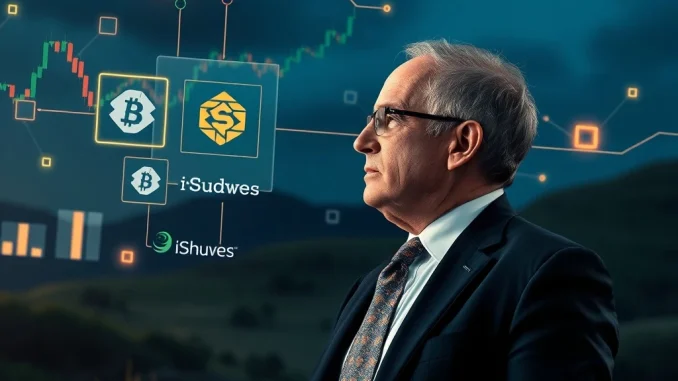
The financial world is abuzz with a significant announcement. BlackRock, the world’s largest asset manager, is actively exploring the **BlackRock tokenization** of its vast array of investment products. This includes popular offerings like its iShares exchange-traded funds (ETFs) and other long-term investment vehicles. This strategic consideration by **Larry Fink**, BlackRock’s influential CEO, signals a profound shift. It indicates traditional finance’s increasing embrace of blockchain technology and **digital assets**. Investors and market observers are keenly watching these developments, recognizing their potential to redefine investment landscapes.
Understanding BlackRock Tokenization: A New Era for iShares
Larry Fink recently confirmed BlackRock’s interest in leveraging blockchain technology. Specifically, he discussed tokenizing long-term investment products. This move extends to the firm’s highly successful **iShares** brand. iShares ETFs represent a significant portion of BlackRock’s nearly $10 trillion in assets under management. Tokenization involves converting real-world assets into digital tokens on a blockchain. This process offers several compelling advantages over traditional asset management. Consequently, it promises to enhance liquidity, transparency, and accessibility for investors globally.
For instance, consider a traditional bond or real estate fund. Tokenizing these assets could:
- Enable Fractional Ownership: Investors could buy a fraction of a high-value asset, previously inaccessible.
- Increase Liquidity: Digital tokens can trade 24/7 on global blockchain networks.
- Improve Transparency: Blockchain ledgers provide immutable records of ownership and transactions.
- Reduce Costs: Automated processes and fewer intermediaries can lower operational expenses.
Ultimately, this innovation aims to modernize how investment products are structured and traded. It could democratize access to premium investment opportunities.
Larry Fink’s Vision: Bridging Traditional Finance and Digital Assets
Larry Fink has been a vocal proponent of blockchain’s potential. His recent statements underscore a growing conviction within BlackRock. The firm believes **digital assets** are not merely a niche market. Instead, they represent the future of financial infrastructure. Fink previously acknowledged Bitcoin’s role as ‘digital gold.’ Now, he envisions a broader application of blockchain technology. This includes tokenizing diverse financial instruments. BlackRock’s strategic pivot reflects a proactive approach. It seeks to integrate cutting-edge technology with established financial practices. This approach could set a new industry standard.
Furthermore, BlackRock’s exploration of **asset tokenization** is not an isolated event. It follows the firm’s successful launch of a spot Bitcoin ETF. This product, the iShares Bitcoin Trust (IBIT), quickly became one of the most successful ETF launches ever. The firm’s engagement with cryptocurrency markets has been steadily deepening. This recent announcement confirms a long-term commitment. It demonstrates a belief in the transformative power of blockchain. Consequently, BlackRock is positioning itself at the forefront of this financial evolution.
The Mechanics of Asset Tokenization and Its Benefits
Tokenization transforms an asset’s ownership rights into a digital token. This token lives on a blockchain. Each token represents a verifiable share of the underlying asset. The process typically involves several key steps:
- Legal Structuring: Defining the legal framework for the tokenized asset.
- Asset Digitization: Creating a digital representation on a chosen blockchain.
- Smart Contract Deployment: Using smart contracts to automate rules and ownership transfers.
- Distribution and Trading: Making tokens available on digital exchanges or platforms.
The benefits extend beyond mere efficiency. Tokenization promises to unlock significant value. It can enhance market efficiency by reducing settlement times. It also broadens investor bases by allowing smaller investment increments. Moreover, it introduces new levels of security. Blockchain’s cryptographic nature protects against fraud and unauthorized alterations. This makes tokenized assets inherently more secure than many traditional counterparts. Therefore, the potential for growth and innovation is substantial.
Impact on iShares and the ETF Market
The tokenization of **iShares** products could revolutionize the ETF market. ETFs already offer investors diversified exposure and liquidity. However, tokenization could elevate these benefits further. Imagine an iShares ETF where units are digital tokens. These tokens could trade seamlessly across various platforms. They could also settle almost instantly. This would eliminate many of the current friction points in traditional markets. Furthermore, it could open up new product possibilities. For instance, fractional iShares ETFs could become commonplace. This would make them accessible to a wider range of retail investors.
This development could also attract a new generation of investors. Younger demographics are often more comfortable with digital platforms and assets. BlackRock’s move acknowledges this evolving investor preference. It aims to cater to future market demands. The integration of blockchain could also foster greater interoperability. Different financial systems could communicate more effectively. This would create a more connected and efficient global financial ecosystem. Consequently, the ETF market could experience unprecedented innovation and growth.
BlackRock’s Strategic Play in the Digital Assets Landscape
BlackRock’s exploration of **asset tokenization** is a strategic masterstroke. It positions the firm as a leader in financial innovation. The company recognizes the long-term potential of blockchain. It understands its capacity to reshape investment vehicles. This initiative is not merely about adopting new technology. It is about fundamentally rethinking how assets are owned, transferred, and managed. BlackRock’s considerable influence could accelerate mainstream adoption of tokenized securities. Other major financial institutions will likely follow suit. This could trigger a widespread transformation across the financial industry.
The firm’s entry into this space lends significant credibility to the entire **digital assets** sector. BlackRock’s rigorous due diligence and compliance standards are well-known. Their involvement signals maturity and legitimacy for tokenized products. This can help alleviate regulatory concerns. It can also build investor confidence. Ultimately, BlackRock is not just adapting to change. It is actively shaping the future of finance. This proactive stance solidifies its position as an industry trailblazer.
Challenges and the Path Forward for Tokenization
Despite the immense potential, the journey to widespread **BlackRock tokenization** faces challenges. Regulatory clarity remains a key hurdle. Governments and financial authorities are still developing comprehensive frameworks. These frameworks will govern digital assets and tokenized securities. Furthermore, technological infrastructure needs robust development. This ensures scalability, security, and interoperability across different blockchains. Educating investors and institutions about the benefits and risks is also crucial. Overcoming these obstacles will require collaborative efforts. Industry leaders, regulators, and technology providers must work together.
However, the momentum is clearly building. BlackRock’s commitment provides a powerful impetus. Their move validates the underlying technology. It also demonstrates a clear demand from institutional players. As these challenges are addressed, the financial landscape will undoubtedly evolve. Tokenized **iShares** and other long-term products could become commonplace. This marks a pivotal moment in the convergence of traditional finance and blockchain technology. The future of investment appears increasingly digital.
BlackRock’s consideration of tokenizing iShares and other long-term products represents a significant milestone. Larry Fink’s vision for **asset tokenization** underscores a profound belief in blockchain’s transformative power. This move has the potential to redefine investment products, enhance market efficiency, and democratize access to financial opportunities. As the world’s largest asset manager steps further into the realm of **digital assets**, the implications for the global financial system are undoubtedly revolutionary. We are witnessing the early stages of a fundamental shift, promising a more accessible and efficient future for investors everywhere.
Frequently Asked Questions (FAQs)
What does BlackRock tokenization mean for investors?
BlackRock tokenization means investors could gain access to fractional ownership of traditional assets. It also implies increased liquidity and transparency. This could make a wider range of investment products, including iShares, more accessible and efficient to trade.
Who is Larry Fink, and what is his role in this development?
Larry Fink is the CEO of BlackRock, the world’s largest asset manager. He is a key driver behind the firm’s exploration of tokenization. His vision aims to integrate blockchain technology into BlackRock’s long-term investment strategies.
What are iShares, and how could tokenization impact them?
iShares are a family of exchange-traded funds (ETFs) offered by BlackRock. Tokenization could transform iShares by making their units digital tokens. This would allow for 24/7 trading, faster settlements, and potentially fractional ownership, enhancing their appeal and accessibility.
What are digital assets in this context?
In this context, digital assets refer to tokenized versions of traditional financial products. This includes stocks, bonds, real estate, and other investment vehicles, all represented as digital tokens on a blockchain.
What are the main benefits of asset tokenization?
The primary benefits of asset tokenization include enhanced liquidity, fractional ownership, increased transparency through blockchain ledgers, and potentially reduced operational costs. It also broadens access to investment opportunities for a wider range of investors.
Are there any challenges to BlackRock tokenization?
Yes, significant challenges remain. These include achieving clear regulatory frameworks, developing robust technological infrastructure for scalability and security, and educating both institutions and investors about this new paradigm. However, BlackRock’s involvement provides strong momentum for overcoming these hurdles.