The cryptocurrency market often buzzes with anticipation, especially regarding institutional adoption. A significant piece of news recently emerged concerning a potential BlackRock ETF for popular altcoins. Indeed, the world’s largest asset manager, BlackRock, has clarified its position on new cryptocurrency exchange-traded funds (ETFs).
BlackRock’s Clear Stance on XRP and SOL ETFs
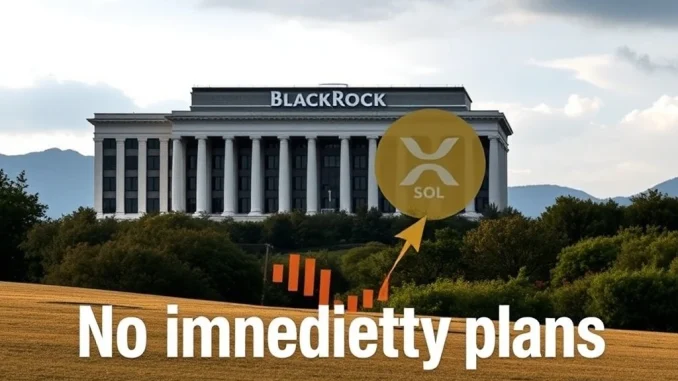
Recent speculation has suggested that BlackRock might be preparing to launch an XRP ETF or a SOL ETF. However, these rumors have now been directly addressed. A spokesperson for BlackRock, speaking to The Block, stated unequivocally: “at this time, BlackRock does not have any plans to file an XRP or SOL ETF.” This statement aims to quell the circulating rumors and provide clarity to the market.
This clarification comes amidst heightened interest in crypto ETFs. The successful launch of spot Bitcoin ETFs earlier this year fueled speculation about similar products for other digital assets. Investors often look to such institutional offerings for increased market legitimacy and accessibility. Consequently, BlackRock’s announcement carries considerable weight within the cryptocurrency community.
Why the Buzz Around a BlackRock Crypto ETF?
BlackRock’s entry into the Bitcoin ETF space marked a pivotal moment for the crypto industry. As the largest asset manager globally, its involvement signals mainstream acceptance and provides a regulated investment vehicle. This success naturally led many to wonder which other cryptocurrencies might follow suit. XRP and Solana (SOL) were frequently cited candidates due to their market capitalization and established ecosystems.
An XRP ETF would allow traditional investors to gain exposure to Ripple’s native token without directly holding the cryptocurrency. Similarly, a SOL ETF would offer a regulated pathway into Solana, a blockchain known for its high transaction speeds and growing decentralized finance (DeFi) ecosystem. The potential for such products to attract significant institutional capital is immense. Therefore, any news, positive or negative, from a firm like BlackRock is closely watched.
The Current Landscape of Crypto ETFs
The regulatory environment for crypto ETF products remains complex. The U.S. Securities and Exchange Commission (SEC) has historically been cautious. While spot Bitcoin ETFs received approval, the path for other digital assets is less clear. Here are key points regarding the current situation:
- Bitcoin ETFs: Several spot Bitcoin ETFs, including BlackRock’s IBIT, began trading in January 2024. These products have seen substantial inflows.
- Ethereum ETFs: Filings for spot Ethereum ETFs are currently under review by the SEC. The approval timeline remains uncertain.
- Altcoin Challenges: The regulatory status of many altcoins, including XRP and SOL, is still debated. The SEC has classified some as securities, which complicates ETF approvals.
This ongoing regulatory scrutiny likely plays a role in BlackRock’s cautious approach. They tend to operate within clear regulatory frameworks. Their current focus appears to be on assets with more established regulatory clarity.
Market Implications of No Immediate XRP or SOL ETF
The news that BlackRock has no current plans for an XRP ETF or SOL ETF could influence market sentiment. Investors hoping for an immediate surge in prices driven by institutional interest may adjust their expectations. However, it is crucial to remember the phrase “at this time.” This leaves the door open for future developments.
For XRP, its legal battle with the SEC has been a significant factor. While Ripple secured partial victories, the broader regulatory uncertainty surrounding XRP’s classification persists. For Solana, its rapid growth and technological advancements have made it a strong contender, but it too operates within an evolving regulatory landscape. The absence of a BlackRock filing might lead to:
- Short-term Price Volatility: Some investors might react by selling, leading to temporary price dips.
- Shift in Focus: Attention might shift back to the underlying utility and development of XRP and Solana networks.
- Long-term Perspective: Patient investors may view this as a temporary pause rather than a permanent rejection.
The market will undoubtedly digest this information. Nevertheless, the long-term growth of these cryptocurrencies depends on various factors beyond just ETF approvals.
BlackRock’s Strategic Approach as an Asset Manager
BlackRock’s strategy as a leading asset manager is typically methodical and risk-averse. They prioritize regulatory compliance and client protection. Their move into Bitcoin ETFs followed years of regulatory discussions and increasing market maturity. It suggests they prefer to enter markets where the regulatory framework is relatively clear or is actively becoming so.
Therefore, their decision regarding XRP and SOL likely reflects a careful assessment of the current regulatory environment for these specific assets. It is not necessarily a judgment on the assets themselves. Instead, it underscores their commitment to offering products that meet strict compliance standards. This prudent approach helps maintain their reputation and trustworthiness among institutional clients.
Future approvals for other crypto ETF products will likely depend on clearer regulatory guidance from the SEC. Furthermore, the overall maturity and stability of the underlying crypto markets will also play a role. BlackRock consistently monitors market conditions and regulatory shifts. Thus, their stance could evolve over time.
What’s Next for XRP, SOL, and Crypto ETFs?
While BlackRock has no immediate plans for an XRP ETF or SOL ETF, the broader movement towards crypto ETFs continues. Other asset managers may pursue these products as regulatory clarity improves. The industry remains optimistic about the long-term prospects of institutional investment in a wider range of digital assets.
For XRP and Solana, development continues on their respective blockchains. Utility and adoption will remain key drivers of their value. The news from BlackRock serves as a reminder that institutional adoption is a gradual process, often dictated by regulatory progress. Investors and enthusiasts should continue to monitor both market developments and regulatory updates closely.
Ultimately, the statement from BlackRock is a snapshot of their current strategy. It highlights their cautious but deliberate approach to the evolving digital asset landscape. The journey for diverse crypto investment products is ongoing, with each development contributing to the market’s maturity.
Frequently Asked Questions (FAQs)
Q1: Did BlackRock ever confirm plans for an XRP or SOL ETF before this announcement?
No, BlackRock had not previously confirmed any plans for an XRP ETF or SOL ETF. The recent statement from their spokesperson directly addresses and refutes circulating rumors and speculation.
Q2: Why is BlackRock’s decision on crypto ETFs so significant?
BlackRock is the world’s largest asset manager, overseeing trillions of dollars. Their involvement in the crypto space, such as with their Bitcoin ETF, lends significant legitimacy and attracts substantial institutional capital. Therefore, their decisions on new crypto products are closely watched by the entire market.
Q3: Does this mean an XRP ETF or SOL ETF will never be launched by BlackRock?
The statement specifies “at this time,” indicating no *current* plans. This leaves the door open for future filings if market conditions, regulatory clarity, or BlackRock’s strategy evolves. It is not a permanent rejection.
Q4: What are the main hurdles for approving more crypto ETFs like XRP or SOL?
The primary hurdles include regulatory clarity regarding the classification of cryptocurrencies (e.g., as securities or commodities), market manipulation concerns, and the overall maturity of the underlying crypto markets. The SEC’s stance on specific altcoins is a major factor.
Q5: How might this news affect the prices of XRP and SOL?
The news might lead to short-term negative sentiment or price volatility for XRP and SOL, as some investors might have anticipated an immediate institutional catalyst. However, the long-term price movements of these assets depend on their fundamental utility, adoption, and broader market trends.
Q6: Are other asset managers likely to pursue XRP or SOL ETFs?
While BlackRock has no current plans, other asset managers might still pursue XRP or SOL ETFs. The appetite for such products exists, and if regulatory conditions become more favorable, more firms may file for these products.