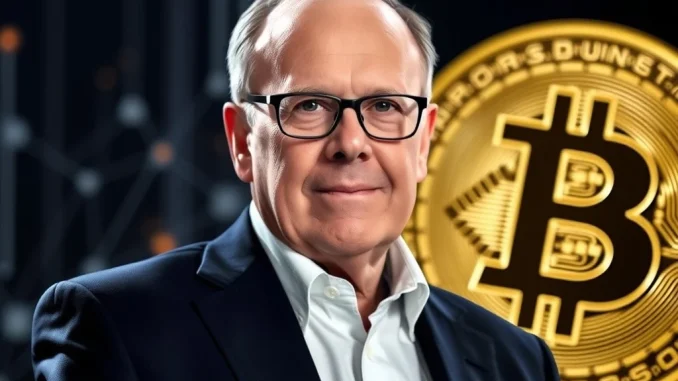
A remarkable shift in perspective has captured the financial world’s attention. Larry Fink, the influential CEO of BlackRock, the globe’s largest asset manager, has fundamentally re-evaluated his stance on Bitcoin. Once viewing the leading cryptocurrency with skepticism, Fink now champions it as a form of ‘digital gold,’ particularly valuable during periods of economic uncertainty and currency debasement. This evolution in thought from such a prominent figure signals a significant milestone for the cryptocurrency market.
Larry Fink’s Astounding Bitcoin Revelation
During an interview on Citi’s YouTube channel, Larry Fink openly discussed his changed outlook on Bitcoin (BTC). He previously considered it primarily a tool for illicit activities like money laundering. However, the unique economic conditions of the COVID-19 pandemic prompted a deeper investigation. This period of reflection led him to recognize the inherent strength and potential of blockchain technology. Consequently, his perception of Bitcoin transformed dramatically. Fink now sees BTC as a legitimate and powerful asset.
His new view positions Bitcoin as a crucial hedge. It can protect assets from the eroding effects of fiat currency devaluation. This statement from the head of a firm managing trillions of dollars carries immense weight. It underscores a growing institutional acceptance of digital assets. Furthermore, it highlights a broader concern among traditional finance leaders about global economic stability.
Bitcoin: A Modern Digital Gold Standard
The concept of Bitcoin as ‘digital gold‘ is not new within the crypto community. Yet, its endorsement by Larry Fink brings this idea into mainstream financial discourse with unprecedented force. Historically, gold has served as a safe haven asset. Investors flocked to it during times of economic instability, inflation, or geopolitical turmoil. Gold’s limited supply and inherent value made it a reliable store of wealth. Bitcoin shares many of these characteristics. It possesses a capped supply of 21 million coins, making it inherently scarce. This scarcity provides a strong argument for its value proposition.
Moreover, Bitcoin operates on a decentralized network. This means no single government or institution controls it. This independence from central authorities makes it particularly attractive to those wary of traditional financial systems. As central banks worldwide engage in quantitative easing and expand money supplies, the risk of currency debasement grows. Bitcoin offers an alternative, an asset not subject to the same inflationary pressures. Therefore, its role as a potential hedge against such debasement becomes increasingly vital.
BlackRock’s Growing Interest in Digital Assets
BlackRock, under Fink’s leadership, has shown increasing signs of engaging with the digital asset space. While Fink’s personal views are significant, they often reflect or precede broader strategic moves by the firm. BlackRock has already made strides in offering crypto-related investment products. For instance, they have filed for a spot Bitcoin ETF. Such actions indicate a strategic shift towards embracing digital assets within their vast portfolio offerings. This institutional pivot could unlock massive capital flows into the crypto market. It would provide traditional investors with regulated avenues to gain exposure to Bitcoin.
The firm’s cautious yet determined approach highlights a meticulous due diligence process. They understand the regulatory complexities and market volatility. However, the long-term potential of blockchain technology and digital assets appears to outweigh these challenges. BlackRock’s involvement lends significant credibility to the entire crypto ecosystem. It also paves the way for other major financial institutions to follow suit.
The Impact of Currency Debasement on Investors
Currency debasement refers to the process where the purchasing power of a currency decreases. This often happens when governments or central banks increase the money supply. During the COVID-19 pandemic, many nations implemented aggressive monetary policies. They printed vast amounts of money to stimulate economies. While intended to support growth, these actions inevitably lead to inflation. Consequently, the value of savings and investments held in fiat currency diminishes over time. Investors therefore seek assets that can preserve or even grow their wealth in real terms.
This economic reality forms the core of Fink’s argument for Bitcoin. He recognizes the urgent need for alternative stores of value. Traditional hedges, like real estate or stocks, also face their own set of risks. Bitcoin, with its unique properties, presents a compelling option. It offers a transparent, immutable, and globally accessible alternative. Investors are increasingly looking for assets that can withstand the pressures of monetary expansion. Thus, Bitcoin’s appeal as a defense against currency debasement strengthens.
The Future of Digital Assets and Institutional Adoption
Larry Fink‘s endorsement marks a pivotal moment. It underscores the ongoing maturation of the cryptocurrency market. Institutional adoption is no longer a theoretical concept. Instead, it is becoming a tangible reality. As more financial giants like BlackRock explore and embrace digital assets, the landscape will continue to evolve rapidly. This trend suggests a future where cryptocurrencies play a more integrated role in global finance. They may even become standard components of diversified investment portfolios.
The journey from skepticism to advocacy highlights a broader educational process. Many initially dismissed cryptocurrencies. Yet, their underlying technology and economic principles are now gaining recognition. This shift is not just about price movements. It is about understanding the fundamental value proposition of decentralized, scarce digital assets. The path ahead will likely involve further regulatory clarity and technological advancements. However, the direction towards greater institutional engagement with Bitcoin and other digital assets seems clear.
Larry Fink’s powerful statements confirm a growing belief among financial elites: Bitcoin is more than just a speculative asset. It is a vital tool for wealth preservation in an era of unprecedented monetary expansion. His recognition of Bitcoin as ‘digital gold‘ against currency debasement is a resounding affirmation. It will undoubtedly influence countless investors and institutions globally. The financial world continues its profound transformation, with digital assets at its core.
Frequently Asked Questions (FAQs)
Q1: Why did Larry Fink change his view on Bitcoin?
A1: Larry Fink initially viewed Bitcoin as a tool for money laundering. However, the economic shifts and concerns about fiat currency debasement during the COVID-19 pandemic prompted him to study blockchain technology more deeply. He then recognized Bitcoin’s potential as a legitimate store of value, akin to digital gold.
Q2: What does Larry Fink mean by ‘digital gold’?
A2: By ‘digital gold,’ Fink refers to Bitcoin’s ability to act as a safe haven asset. Similar to physical gold, Bitcoin has a limited supply and is not controlled by central banks. This makes it an attractive asset for preserving wealth during times when fiat currencies may lose value due to inflation or government policies, such as currency debasement.
Q3: How does currency debasement affect investors?
A3: Currency debasement occurs when the purchasing power of a currency decreases, often due to an increased money supply. This reduces the real value of savings and investments held in that currency. Investors then seek alternative assets, like Bitcoin, that can maintain or increase their value independently of traditional monetary policies.
Q4: What is BlackRock’s involvement with Bitcoin?
A4: BlackRock, led by Larry Fink, has shown increasing interest in digital assets. The firm has filed for a spot Bitcoin ETF and is actively exploring ways to integrate cryptocurrencies into its investment offerings. This indicates a strategic move towards broader institutional adoption of Bitcoin and other digital assets.
Q5: Is Bitcoin truly a hedge against inflation?
A5: Many proponents, including Larry Fink, argue that Bitcoin serves as an effective hedge against inflation and currency debasement due to its finite supply and decentralized nature. Unlike fiat currencies, its supply cannot be arbitrarily increased, which helps preserve its value over time, making it a strong contender for ‘digital gold‘ status.