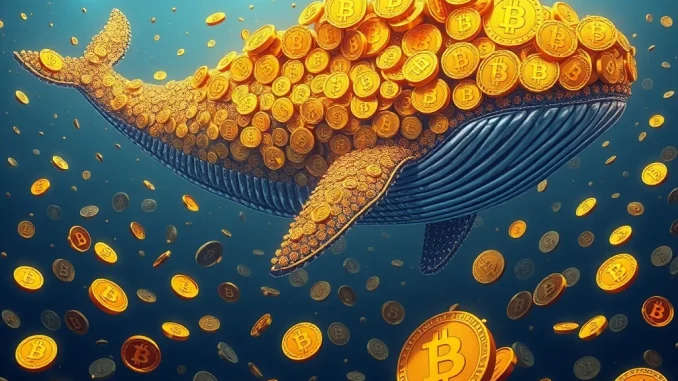
Bitcoin (BTC) whales holding over 1,000 BTC are making aggressive moves, buying up the flagship cryptocurrency even as it hovers near record highs. Meanwhile, retail and mid-sized investors are offloading their holdings. This trend suggests a significant shift in BTC ownership—from retail to institutional or high-net-worth investors. What does this mean for the future of Bitcoin?
Why Are Bitcoin Whales Buying Aggressively?
According to Glassnode data cited by CoinDesk, large holders (whales) are accumulating BTC despite its high valuation. Here’s what’s driving this trend:
- Institutional Interest: Big players see Bitcoin as a long-term store of value.
- Market Confidence: Whales believe in BTC’s potential for further growth.
- Strategic Positioning: Accumulating now could lead to greater control over future price movements.
Retail Investors Selling: A Sign of Weak Hands?
Smaller investors (those holding less than 1 BTC or between 10-100 BTC) are selling. Possible reasons include:
- Profit-Taking: Retail traders may be cashing out after recent highs.
- Fear of Volatility: Uncertainty drives smaller players to exit.
- Liquidity Needs: Some may need funds for other investments.
Implications of BTC Transfer to Institutional Investors
This shift could reshape Bitcoin’s market dynamics:
| Impact | Description |
|---|---|
| Price Stability | Institutional holdings may reduce extreme volatility. |
| Market Influence | Whales could dictate future price trends. |
| Adoption Growth | More institutional involvement may legitimize Bitcoin further. |
What Should Retail Investors Do?
While whales dominate, retail investors can still strategize:
- Dollar-Cost Averaging (DCA): Mitigate risk by buying small amounts over time.
- Stay Informed: Monitor whale activity for market signals.
- Long-Term Holding: Avoid panic selling during volatility.
Conclusion: A New Era for Bitcoin?
The aggressive accumulation by Bitcoin whales marks a pivotal moment. As institutional and high-net-worth investors take the reins, the market may see reduced volatility and increased legitimacy. Retail investors should stay vigilant and adapt to this evolving landscape.
Frequently Asked Questions (FAQs)
1. What defines a Bitcoin whale?
A Bitcoin whale is an entity holding a significant amount of BTC, typically over 1,000 coins, capable of influencing market prices.
2. Why are retail investors selling BTC now?
Many are taking profits after recent price surges or exiting due to fear of volatility.
3. How does institutional involvement affect Bitcoin?
It may bring stability, higher liquidity, and broader adoption, but also centralization risks.
4. Should retail investors follow whale activity?
While monitoring whales can provide insights, retail investors should base decisions on their own risk tolerance and strategy.
5. Will whale dominance reduce Bitcoin’s decentralization?
Increased institutional holdings could centralize influence, but Bitcoin’s core protocol remains decentralized.