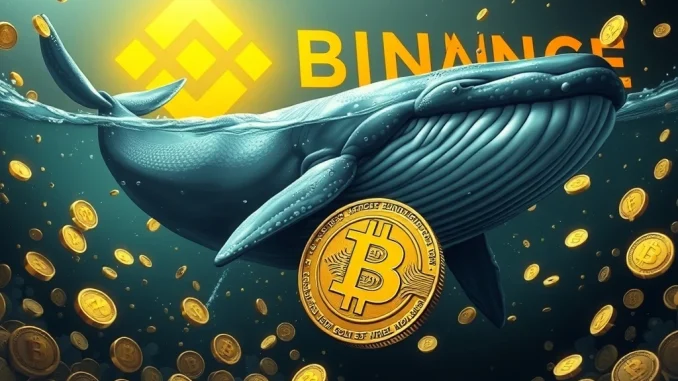
A massive Bitcoin whale has just shaken the crypto market by depositing 1,200 BTC (worth $130 million) into Binance. Could this signal a major price shift? Let’s dive into the details.
What Does This Bitcoin Whale Activity Mean for the Market?
According to LookOnChain, the whale address (bc1q2q) moved 1,200 BTC to Binance in just seven hours. Such large deposits often indicate potential selling pressure, which could impact Bitcoin’s price. Here’s what traders should watch for:
- Market Sentiment: Whale moves can trigger fear or speculation among retail traders.
- Liquidity Impact: Large deposits may increase sell orders, affecting short-term volatility.
- Historical Patterns: Past whale activity has preceded both dips and rallies.
Why Did the Whale Choose Binance for This Deposit?
Binance remains a top exchange for high-volume crypto trading due to its deep liquidity and global reach. The whale likely selected Binance for:
- Fast execution of large trades.
- Lower slippage compared to smaller exchanges.
- Access to derivatives and spot markets.
How Could This Affect Bitcoin Price in the Short Term?
Whale deposits often precede increased volatility. Traders should monitor:
- Order book depth on Binance.
- BTC price reactions in the next 24-48 hours.
- Follow-up transactions from the same address.
What’s Next for Crypto Trading After This Whale Move?
This deposit could lead to:
- Increased trading volume on Binance.
- Potential price swings as the market digests the news.
- More whale-watching as traders anticipate the next big move.
Final Thought: Whale activity always grabs attention, but smart traders look beyond the headlines. Whether this signals a sell-off or just portfolio rebalancing, one thing is certain—the crypto markets never sleep.
Frequently Asked Questions (FAQs)
1. What is a Bitcoin whale?
A Bitcoin whale is an individual or entity holding a large amount of BTC, capable of influencing market prices.
2. Why do whales deposit Bitcoin to exchanges like Binance?
Whales often move funds to exchanges to sell, trade, or use in derivatives markets.
3. How can I track whale activity?
Use blockchain explorers like Etherscan or platforms like LookOnChain to monitor large transactions.
4. Does whale activity always lead to price drops?
Not always—whales may also accumulate or rebalance portfolios without causing major price shifts.
5. Should retail traders react to whale moves?
While informative, retail traders should base decisions on broader market trends, not just whale activity.