A remarkable shift is occurring in the Bitcoin ecosystem. For the first time since Bitcoin achieved its latest all-time high, its **Bitcoin on-chain volume** has dramatically surpassed the combined trading volume on centralized exchanges (CEXs). This unusual development signals potentially significant shifts in the broader crypto landscape. Investors and analysts are closely monitoring this rare market trend, which raises questions about current market dynamics and future price movements. Understanding this divergence is crucial for anyone navigating the complex world of digital assets.
Unpacking the Surge in Bitcoin On-Chain Volume
Recently, **Bitcoin on-chain volume** has shown an unprecedented surge. This metric measures the total value of Bitcoin transferred directly on the blockchain. It includes all transactions, from large institutional movements to individual transfers. According to CryptoQuant contributor Axel Adler Jr., this on-chain activity now exceeds the volume seen on centralized platforms. This observation highlights a growing preference for direct, peer-to-peer transactions or self-custody. Many factors could contribute to this trend. Users might be moving coins off exchanges due to security concerns. Furthermore, increasing institutional interest often involves large, direct transfers. These movements are recorded transparently on the public ledger. Consequently, on-chain data provides a raw, unfiltered view of network activity.
Historically, CEXs dominated transaction volumes. Their convenience and liquidity attracted most traders. However, recent events might be shifting this dynamic. The rise in on-chain activity suggests a maturing market. It also indicates a potential move towards greater decentralization. Investors are increasingly valuing the security and control offered by self-custody. This shift impacts how we interpret market health. It also influences how we predict future price action. Therefore, analyzing on-chain metrics becomes even more vital for informed decision-making.
The Curious Case of Lagging CEX Trading Volume
While **Bitcoin on-chain volume** climbs, **CEX trading volume** has remained comparatively subdued. Centralized exchanges (CEXs) are platforms where users buy, sell, and trade cryptocurrencies. They facilitate both spot and futures trading. Typically, CEXs account for the vast majority of crypto trading activity. Their order books provide deep liquidity. They also offer a range of advanced trading tools. Yet, Adler Jr.’s analysis points to a significant drop in their relative importance. This decline in CEX activity, especially after an all-time high, is unusual. It suggests a lack of broad market participation on these platforms. Institutional players might be executing larger trades off-exchange. Retail traders might also be less active. Moreover, regulatory uncertainties could be deterring some users from CEXs. This creates a challenging environment for market makers. It also impacts the overall efficiency of price discovery.
The discrepancy between on-chain and CEX volumes signals a fragmented market. It indicates that significant capital movements are happening away from public exchange order books. This can lead to less transparent price action. It also makes market analysis more complex. A robust CEX volume typically indicates healthy market participation. It shows strong buying and selling interest. Therefore, the current trend suggests underlying issues. These issues could affect market stability. Ultimately, understanding this divergence is key. It helps to grasp the current state of Bitcoin’s market structure.
Understanding the Crypto Liquidity Shortage
The observed trends strongly suggest a **crypto liquidity shortage**. Liquidity refers to the ease with which an asset can be bought or sold without significantly impacting its price. High liquidity ensures smooth trading. It also minimizes price volatility. A shortage, however, means fewer buyers or sellers are willing to transact at current prices. This makes it harder to execute large orders without causing price swings. Axel Adler Jr. explicitly noted this lack of market liquidity. He pointed to it as a significant concern. This shortage becomes particularly evident when prices rise on decreasing trading volume. Such a scenario suggests that fewer participants are driving the price up. It indicates a lack of broad market conviction. Consequently, any large sell order could trigger a rapid price decline. This makes the market more vulnerable to sudden shifts.
Several factors can contribute to a liquidity crunch. These include:
- **Reduced Retail Participation:** Fewer individual traders entering the market.
- **Institutional Hoarding:** Large entities accumulating Bitcoin and holding it off-exchange.
- **Regulatory Uncertainty:** Hesitation from large players due to unclear regulations.
- **Market Concentration:** A few large holders controlling a significant portion of the supply.
Ultimately, a sustained **crypto liquidity shortage** can lead to higher volatility. It also makes price movements less reliable. This situation demands careful attention from all market participants. It influences trading strategies. It also affects long-term investment decisions.
Spotting Bearish Divergence BTC: A Warning Signal
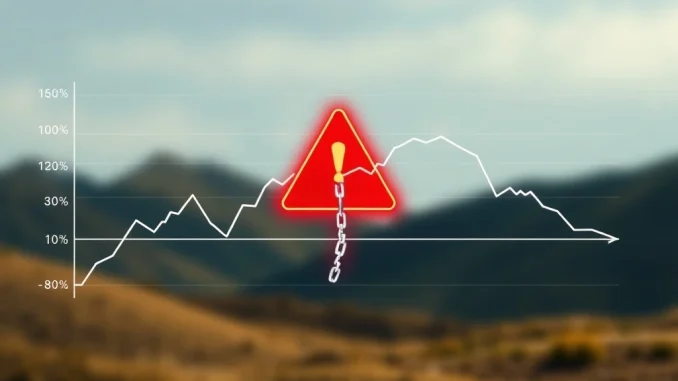
Adler Jr. also highlighted a **bearish divergence BTC**. This technical analysis pattern occurs when an asset’s price makes higher highs, but a related indicator, like trading volume, makes lower highs. In simple terms, Bitcoin’s price has continued to rise, yet the underlying trading volume has been decreasing. This divergence is often considered a strong warning sign. It suggests that the upward price movement lacks conviction. Fewer market participants are supporting the higher prices. Thus, the rally might be unsustainable. It could precede a price correction or a reversal. Traders often use this signal to anticipate potential downturns. It indicates weakening momentum. Furthermore, it suggests that the buying pressure is not as strong as the price action implies. This pattern is particularly concerning when combined with a liquidity shortage. The market becomes more fragile. Small selling pressure can have a disproportionate impact. This situation underscores the importance of monitoring multiple indicators. Relying solely on price can be misleading. Therefore, a **bearish divergence BTC** demands careful consideration.
Understanding divergence patterns is crucial for risk management. It helps traders avoid false breakouts. It also prepares them for potential market reversals. This particular divergence suggests that the current rally might be on shaky ground. It is not supported by broad market participation. Instead, it might be driven by fewer, larger players. Such a market structure is inherently less stable. It is more prone to sudden shifts. Investors should interpret this signal with caution. They should also consider adjusting their strategies accordingly. Vigilance remains paramount in these conditions.
Implications for Bitcoin Market Trends
These combined factors—surging **Bitcoin on-chain volume**, subdued CEX activity, a **crypto liquidity shortage**, and a **bearish divergence BTC**—have profound implications for **Bitcoin market trends**. First, the increased on-chain activity suggests a growing shift towards self-custody. It also indicates institutional accumulation. This could be bullish long-term. However, the immediate concern is the lack of liquidity on CEXs. This makes the market more susceptible to volatility. Price discovery becomes less efficient. Secondly, the bearish divergence acts as a cautionary signal. It suggests that the current price rally might not be sustainable. A correction could be on the horizon. This could lead to increased market uncertainty. Investors might become more risk-averse. This can affect broader sentiment. Ultimately, these trends point to a market in transition. It is grappling with evolving structures and underlying pressures. Navigating this environment requires a deep understanding of these complex dynamics.
The current market conditions demand a data-driven approach. Traders and investors must look beyond simple price charts. They need to analyze on-chain metrics. They also need to understand market liquidity. The interplay of these factors will shape Bitcoin’s near-term future. This period could present both risks and opportunities. Those who understand these signals will be better positioned. They can make more informed decisions. Conversely, ignoring these warnings could lead to significant losses. The landscape of **Bitcoin market trends** is constantly evolving. Staying informed is essential for success.
Navigating the Current Bitcoin Landscape
The current Bitcoin market presents a complex picture. The surge in **Bitcoin on-chain volume** indicates robust network usage. It also suggests a move towards decentralization. However, this positive sign is tempered by concerns about **CEX trading volume** and a **crypto liquidity shortage**. The **bearish divergence BTC** further complicates the outlook. These indicators collectively paint a picture of a market that is consolidating. It is also potentially preparing for a significant move. This move could be either upward or downward. It depends on how these underlying pressures resolve. Investors should exercise caution. They should also diversify their portfolios. They should consider the broader economic environment. Furthermore, staying updated on regulatory developments is crucial. These factors will continue to influence market sentiment. They will also affect price stability. Ultimately, adaptability and informed analysis are key in these volatile times.
The ongoing changes in **Bitcoin market trends** underscore the importance of continuous learning. Market participants must understand both technical and fundamental indicators. They must also monitor on-chain data. This comprehensive approach helps in making sound investment decisions. It also helps in managing risks effectively. The cryptocurrency market remains dynamic. Therefore, vigilance and strategic planning are indispensable. This ensures long-term success in the evolving digital asset space.
FAQs
Q1: What does Bitcoin on-chain volume surpassing CEX volume mean?
It means that the total value of Bitcoin transactions occurring directly on the blockchain network has exceeded the combined spot and futures trading volume on centralized exchanges. This suggests a shift towards self-custody, institutional movements, or reduced trust in CEXs, rather than active trading on exchanges.
Q2: How does a crypto liquidity shortage impact Bitcoin’s price?
A crypto liquidity shortage means there are fewer buyers and sellers willing to trade at current prices. This can lead to increased price volatility, making it easier for large orders to cause significant price swings. It also indicates that price movements might not be supported by broad market participation, making them potentially unsustainable.
Q3: What is a bearish divergence, and why is it concerning for BTC?
A bearish divergence occurs when Bitcoin’s price makes higher highs, but a related indicator (like trading volume or an oscillator) makes lower highs. For BTC, this is concerning because it suggests that the upward price movement lacks strong buying conviction. It can signal weakening momentum and often precedes a price correction or reversal.
Q4: What are the implications of these trends for Bitcoin investors?
These trends suggest increased market fragility and potential for higher volatility. Investors should exercise caution, closely monitor on-chain data and market liquidity, and consider diversifying their portfolios. It emphasizes the need for a data-driven approach and careful risk management.
Q5: Is this a rare market trend for Bitcoin?
Yes, according to CryptoQuant contributor Axel Adler Jr., Bitcoin’s on-chain volume surpassing CEX volume, especially after an all-time high, is considered a rare market trend. It indicates unusual market dynamics compared to historical patterns.