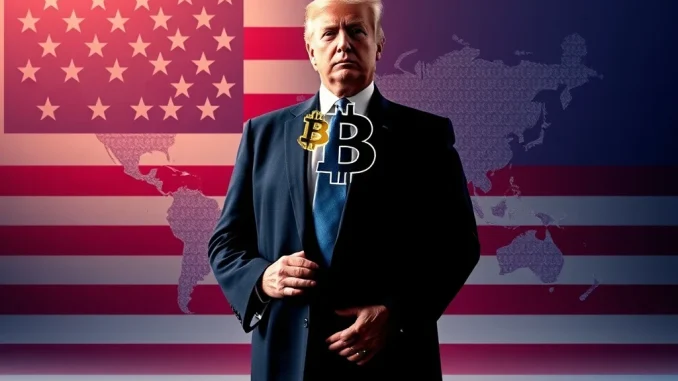
President Trump recently declared a significant shift. He stated the United States is emerging as a Bitcoin superpower. Indeed, he sees it becoming the world’s crypto capital. This bold statement has created considerable discussion. It impacts the global financial community. Furthermore, it ignites fresh debate about digital currencies. For those deeply invested in the crypto space, this pronouncement carries immense weight. It signals a potential turning point in how America approaches this innovative financial frontier.
Trump Crypto Stance Signals a New Era
Former President Donald Trump has articulated a notable shift in his perspective on Trump crypto. His recent remarks highlight a more positive outlook. He now acknowledges cryptocurrency serves many beneficial functions. This stance contrasts with some of his earlier, more skeptical comments. Previously, he expressed reservations about digital assets. However, his current view suggests a growing acceptance. He now identifies the U.S. as a leader in the digital currency space. This evolving perspective from a prominent political figure carries significant implications. It could shape future policy discussions and public perception.
His statements reflect a growing recognition. Cryptocurrencies are not just fringe assets. Instead, they are becoming integral to the global financial system. Trump’s declaration provides a powerful endorsement. It legitimizes the sector further. Moreover, it encourages wider adoption. This could attract more institutional interest. Consequently, it might foster greater innovation within the country. The former President’s words often resonate widely. Therefore, his positive comments about crypto are noteworthy.
America’s Rise as a US Crypto Capital
The United States is indeed positioning itself as a dominant US crypto capital. This aspiration is not without foundation. The country boasts several advantages. It has a robust technological infrastructure. Furthermore, it possesses a strong culture of innovation. Many leading blockchain companies and crypto startups are based here. American venture capital fuels much of the industry’s growth. Regulatory discussions, while ongoing, aim for clarity. This clarity can foster a stable environment. Such stability is crucial for long-term development. Therefore, the US seeks to attract and retain top talent. It also aims to encourage significant investment in the sector.
Becoming the world’s crypto capital involves several key factors:
- Technological Innovation: The U.S. leads in blockchain research and development.
- Market Liquidity: American exchanges handle vast trading volumes.
- Talent Pool: Skilled developers and entrepreneurs thrive in the U.S. ecosystem.
- Investment Capital: Significant funding flows into crypto projects.
These elements combine to create a fertile ground. They allow for the expansion of digital asset technologies. Consequently, the US can truly lead the global crypto landscape.
Understanding the Bitcoin Superpower Vision
Trump’s vision of the U.S. as a Bitcoin superpower extends beyond mere market dominance. It suggests a strategic national advantage. He believes digital assets can ease pressure on the U.S. dollar. This is a crucial point. A strong dollar is often seen as a sign of economic health. However, excessive strength can hinder exports. It can also create trade imbalances. Cryptocurrencies offer an alternative. They provide new avenues for global commerce. They also facilitate cross-border transactions. This could diversify financial risk. Furthermore, it could enhance America’s economic resilience. Therefore, embracing Bitcoin is not just about technology. It is about strengthening national economic policy.
This perspective views Bitcoin as a tool. It supports national interests. It is not merely a speculative investment. Instead, it is a strategic asset. A nation leading in Bitcoin adoption gains influence. It shapes the future of global finance. It also sets technological standards. This leadership can attract more capital. It also fosters a competitive edge. Ultimately, the superpower status implies both economic and geopolitical strength in the digital realm.
The Role of Digital Assets in Economic Strategy
The strategic integration of digital assets into the U.S. economy offers numerous benefits. They can enhance financial inclusion. They provide new tools for secure transactions. Furthermore, they reduce costs associated with traditional banking. Blockchain technology, underpinning these assets, improves efficiency. It offers transparency in various industries. From supply chains to healthcare, its applications are vast. Therefore, a forward-thinking approach to digital assets is essential. It ensures the U.S. remains competitive globally. It also secures its economic future. The former President’s recognition of these ‘positive functions’ is a significant endorsement. It validates the technology’s potential.
The adoption of digital assets can:
- Streamline Payments: Faster and cheaper transactions globally.
- Boost Innovation: Foster new industries and job creation.
- Enhance Security: Cryptographic security protects transactions.
- Diversify Investment: Provide new opportunities for investors.
These benefits collectively contribute to a more dynamic economy. They also position the U.S. at the forefront of financial evolution.
The Broader Impact of Cryptocurrency Adoption
Wider cryptocurrency adoption in the U.S. would bring substantial changes. It would likely lead to clearer regulatory frameworks. This clarity would reduce uncertainty. It would also encourage more mainstream businesses to participate. Institutional investors might increase their allocations. This would inject more capital into the market. Moreover, public awareness and education would grow. People would better understand the technology. This broader understanding is crucial for mass adoption. Consequently, the U.S. financial system could become more robust. It would also become more technologically advanced. This transformation promises significant economic growth. It also ensures America maintains its global financial leadership.
The journey towards full integration will involve careful planning. It will require collaboration between policymakers and industry leaders. However, the potential rewards are immense. A unified approach can unlock new economic opportunities. It can also solidify the nation’s role as a digital financial hub.
Navigating the Future of US Crypto Policy
The future of U.S. crypto policy remains a dynamic landscape. Trump’s statements add a new dimension to this ongoing debate. Policymakers must balance innovation with consumer protection. They must also address financial stability concerns. Clear guidelines are necessary for businesses. They need certainty to build and expand. Discussions often revolve around several key areas:
- Regulatory Clarity: Defining which agencies oversee different digital assets.
- Consumer Protection: Safeguarding users from fraud and market manipulation.
- Taxation: Establishing fair and consistent tax rules for crypto transactions.
- National Security: Addressing concerns about illicit finance and sanctions evasion.
Achieving a balanced approach is critical. It will ensure the U.S. capitalizes on crypto’s potential. It will also mitigate associated risks. Therefore, a proactive and informed policy strategy is paramount. It secures America’s position as a global financial leader.
In conclusion, President Trump’s recent declaration marks a significant moment. It highlights the U.S.’s potential to become a true Bitcoin superpower. His positive outlook on cryptocurrency and digital assets underscores their growing importance. It also suggests a strategic vision for America’s economic future. The path ahead involves continued innovation and thoughtful regulation. However, the commitment to leading the global crypto space is clear. This evolution promises a transformative era for finance and technology in the United States.
Frequently Asked Questions (FAQs)
What does President Trump mean by the U.S. becoming a ‘Bitcoin superpower’?
President Trump suggests the U.S. will lead the world in Bitcoin and cryptocurrency adoption and innovation. This implies significant economic influence and technological dominance in the digital asset space, potentially easing pressure on the U.S. dollar and enhancing national economic resilience.
How have Trump’s views on cryptocurrency evolved?
Initially, President Trump expressed skepticism about cryptocurrencies. However, his recent statements indicate a more positive and embracing stance. He now acknowledges their ‘many positive functions’ and sees the U.S. emerging as a global crypto capital.
What are the ‘positive functions’ of cryptocurrency mentioned by Trump?
While not explicitly detailed, these positive functions generally refer to benefits like facilitating global transactions, fostering technological innovation, offering new investment avenues, and potentially diversifying national financial strategies to ease pressure on traditional currencies like the U.S. dollar.
What impact could this stance have on the U.S. crypto market?
A positive stance from a prominent political figure like Trump can boost confidence in the U.S. crypto market. It may encourage further institutional investment, attract more innovation, and potentially lead to clearer, more favorable regulatory frameworks, solidifying the U.S. as a leading crypto hub.
What makes the U.S. a strong candidate to be the ‘world’s crypto capital’?
The U.S. possesses a robust technological infrastructure, a vibrant startup ecosystem, significant venture capital investment, and a strong pool of talent in blockchain and cryptocurrency. These factors collectively position it well to lead global crypto development and adoption.
How do digital assets ease pressure on the U.S. dollar?
Digital assets can offer alternative avenues for international trade and finance, potentially reducing reliance on the dollar for certain transactions. This diversification can help manage the dollar’s strength, preventing it from becoming too strong and hindering exports, while also offering new tools for global economic engagement.