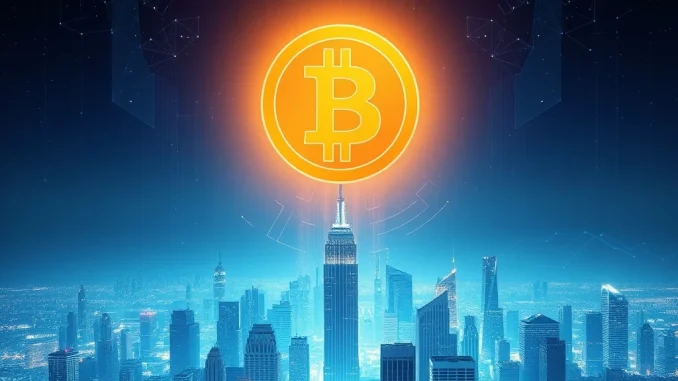
Bitcoin has once again shattered expectations, surging past $120,000 as analysts dub it the ‘S&P 500 of the future.’ This milestone isn’t just a number—it’s a testament to Bitcoin’s growing role as a foundational asset in modern finance. But what does this mean for investors, and is it too late to get in? Let’s break it down.
Why Bitcoin Is Being Called the ‘S&P 500 of the Future’
Jordi Visser, chief investment officer at 22V Research, recently compared Bitcoin to the S&P 500, but not in the way you might think. Unlike the S&P 500, which tracks top U.S. stocks, Bitcoin operates in a different asset class with unique risk and reward dynamics. Here’s why the analogy holds weight:
- Resilient Store of Value: Bitcoin acts as a hedge against macroeconomic uncertainty, especially as AI and digital assets reshape finance.
- Portfolio Staple: Just as the S&P 500 is a cornerstone of traditional investing, Bitcoin is becoming essential for diversified portfolios.
- Long-Term Potential: With year-to-date gains exceeding 50%, Bitcoin continues to outperform traditional benchmarks.
Bitcoin vs. Crypto-Proxies: Which Is the Better Investment?
Investors face a choice: buy Bitcoin directly or invest indirectly through crypto-proxies like MicroStrategy (NASDAQ: MSTR). Here’s a quick comparison:
| Option | Pros | Cons |
|---|---|---|
| Direct Bitcoin Ownership | Stability, long-term strategic value | Volatility |
| Crypto-Proxies (e.g., MSTR) | Potential for higher returns | Exposure to company-specific risks |
Visser favors direct Bitcoin exposure, citing its stability and macro-hedge potential.
Is It Too Late to Invest in Bitcoin?
Many traditional investors wonder if they’ve missed the boat. Visser dismisses this fear, predicting even skeptics will eventually own Bitcoin—whether they admit it or not. His bold forecast? Bitcoin could hit $200,000 by year-end.
Actionable Insights for Investors
- Diversify: Allocate a portion of your portfolio to Bitcoin as a hedge against systemic financial change.
- Stay Informed: Monitor trends in digital assets and stablecoins, which are increasingly integrated into daily economics.
- Think Long-Term: Bitcoin’s volatility is a feature, not a bug—focus on its strategic value over time.
Conclusion: Bitcoin’s Unstoppable Momentum
Bitcoin’s surge past $120,000 is more than a price milestone—it’s a signal of its evolving role in global finance. Whether as the ‘S&P 500 of the future’ or a macro hedge, Bitcoin is proving its staying power. The question isn’t whether to invest, but how much to allocate.
Frequently Asked Questions (FAQs)
1. Why is Bitcoin compared to the S&P 500?
Bitcoin is seen as a foundational asset in portfolios, much like the S&P 500 is for traditional equities. It offers diversification and acts as a hedge against macroeconomic shifts.
2. Should I invest in Bitcoin directly or through proxies?
Direct ownership offers stability, while proxies like MicroStrategy may yield higher returns but carry additional risks.
3. Is Bitcoin too volatile for long-term investment?
Volatility is part of Bitcoin’s nature, but its long-term upward trajectory and role as a store of value make it a compelling option.
4. What’s the price target for Bitcoin by year-end?
Jordi Visser predicts Bitcoin could reach $200,000 by the end of the year, driven by growing adoption and macroeconomic trends.