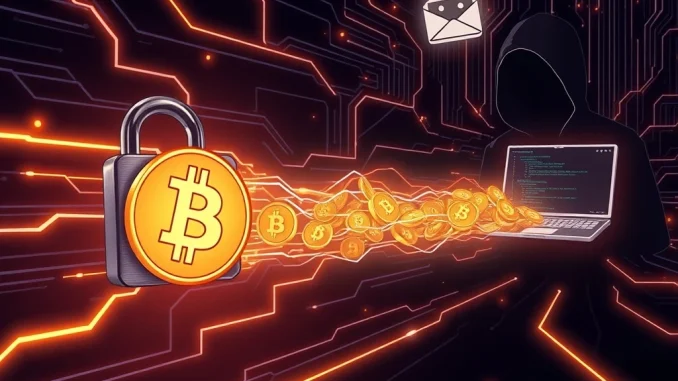
The cryptocurrency world recently faced a stark reminder of persistent security threats. A devastating Bitcoin scam resulted in the theft of 783 BTC, valued at approximately $91 million. This incident underscores the critical importance of robust crypto security measures for all digital asset holders. Victims often fall prey to sophisticated tactics. Therefore, understanding these risks is essential for every investor.
Unpacking the Devastating Bitcoin Scam
On August 19, a significant Bitcoin scam unfolded, capturing widespread attention across the crypto community. Blockchain security expert ZachXBT reported the incident on X, detailing a substantial loss for one unfortunate victim. Fraudsters successfully stole 783 BTC, which equated to a staggering $91 million at the time. This massive theft did not involve a direct hack of an exchange or a hardware wallet. Instead, it leveraged a far more insidious method: social engineering.
The attackers meticulously crafted a deceptive scheme. They posed as legitimate support staff from both a cryptocurrency exchange and a hardware wallet provider. This dual impersonation created a convincing illusion of authenticity. Consequently, the victim unknowingly divulged critical information or authorized transactions. Such tactics exploit human psychology rather than technical vulnerabilities. The stolen funds were later funneled through the non-custodial Wasabi wallet. This action made tracing the assets significantly more challenging for investigators. Ultimately, this incident serves as a grim warning about the evolving nature of digital asset threats.
The Peril of Social Engineering Attacks
Social engineering represents a significant threat in the digital age. It is a manipulation technique designed to trick individuals into divulging confidential information or performing actions they might not otherwise do. Unlike traditional hacking, which targets system weaknesses, social engineering targets human vulnerabilities. Attackers exploit trust, curiosity, fear, or a sense of urgency. Therefore, users must remain constantly vigilant.
In the context of cryptocurrency, social engineering attacks manifest in various forms. Common tactics include:
- Phishing: Scammers send fraudulent emails or messages. These communications often mimic legitimate entities, such as crypto exchanges or wallet providers. They aim to trick recipients into clicking malicious links or entering credentials on fake websites.
- Pretexting: This involves creating a fabricated scenario to engage a victim. The scammer might pose as a customer service representative needing to ‘verify’ account details. They build a false sense of trust.
- Impersonation: As seen in the $91 million Bitcoin scam, attackers pretend to be support staff. They might claim a security breach or an urgent account issue requires immediate action. This creates pressure and bypasses critical thinking.
- Baiting: This tactic uses false promises or tempting offers. For instance, free cryptocurrency giveaways often require users to send a small amount first. However, these are almost always scams.
These methods bypass technical safeguards by exploiting human trust. Moreover, they highlight the importance of skepticism in all online interactions. A single misstep can lead to catastrophic financial losses.
Safeguarding Your Hardware Wallet: A Critical Component of Crypto Security
For many cryptocurrency users, a hardware wallet represents the gold standard for asset protection. These physical devices store private keys offline, away from internet-connected computers. This ‘cold storage’ significantly reduces the risk of online hacks. However, even hardware wallets are not immune to threats. The recent $91 million theft, for instance, exploited the *perception* of hardware wallet support, not the device itself.
To maximize hardware wallet security, users must follow several best practices:
- Purchase Directly: Always buy hardware wallets directly from the manufacturer’s official website. Avoid third-party resellers, even reputable ones, to prevent tampering.
- Verify Authenticity: Upon receipt, carefully inspect the device for any signs of tampering. Check seals and packaging.
- Never Share Your Seed Phrase: Your 12- or 24-word recovery phrase is the master key to your funds. Never store it digitally. Do not share it with anyone, under any circumstances, even if they claim to be ‘support.’
- Use Strong PINs: Set a complex PIN for your device. This adds an extra layer of physical security.
- Confirm Transactions on Device: Always physically verify transaction details on your hardware wallet’s screen. Do not rely solely on your computer screen.
- Update Firmware Safely: Only update firmware through official channels, following manufacturer instructions precisely.
- Be Skeptical of Support: Legitimate hardware wallet support will never ask for your seed phrase or private keys. They will also not ask you to download remote access software.
By adhering to these guidelines, individuals can significantly fortify their defenses against sophisticated social engineering attempts targeting their digital assets.
Enhancing Overall Crypto Security Measures
Beyond hardware wallets, a comprehensive approach to crypto security is non-negotiable in today’s digital landscape. The sheer volume of assets traded daily attracts malicious actors. Therefore, users must adopt a multi-layered defense strategy. This involves both technological safeguards and personal vigilance. A single point of failure can compromise an entire portfolio. Prioritizing security is paramount for every crypto enthusiast.
Consider these essential practices to bolster your digital defenses:
- Implement Multi-Factor Authentication (MFA): Always enable MFA on all your crypto accounts. Hardware security keys (like YubiKey) offer superior protection compared to SMS or app-based 2FA. They significantly reduce the risk of phishing.
- Use Unique, Strong Passwords: Create complex, unique passwords for each platform. Utilize a reputable password manager. Avoid reusing passwords across different services.
- Be Wary of Unsolicited Communications: Treat all unexpected emails, messages, or calls with extreme skepticism. Verify the sender’s identity through independent channels. Never click on suspicious links.
- Educate Yourself Continuously: Stay informed about the latest scam techniques and security vulnerabilities. Knowledge is your first line of defense against evolving threats.
- Understand Cold vs. Hot Storage: Use cold storage (hardware wallets) for significant holdings. Limit funds on exchanges (hot wallets) to only what you actively trade. This minimizes exposure to exchange hacks.
- Verify URLs: Always double-check website URLs for official platforms. Bookmark legitimate sites and use them instead of clicking links from emails or social media. Phishing sites often have subtle misspellings.
- Regularly Monitor Accounts: Keep an eye on your transaction history and account balances. Report any suspicious activity immediately to the relevant platform.
By integrating these practices, users can build a formidable barrier against potential attacks. This proactive stance is crucial for safeguarding valuable digital assets.
The Aftermath of Crypto Theft: Tracing Stolen Funds and Lessons Learned
The $91 million crypto theft highlights the challenging reality of recovering stolen digital assets. Once funds are moved off an exchange and into privacy-focused wallets like Wasabi, tracing becomes incredibly difficult. Wasabi wallet employs CoinJoin, a technique that mixes transactions from multiple users. This effectively obfuscates the origin and destination of funds. Consequently, law enforcement agencies face significant hurdles in following the money trail. This situation often leaves victims with little recourse.
However, the crypto community and blockchain analytics firms continue to evolve their tracing capabilities. While complete anonymity is sought by some, these tools also aid illicit activities. The incident with the Wasabi wallet emphasizes this dual nature. The lack of centralized authority in cryptocurrency, while offering freedom, also presents challenges in fraud prevention and recovery. Therefore, the onus of security largely falls on individual users. This incident reinforces several critical lessons:
- Personal Responsibility: Each user is ultimately responsible for their own security. Relying solely on platform security is insufficient.
- Vigilance is Key: Constant alertness to new scam techniques is vital. Scammers continually adapt their methods.
- Due Diligence: Always verify the authenticity of any communication or request. Assume nothing is legitimate until proven otherwise.
- Community Reporting: Sharing information about scams, as ZachXBT did, helps others stay safe. Collective awareness strengthens defenses.
Ultimately, this significant crypto theft serves as a powerful cautionary tale. It underscores the ongoing need for robust security education and proactive measures within the digital asset space.
Conclusion: Fortifying Your Digital Frontier Against Crypto Scams
The recent $91 million Bitcoin scam serves as a stark, urgent reminder of the ever-present dangers in the cryptocurrency ecosystem. It clearly demonstrates the sophistication of modern cybercriminals. They increasingly target human vulnerabilities through advanced social engineering tactics. While technology advances, the human element often remains the weakest link. Therefore, continuous education and vigilance are not just recommendations; they are absolute necessities for every participant in the digital asset space.
Protecting your investments demands a multi-faceted approach. This includes securing your hardware wallet, implementing strong crypto security practices, and maintaining a healthy skepticism towards all unsolicited communications. The fight against crypto theft is ongoing. However, by adopting a proactive and informed mindset, you can significantly reduce your risk exposure. Stay safe, stay informed, and always prioritize your digital security.
Frequently Asked Questions (FAQs)
Q1: What is social engineering in the context of a Bitcoin scam?
A1: Social engineering is a manipulative tactic where scammers trick individuals into giving up confidential information or performing actions that compromise their security. In a Bitcoin scam, this often involves impersonating legitimate entities like exchanges or hardware wallet support to gain access to a victim’s funds or private keys, bypassing technical security measures.
Q2: How can I protect my hardware wallet from social engineering attacks?
A2: To protect your hardware wallet, always purchase it directly from the official manufacturer. Never share your seed phrase or private keys with anyone, even if they claim to be support. Always verify transactions on the device’s screen and be extremely skeptical of unsolicited requests for information or software downloads. Legitimate support will never ask for your private keys.
Q3: What are the key elements of strong crypto security?
A3: Strong crypto security involves several layers: using hardware wallets for cold storage, enabling multi-factor authentication (MFA) with hardware keys, creating unique and complex passwords, being vigilant against phishing and social engineering, regularly updating software, and understanding the risks associated with hot wallets and smart contracts.
Q4: Is it possible to recover funds lost in a crypto theft like the $91M Bitcoin scam?
A4: Recovering funds lost in a crypto theft, especially when moved through privacy-focused wallets like Wasabi, is extremely challenging. While blockchain analytics firms work to trace funds, the anonymity features of such wallets significantly hinder recovery efforts. Prevention through robust security practices is therefore the best defense.
Q5: What role did Wasabi wallet play in the $91M crypto theft?
A5: The Wasabi wallet was used by the scammers to funnel the stolen funds. Wasabi employs CoinJoin, a transaction mixing technique that enhances privacy by combining transactions from multiple users. This process makes it significantly more difficult for investigators to trace the origin and destination of the stolen Bitcoin, obscuring the illicit money trail.
Q6: How can I stay informed about new crypto scams and security threats?
A6: To stay informed, follow reputable blockchain security experts and news outlets on platforms like X (formerly Twitter) and dedicated crypto news sites. Join official community forums for your chosen exchanges and wallets. Regularly review security advisories and educational content provided by trusted sources. Continuous learning is crucial for adapting to evolving threats.